
Diabetes can quietly reduce feeling and circulation in the feet, which means small problems — a blister, a pressure spot, a tiny cut — can go unnoticed until they become serious. A short daily routine is one of the simplest ways to catch issues early. Here is a practical checklist you can actually keep up with.
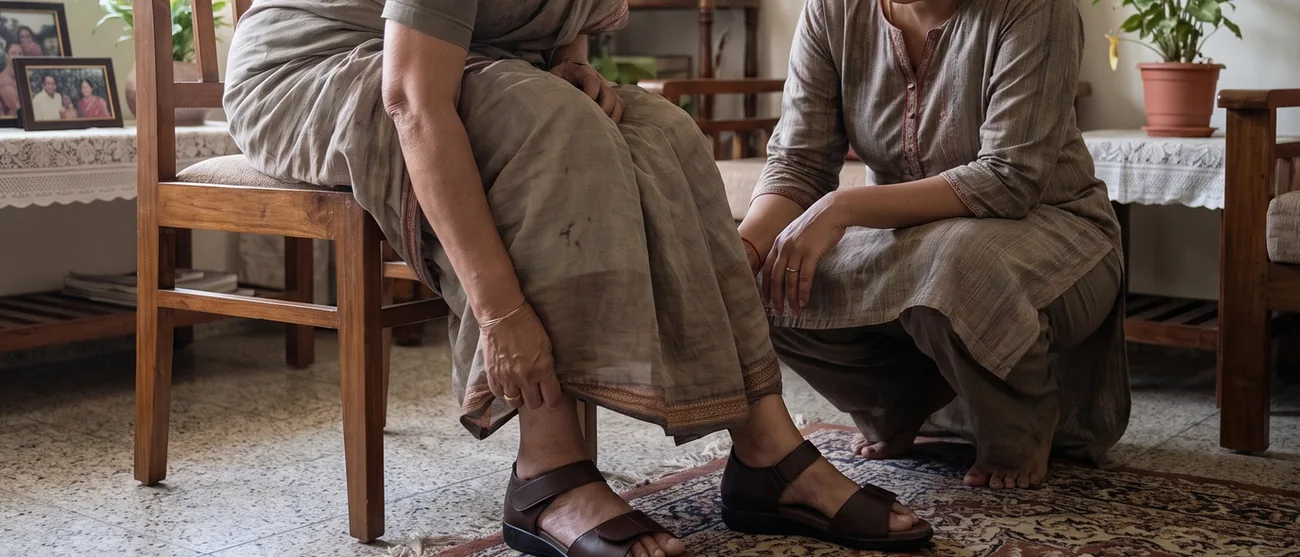
Every Day: A 2-Minute Foot Check
- Look at the whole foot, including between the toes and the sole — use a mirror or ask a family member to help if bending down is difficult.
- Check for cuts, blisters, redness, swelling, or dry cracked skin, especially after wearing new footwear.
- Feel the temperature of both feet — one noticeably warmer or cooler than the other is worth mentioning to your doctor.
- Wash and dry properly, especially between the toes, where moisture can sit unnoticed.
- Moisturise dry areas, but avoid applying cream directly between the toes.
Trim Nails Carefully
Cut nails straight across rather than rounding the corners, and avoid cutting them too short. If your eyesight or reach makes this difficult, or if you have any nerve or circulation concerns, ask a professional to help rather than risking a nick that’s hard to notice healing.
Never Walk Barefoot — Even at Home
An unnoticed step on something small can turn into a wound you don’t feel happen. Keep a soft, well-fitted diabetic sandal on at home, not just for outdoor trips.
Choose Footwear That Works With You, Not Against You
This is where footwear choice becomes part of the daily routine rather than a separate decision. Look for:
- A soft, seam-free upper with no hard edges pressing on the skin.
- A cushioned, contoured footbed that spreads pressure evenly.
- An adjustable fit that can loosen if your feet swell during the day.
- A wide, rounded toe box that doesn’t squeeze the toes together.
Every pair in our men’s and women’s diabetic ranges is built around exactly this, using genuine iWALK Foot Care construction.
When to See a Doctor Promptly
Report any cut, blister, redness, or swelling that doesn’t start improving within 48 hours, any sign of infection (warmth, odour, discharge), or any new numbness or tingling. Early attention is what keeps a small issue small.
Looking for footwear that fits into this routine? Shop men’s diabetic footwear, women’s diabetic footwear, or ask about home-visit physiotherapy for additional support at home.
This article is for general information only and isn’t a substitute for advice from your doctor or podiatrist. Please consult a healthcare professional for diagnosis and treatment.