Regular walking is one of the simplest, cheapest and most effective habits for people with diabetes. It helps muscles use glucose, supports healthy weight and blood pressure, improves mood and sleep, and helps circulation in the legs. But diabetic feet need protecting while you walk.
How much should you walk?
Health guidelines commonly recommend about 150 minutes of moderate activity a week for adults with diabetes — for example 30 minutes on 5 days — unless your doctor advises otherwise. Many people also find a short 10–15 minute walk after meals helps.
Always check with your doctor first, especially if you have heart problems, neuropathy, foot ulcers, eye complications, or take insulin or tablets that can cause low sugar.
A simple 6-week plan to build up
| Week | Walking time | How often |
|---|---|---|
| 1 | 10 minutes | 5 days |
| 2 | 15 minutes | 5 days |
| 3 | 20 minutes | 5 days |
| 4 | 25 minutes | 5 days |
| 5–6 | 30 minutes | 5 days |
Walk at a pace where you can talk but not sing. If you can't manage 10 minutes at once, split it into shorter walks.
Foot safety before and after every walk
Before:
- Check your feet and the inside of your footwear.
- Wear clean, seamless socks with closed shoes.
- Carry water — and a glucose source if your medicines can cause low sugar.
After:
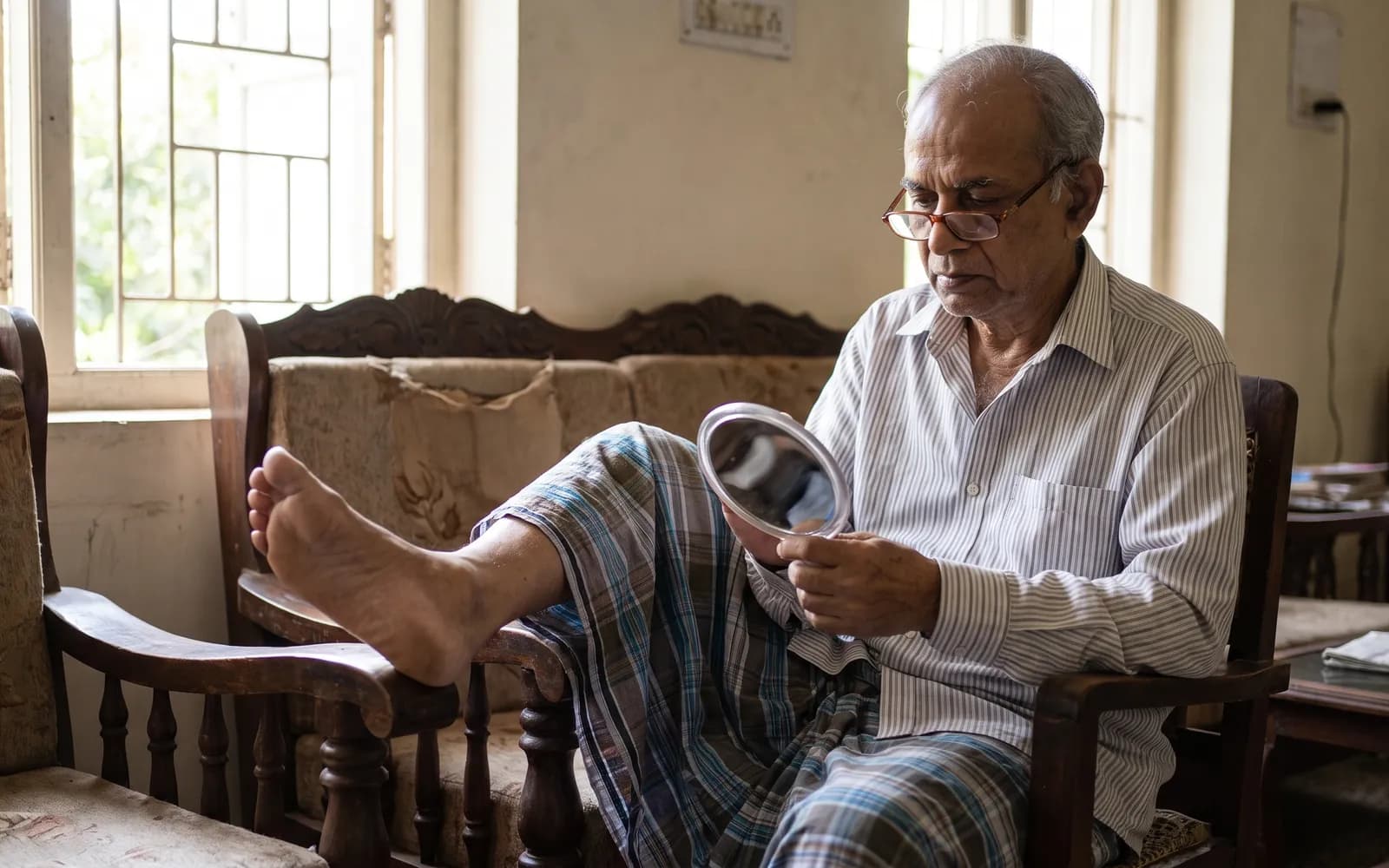
- Remove footwear and check for red marks, blisters or cuts.
- Wash and dry feet, especially between the toes.
See our full diabetic foot care checklist.
Choosing walking footwear for diabetes
- Cushioned, shock-absorbing sole and MCP footbed
- Roomy toe box — toes shouldn't touch the front on downhill steps
- Firm heel counter for stability
- Breathable upper — important in Chennai's humidity
- Secure fastening so the foot doesn't slide
- Flexible at the ball of the foot, firm through the middle
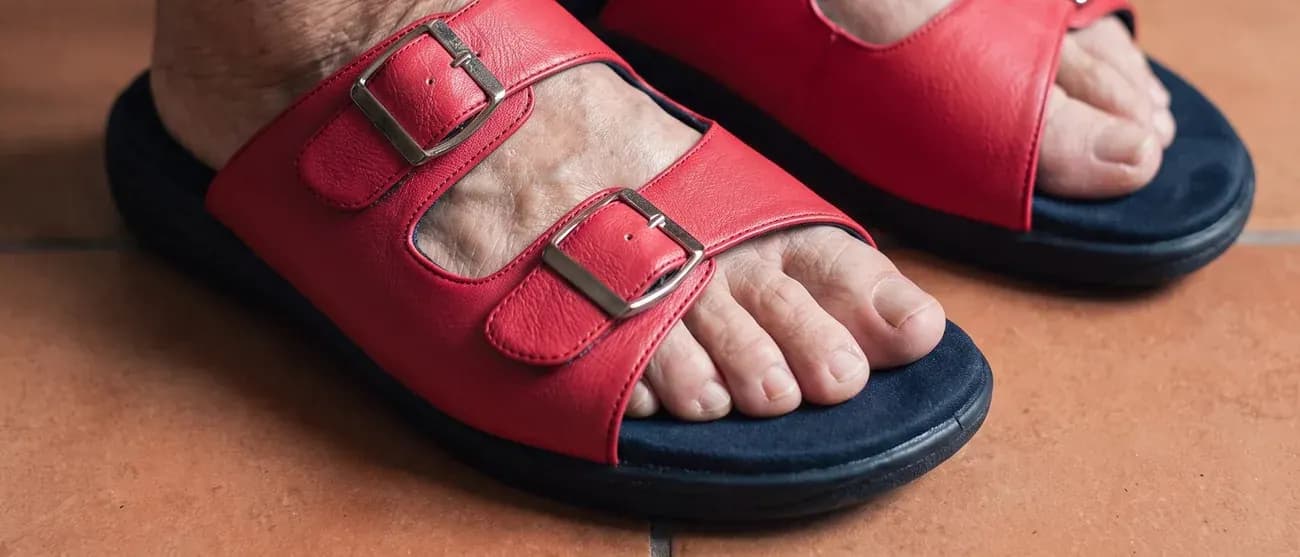
For longer walks, closed walking shoes or a closed walker sandal protect the toes. For short walks around the block, a supportive strap sandal is fine.
Walking in Chennai
- Early morning or evening avoids the worst heat.
- Parks and school grounds are gentler and safer than broken roads.
- In the monsoon, avoid waterlogged streets — see monsoon foot care in Chennai.
Warm-up and cool-down
- Warm up for 5 minutes with slow walking and gentle ankle circles.
- Cool down for 5 minutes by slowing your pace, then do calf stretches against a wall.
This reduces stiffness and the risk of strains, especially if you're starting after a long break.
Signs to stop and rest
Stop walking and seek advice if you have:
- Chest pain, unusual breathlessness or dizziness
- Signs of low blood sugar — sweating, shakiness, confusion
- New pain in the feet or legs, or calf pain that comes on with walking and eases with rest
- A blister or wound on your foot
Making it a habit
- Walk with a friend or family member — it's safer and more enjoyable.
- Pick a regular time and route.
- Track your minutes on a calendar or phone.
- On rainy days, walk indoors — corridors, malls or even around the house count.