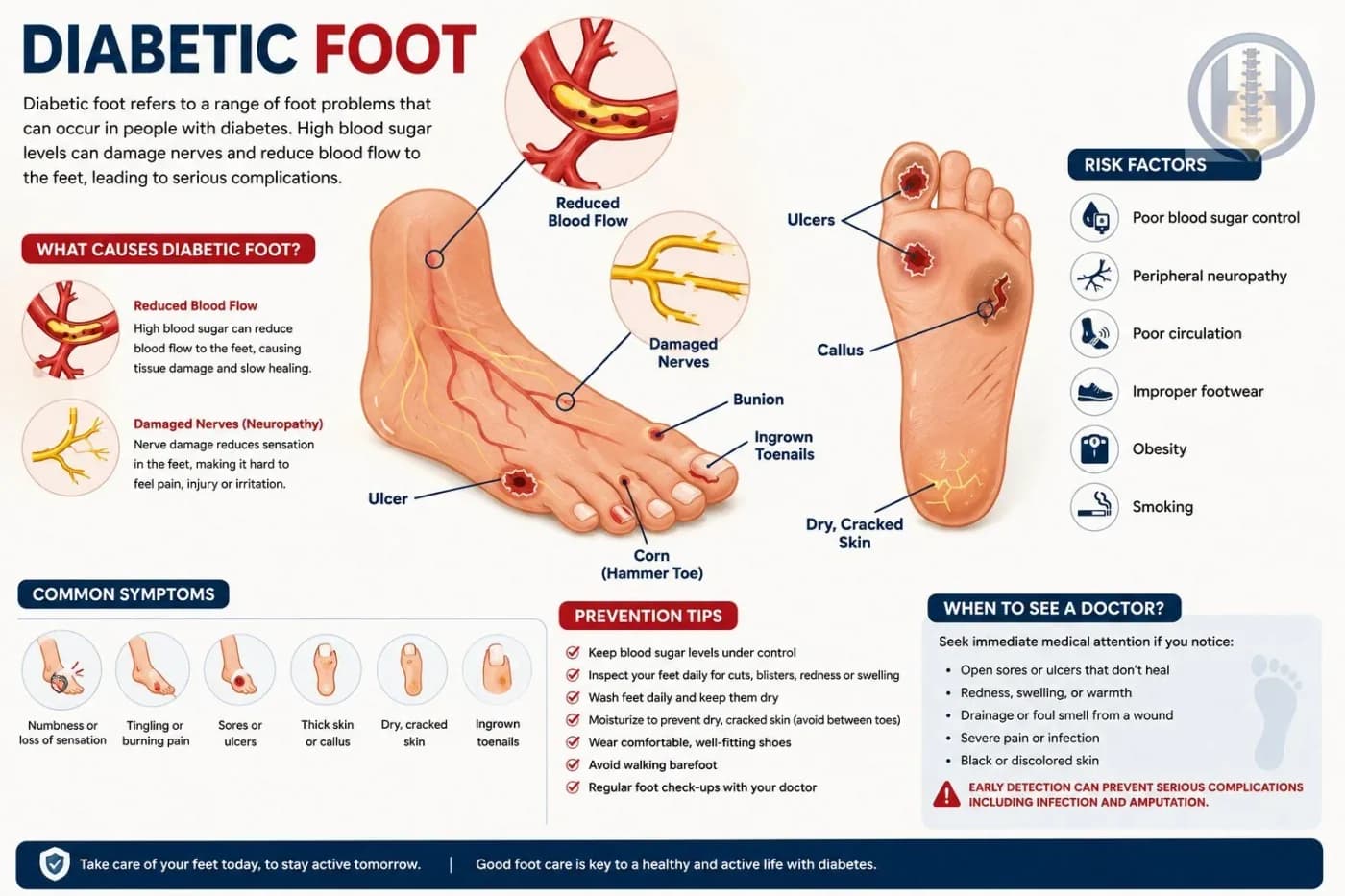
India has one of the largest numbers of people with diabetes in the world — and many don't know they have it. High blood sugar quietly affects the nerves and blood vessels of the feet, so the feet often show diabetes symptoms early, sometimes years before a diagnosis.
Knowing these signs helps in two ways: if you haven't been tested, they are a reason to check your sugar; if you already have diabetes, they warn you that your feet need more protection. Here are 12 warning signs to watch for.
Nerve-related symptoms (neuropathy)
1. Tingling or "pins and needles"
Often the very first sign. It usually starts in the toes of both feet and slowly moves up. Many people notice it at night.
2. Numbness or reduced feeling
Feeling as if you are wearing socks when you aren't, or not feeling small stones in your chappal. This is dangerous because cuts, blisters and burns can go unnoticed.
3. Burning pain
Burning feet, especially at night, is a classic sign of diabetic neuropathy. Read our guide to burning sensation in the feet.
4. Sharp, shooting or electric pains
Sudden jolts of pain in the feet or legs, sometimes with sensitivity to light touch — even a bedsheet can hurt.
5. Not sensing heat or cold
Not noticing that bath water, a hot floor or a hot-water bag is too hot. This is how many diabetic foot burns happen, including on hot temple floors.
Circulation-related symptoms
6. Cold feet
Feet that feel cold to the touch even in warm weather can mean reduced blood flow.
7. Pain in the calves when walking
Cramping in the calves that comes on with walking and eases with rest (claudication) can be a sign of narrowed leg arteries.
8. Slow-healing cuts and sores
A small wound that takes weeks to heal is a red flag — high sugar slows healing and invites infection.
9. Skin colour changes and hair loss
Shiny, thin, pale, bluish or darkened skin on the feet, and loss of hair on the toes and lower legs.
Skin, nail and shape changes
10. Dry, cracked skin
Diabetes can reduce sweating, leaving heels dry and prone to cracks — which can become entry points for infection (cracked heels guide).
11. Fungal infections and thick nails
Itching between the toes, and thick, yellow or crumbly toenails are more common with diabetes.
12. Calluses, swelling or changes in foot shape
Hard skin over pressure points, unexplained swelling, or a foot that becomes red, warm and swollen — sometimes with a changing shape — needs urgent attention. A red, hot, swollen foot without injury can be a sign of Charcot foot, a serious complication.
What to do if you notice these signs
If you haven't been tested: see a doctor and ask for a blood sugar test (fasting sugar and HbA1c). Early diagnosis protects your nerves and blood vessels.
If you already have diabetes:
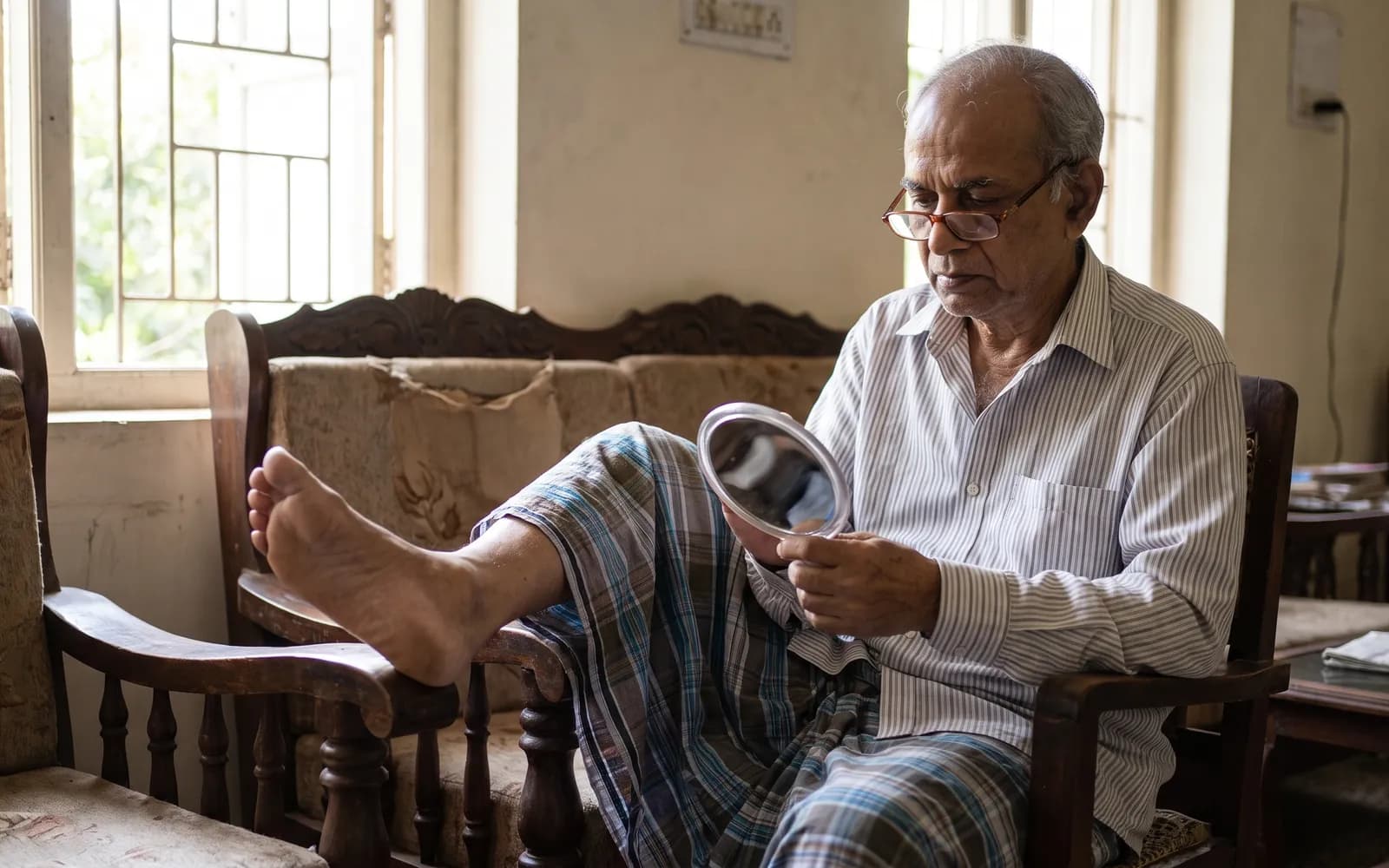
- Check your feet every day — tops, soles, heels and between the toes. Use a mirror or ask a family member.
- Never walk barefoot, indoors or outside.
- Wear diabetic footwear with soft linings, a roomy toe box and a cushioned footbed.
- Keep blood sugar, blood pressure and cholesterol in your target range.
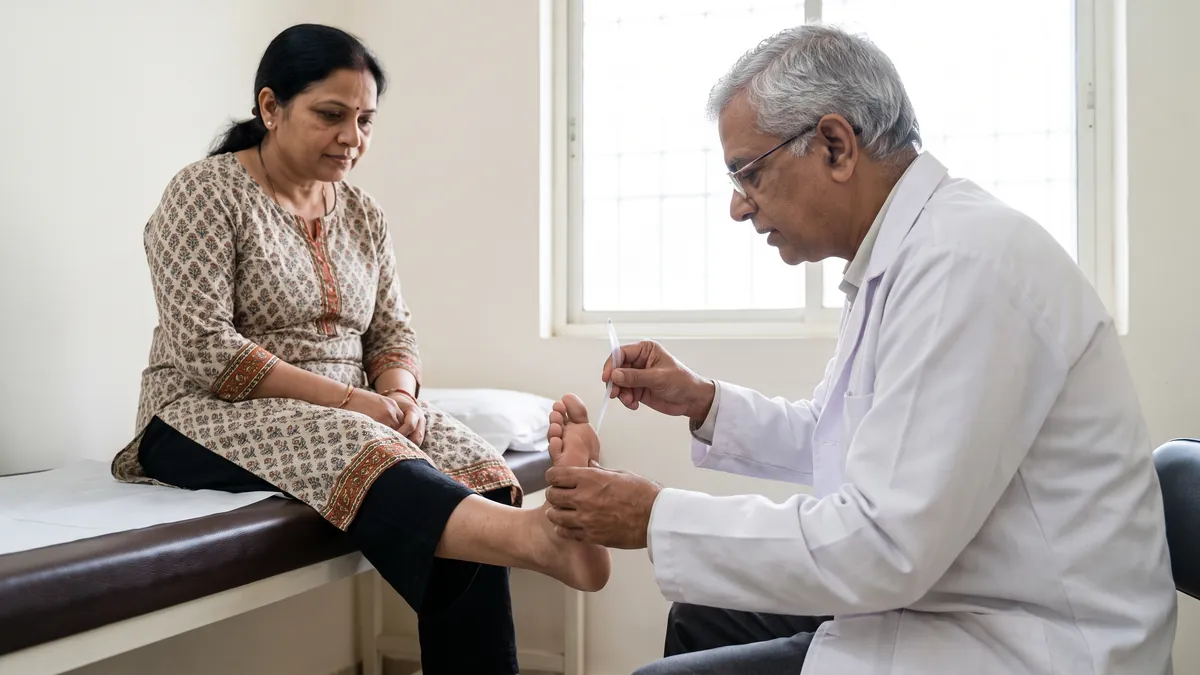
- Have a doctor examine your feet at least once a year, including a sensation (monofilament) test.
Our daily diabetic foot care tips cover the full routine.
Why footwear matters so much
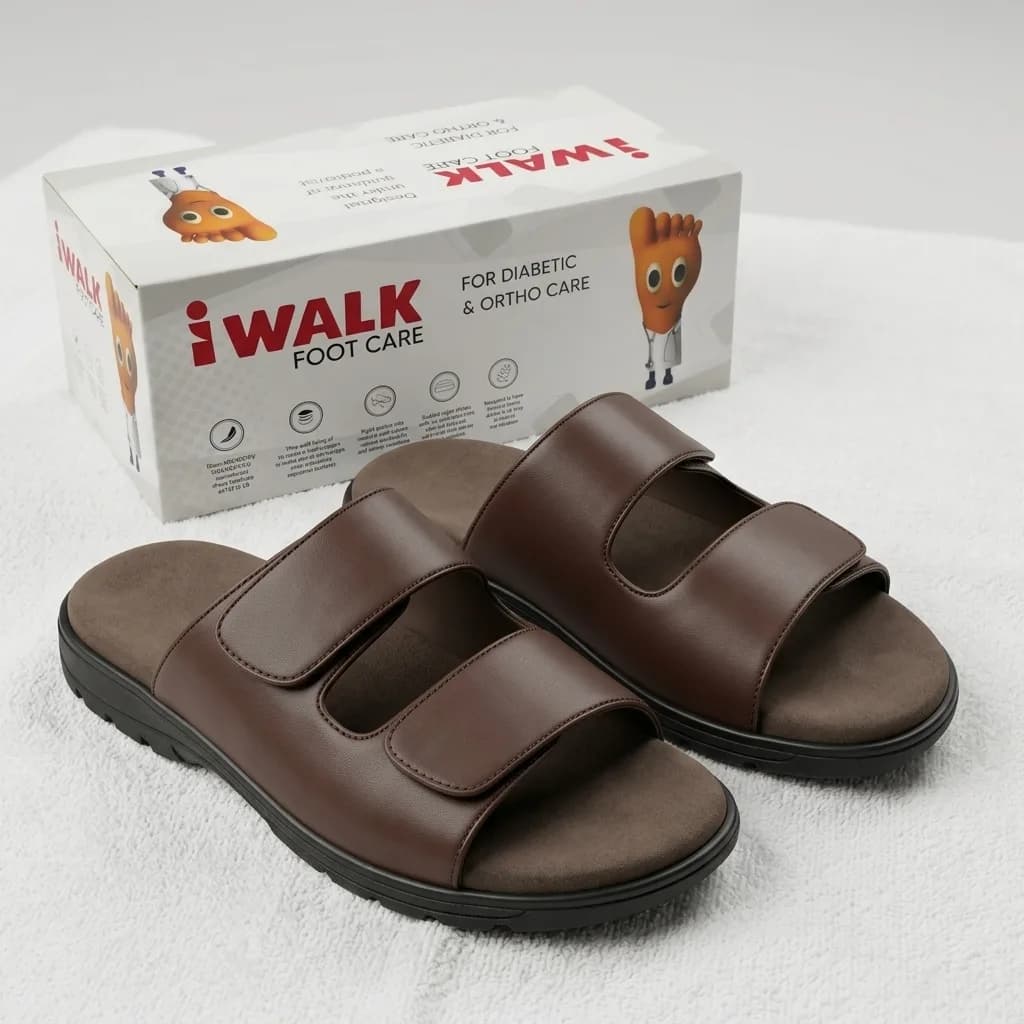
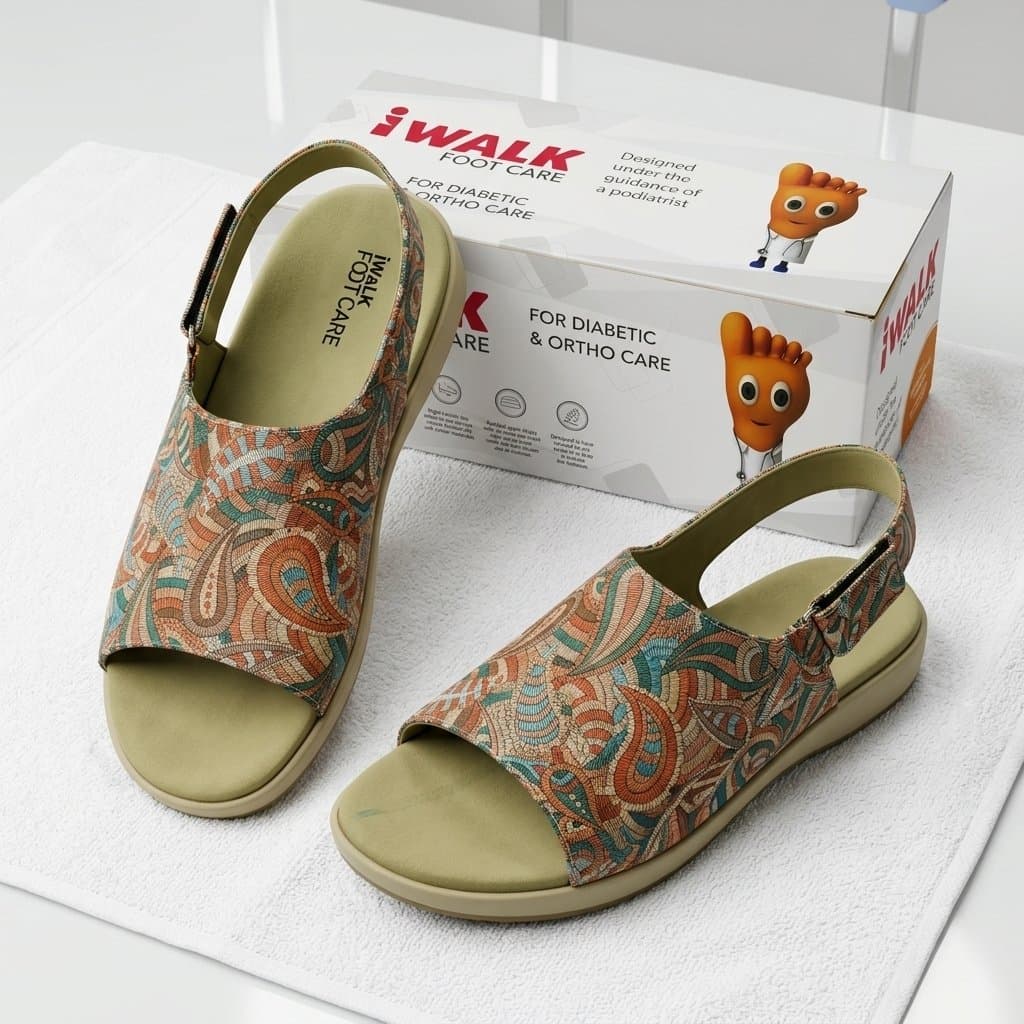
When feet can't feel pressure properly, ordinary chappals become risky: a toe post can rub, a hard seam can blister, and a thin sole lets sharp objects through. Diabetic footwear protects feet that can no longer warn you.
| Feature | Why it protects diabetic feet |
|---|---|
| Soft, seam-free lining | No rubbing or pressure sores |
| Cushioned MCP footbed | Spreads pressure evenly |
| Roomy toe box | No squeezed toes or corns |
| Adjustable velcro or buckle | Fits swelling through the day |
| Closed design, no toe post | Protects toes; nothing between them |
For men, the AJM 08 slip-on and the AJM 09 velcro sandal are designed for diabetic sensitivity and neuropathy; the AJM Classic suits office wear. For women, the AJL Majestic and AJL 32 offer soft uppers and roomy fits. Learn more in diabetic footwear vs regular footwear.
When to get urgent medical help
- A wound, blister or crack that is red, swollen, warm, smelly or has discharge.
- A red, hot, swollen foot without injury.
- Black or blue areas of skin.
- Fever with a foot wound.
Don't wait for pain — with neuropathy, serious problems may not hurt.
Newly diagnosed with diabetes? WhatsApp us your size and we'll help you choose your first pair of diabetic footwear.
Key takeaways
- Diabetes often shows in the feet first: tingling, numbness, burning, cold feet, slow healing, skin and nail changes.
- If you notice these signs, get your blood sugar tested.
- With diabetes: daily foot checks, no barefoot walking and proper diabetic footwear.
- Browse men's and women's diabetic footwear with Cash on Delivery.