Flat feet are extremely common — and many people only discover them when their heels, arches, knees or lower back start aching. Insoles for flat feet are one of the simplest, most affordable ways to add support to the shoes you already own. But there are many types, and the wrong one can be a waste of money.
This guide explains how arch support insoles work, the main types, who benefits, and how to use them correctly.
Do you have flat feet?
Try the wet footprint test: wet your feet, stand on a piece of dark paper or a dry floor, then step off.
- Normal arch: a curved band along the outer edge, with a clear inward curve.
- Flat foot: almost the whole sole shows — little or no inward curve.
- High arch: only the heel and ball show, with a thin or missing band between (high arch guide).
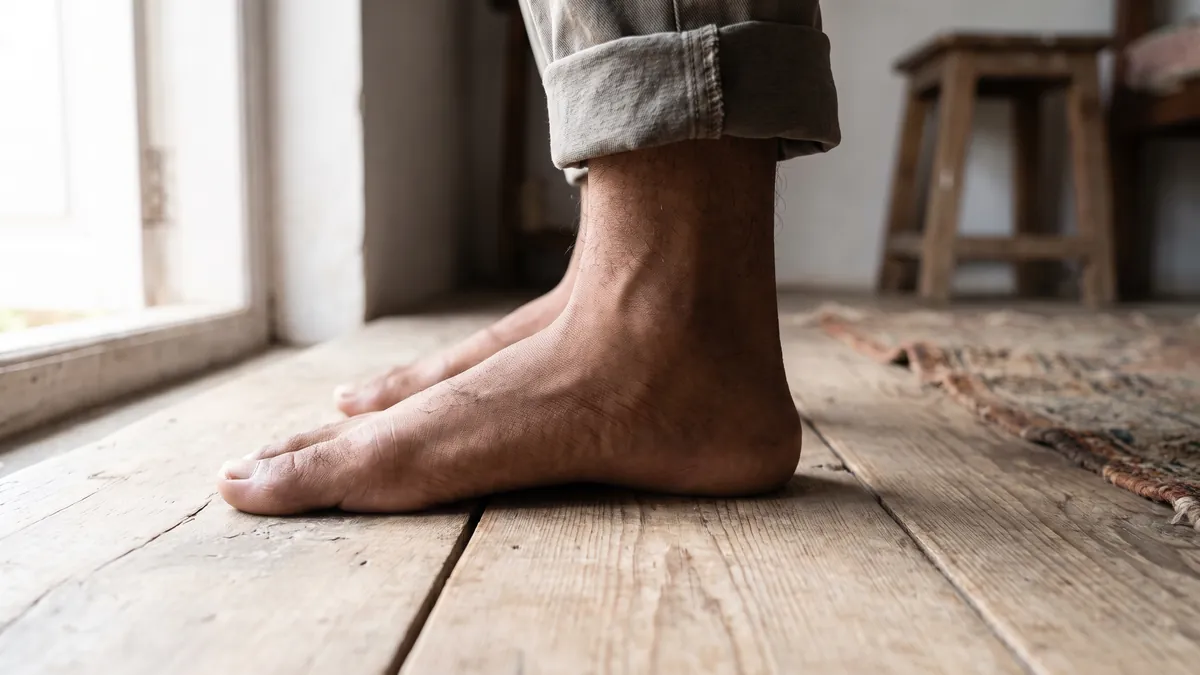
Many people with flat feet have no pain at all and need no treatment. Insoles are worth considering if you have aching arches, heel pain, ankle or knee pain, shin pain or tired legs after standing or walking. Read our full flat feet guide.
How arch support insoles work
When a flat arch collapses with every step, the foot rolls inward (over-pronation). That stretches the plantar fascia, strains the inner ankle, and can twist the shin and knee. A supportive insole:
- Holds the arch so it doesn't collapse fully.
- Cups the heel to keep it stable.
- Spreads pressure across the whole sole instead of the heel and ball.
Types of insoles
| Type | Feel | Best for | Lifespan |
|---|---|---|---|
| Soft gel / silicone insoles | Very cushioned | Tired feet, shock absorption | 6–12 months |
| Semi-rigid arch supports | Supportive with some flex | Flat feet, fallen arches, plantar fasciitis | 12+ months |
| Rigid custom orthotics | Firm, moulded to your foot | Severe deformity, prescribed by a specialist | Years |
| Silicone heel cups | Soft cup for the heel only | Heel pain, heel spur | 6–12 months |
Silicone insoles feel wonderful but mostly add cushioning, not structure — a flat foot can still collapse on a soft gel sheet. For flat feet, a semi-rigid arch support is usually the best balance of support and comfort.
Our pick: Arch Support Semi Pro
The Arch Support Semi Pro (around ₹650) is a semi-rigid insert designed for flat feet, fallen arches and general arch fatigue. Its semi-rigid core keeps the arch aligned through the day while still allowing a natural walking motion, and it is commonly recommended for flat feet and plantar fasciitis.
Which shoes do insoles fit?
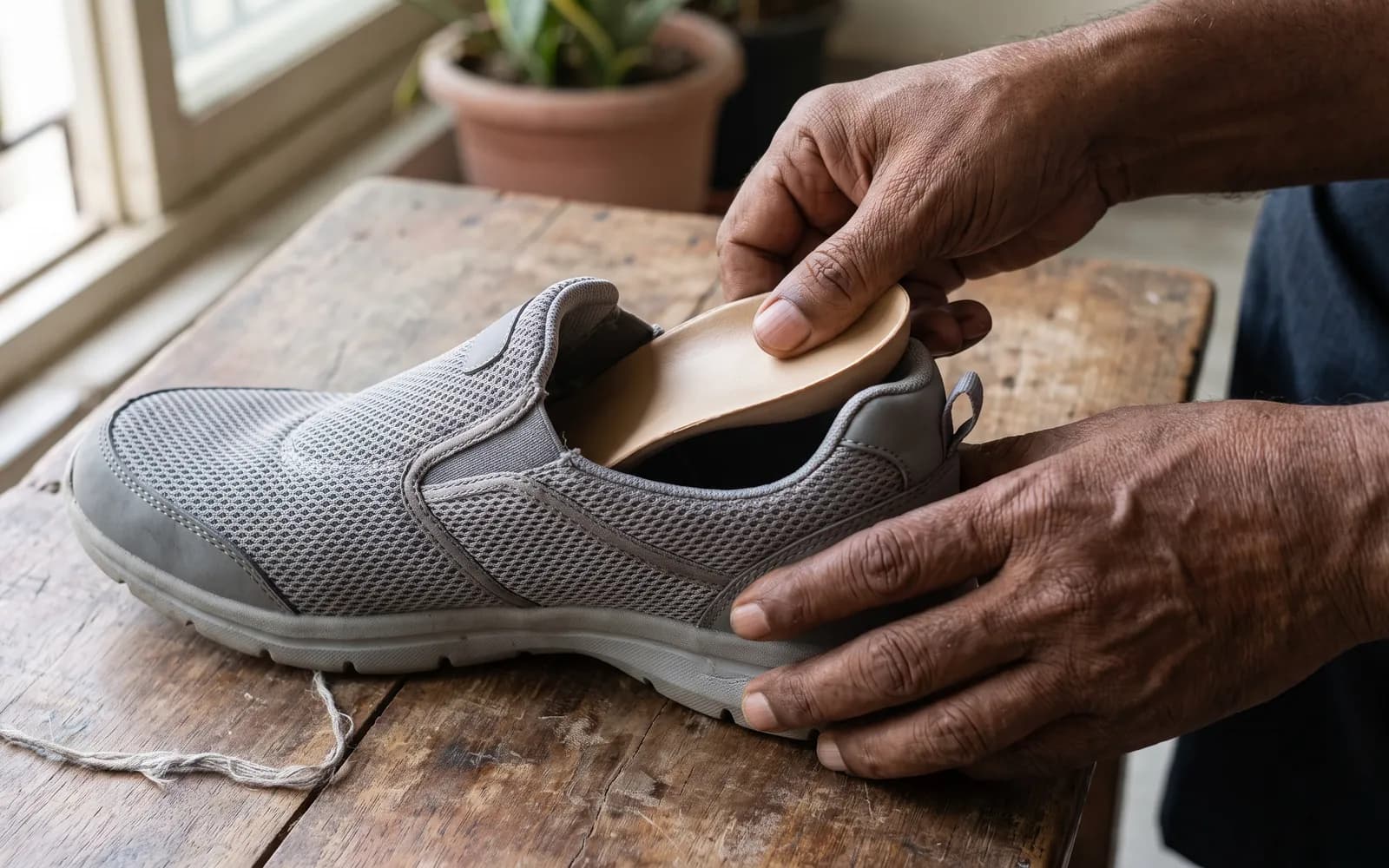
Insoles work best in closed shoes with a removable insole and enough depth:
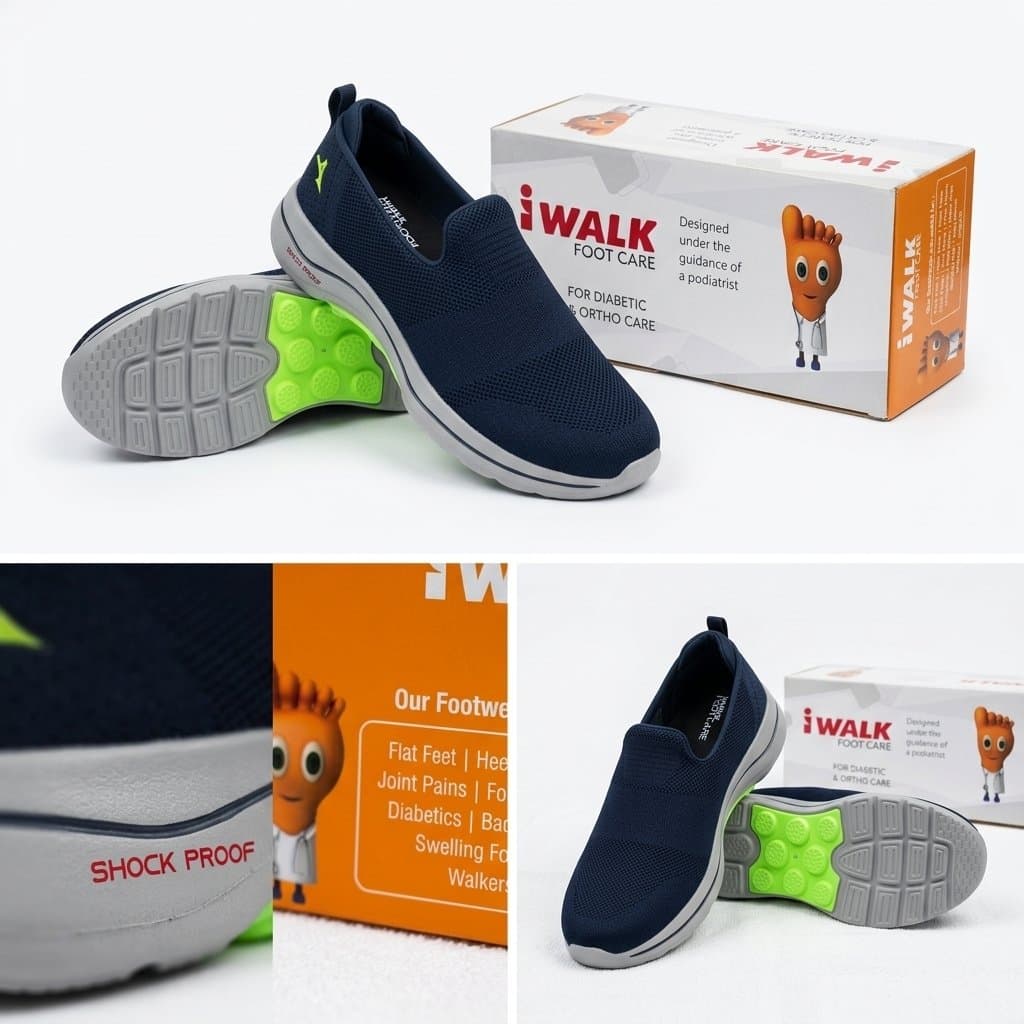
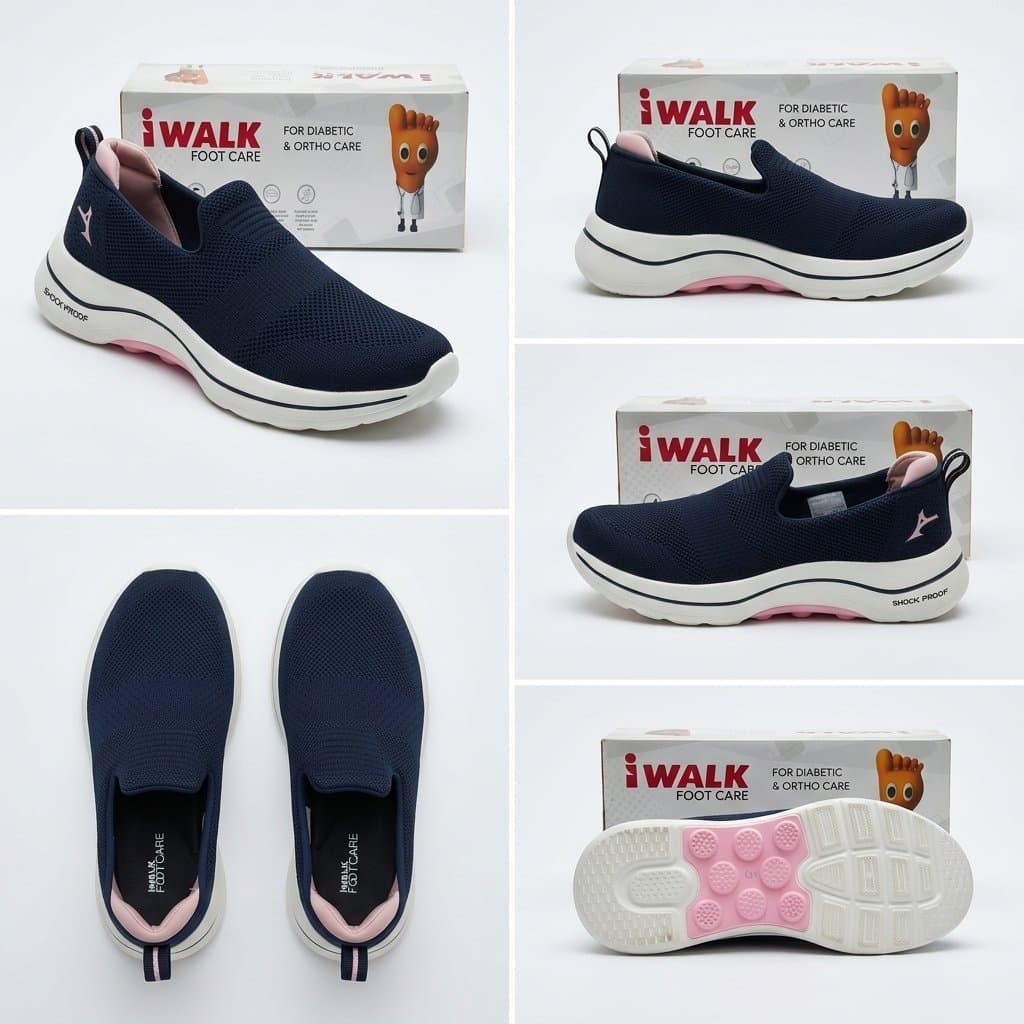
- Walking shoes like the men's and women's walking shoe.
- Sports shoes and school shoes.
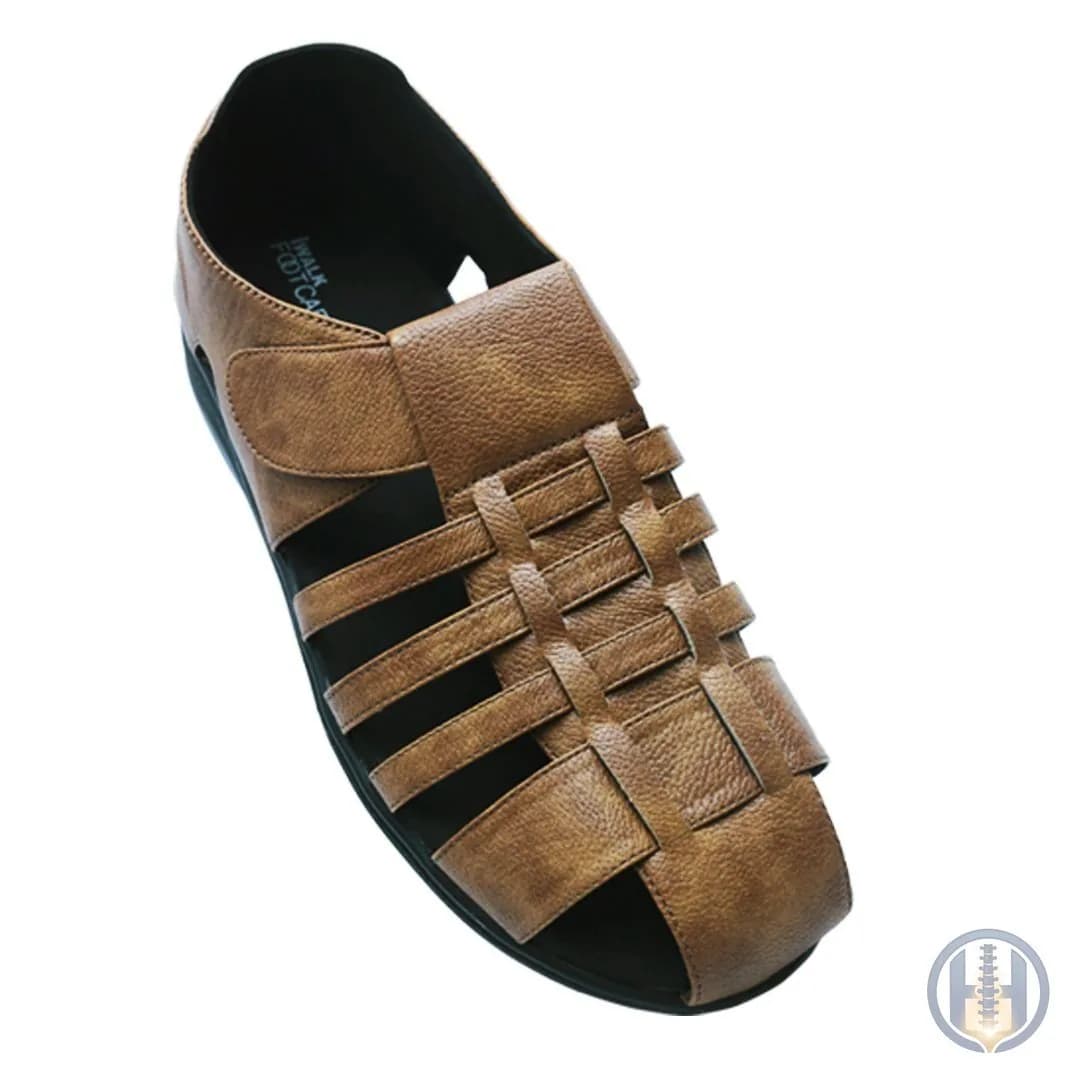
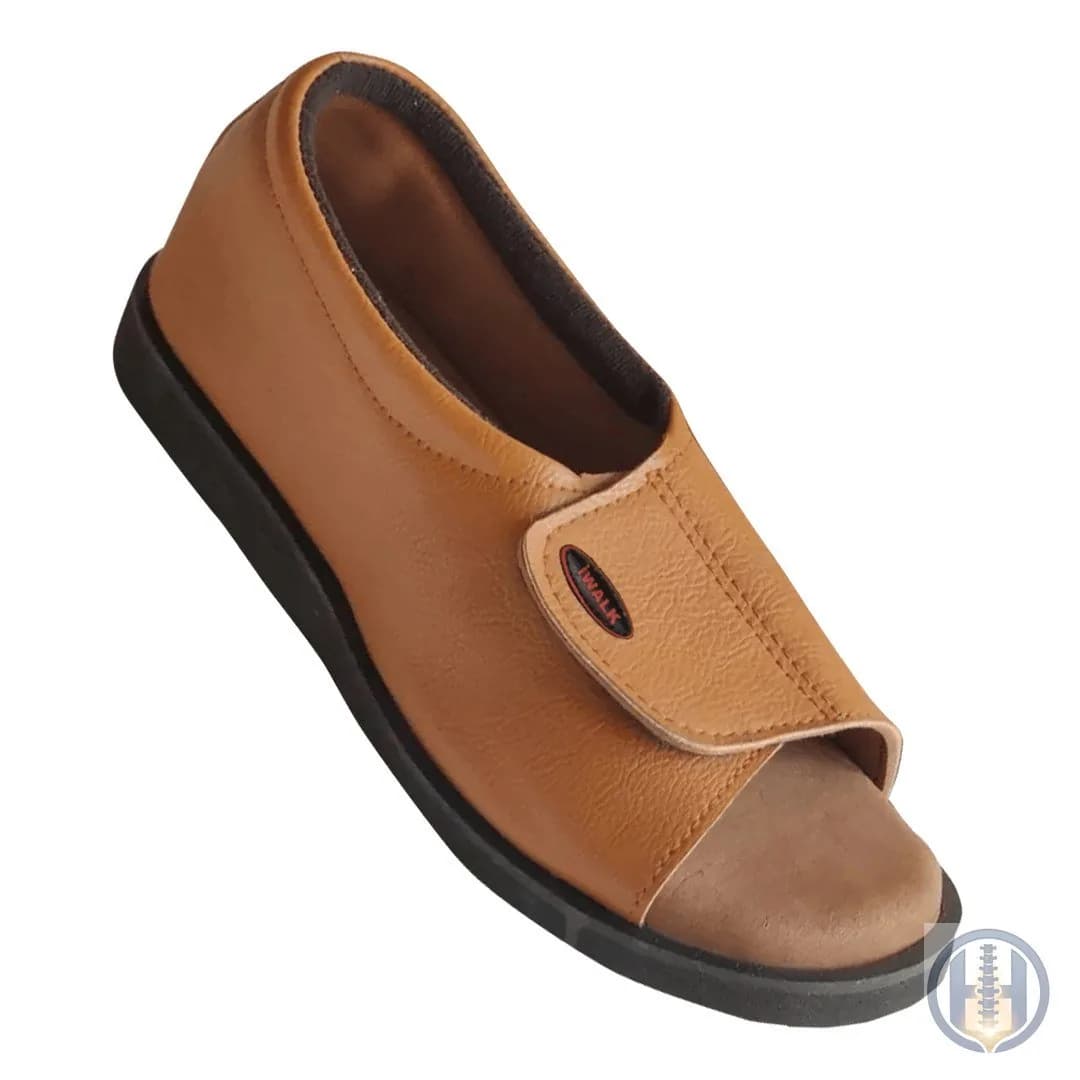
- Extra-depth sandals designed for inserts, such as the AJM 10.
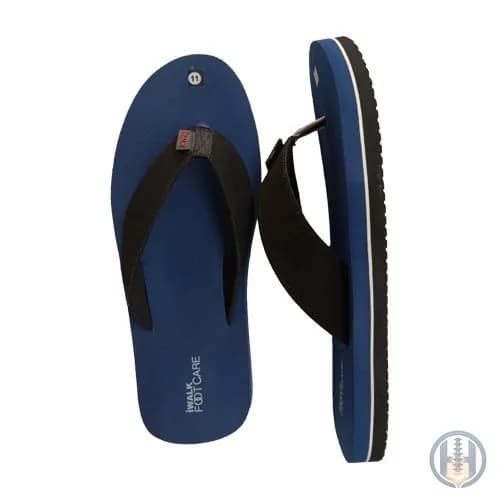
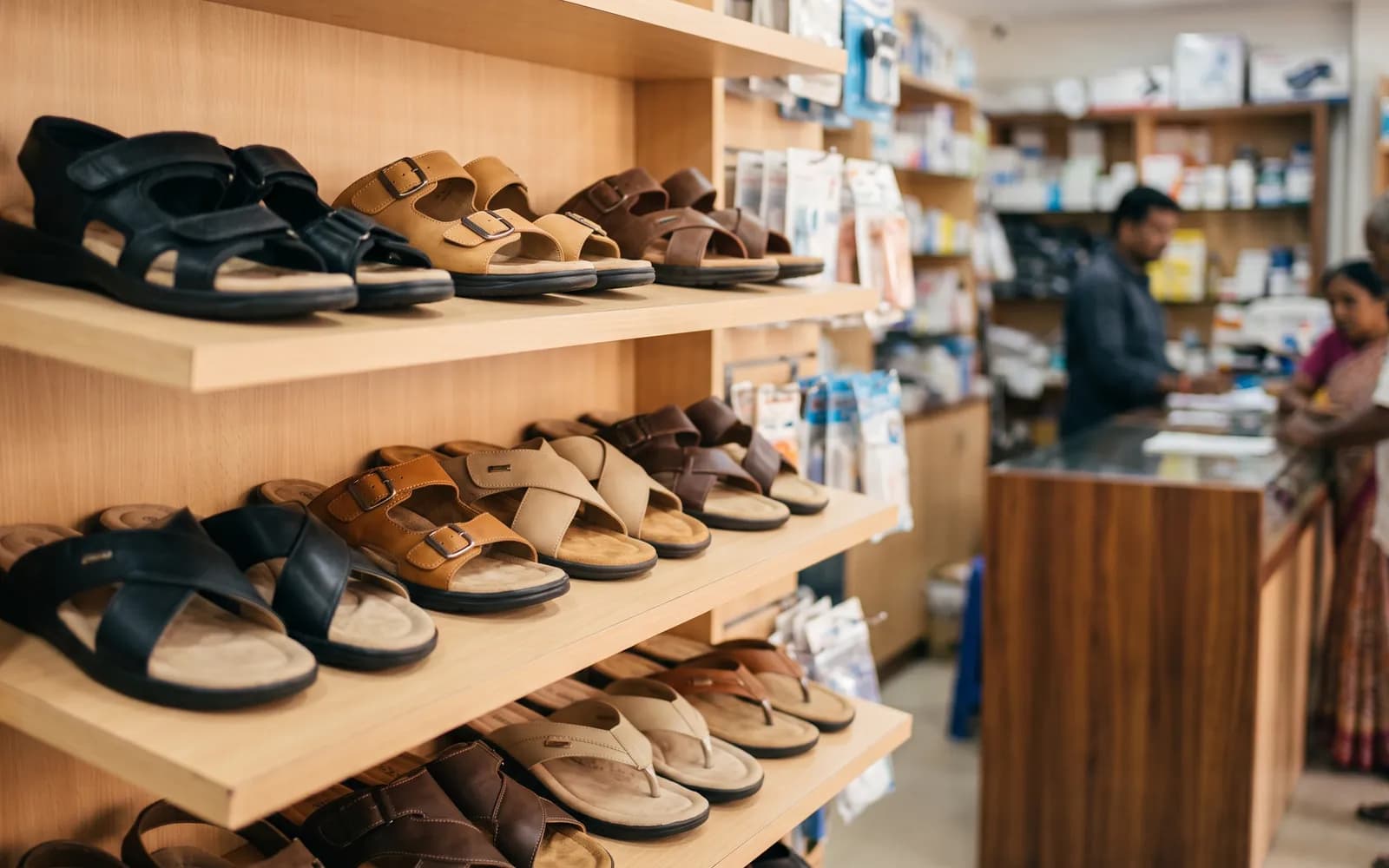
They don't work well in flip-flops or slim sandals — the insert slides around. For those, choose footwear with arch support built in, like the AJM 800 orthopedic flip-flop.
How to start using insoles
- Remove the shoe's existing flat insole if it lifts out, so your heel isn't pushed up.
- Check the fit — your heel should sit in the cup and the arch should match your arch.
- Break in gradually: 1–2 hours on day one, adding an hour or two each day over a week or two.
- Expect some arch awareness at first; sharp pain is not normal — stop and get advice.
- Move them between pairs if you only have one set.
- Replace them when the arch flattens or the top layer wears through.
Insoles plus exercises work best
Insoles support the arch; exercises strengthen it:
- Towel scrunches — pull a towel towards you with your toes, 2 minutes a day.
- Short-foot exercise — without curling your toes, draw the ball of the foot towards the heel to lift the arch; hold 5 seconds, 10 times.
- Calf stretches against a wall, 30 seconds each side.
- Heel raises on both feet, then one foot as you get stronger.
A physiotherapist can tailor a programme — see our home physiotherapy service.
Who should see a specialist?
- Painful flat feet in children or teenagers.
- One foot flatter than the other, or an arch that has recently dropped (this can mean a tendon problem).
- Diabetes with foot deformity — custom orthotics may be needed.
- Pain that continues despite good footwear and insoles.
Hygiene note: used insoles and heel cups can't be returned once removed from sealed packaging. If you're unsure about size or type, WhatsApp us before ordering.
Key takeaways
- Semi-rigid arch support insoles usually work best for flat feet; soft silicone mainly adds cushioning.
- Use them in closed shoes with a removable insole, and break them in gradually.
- Combine insoles with arch-strengthening exercises.
- Get the Arch Support Semi Pro or browse supportive men's and women's footwear.