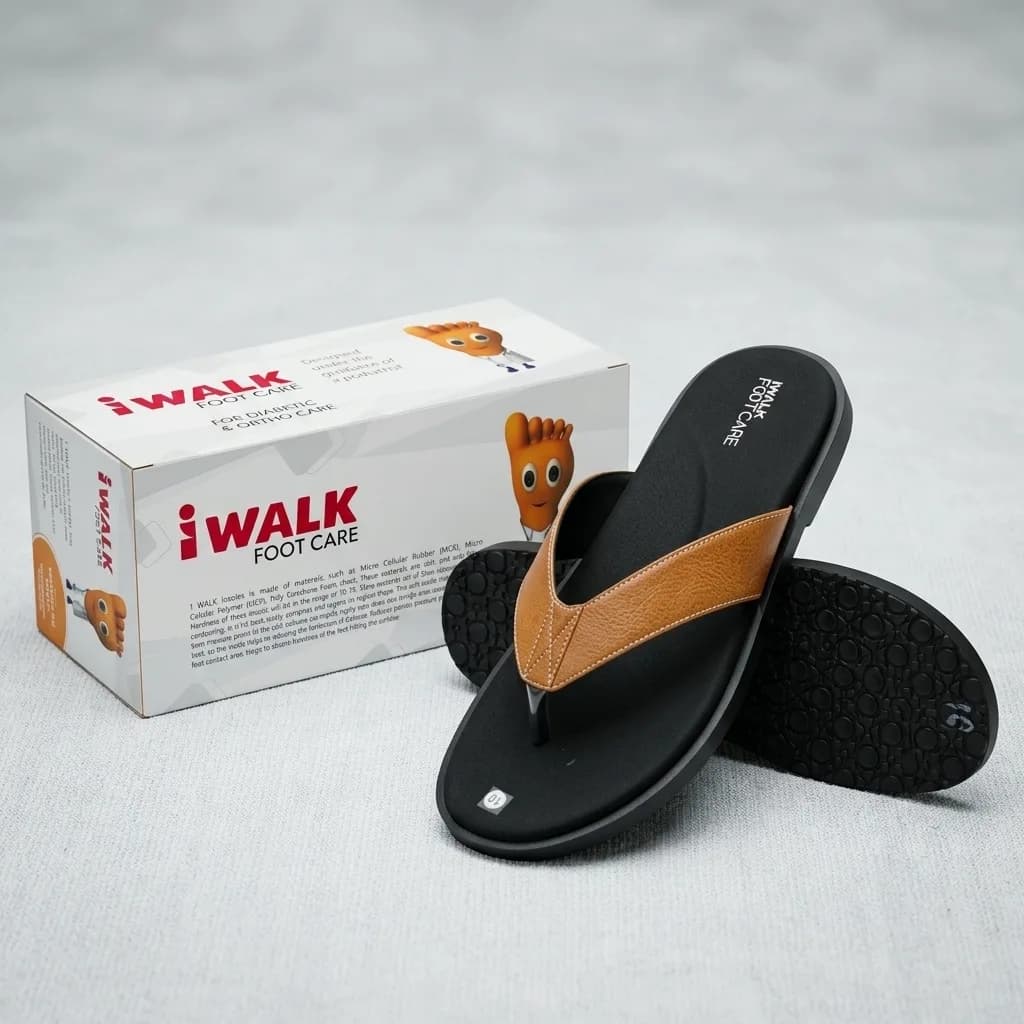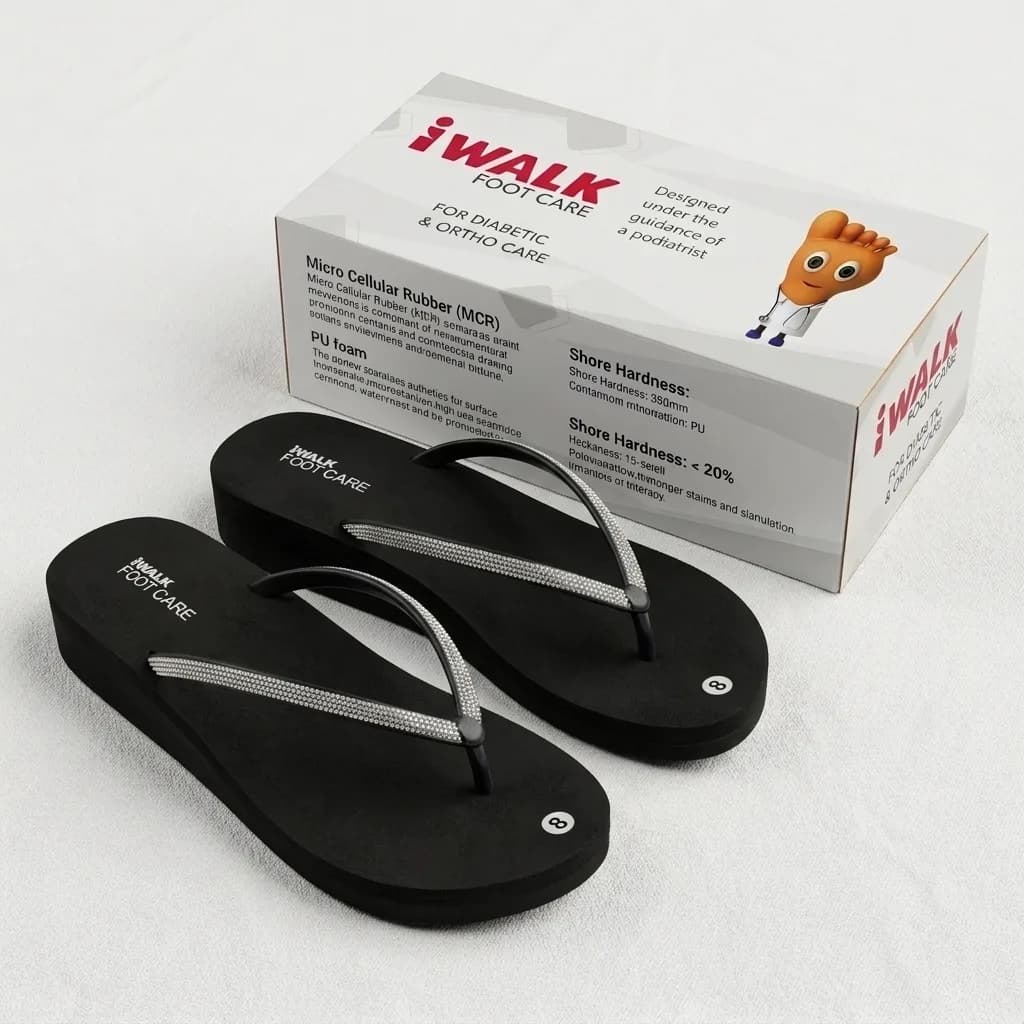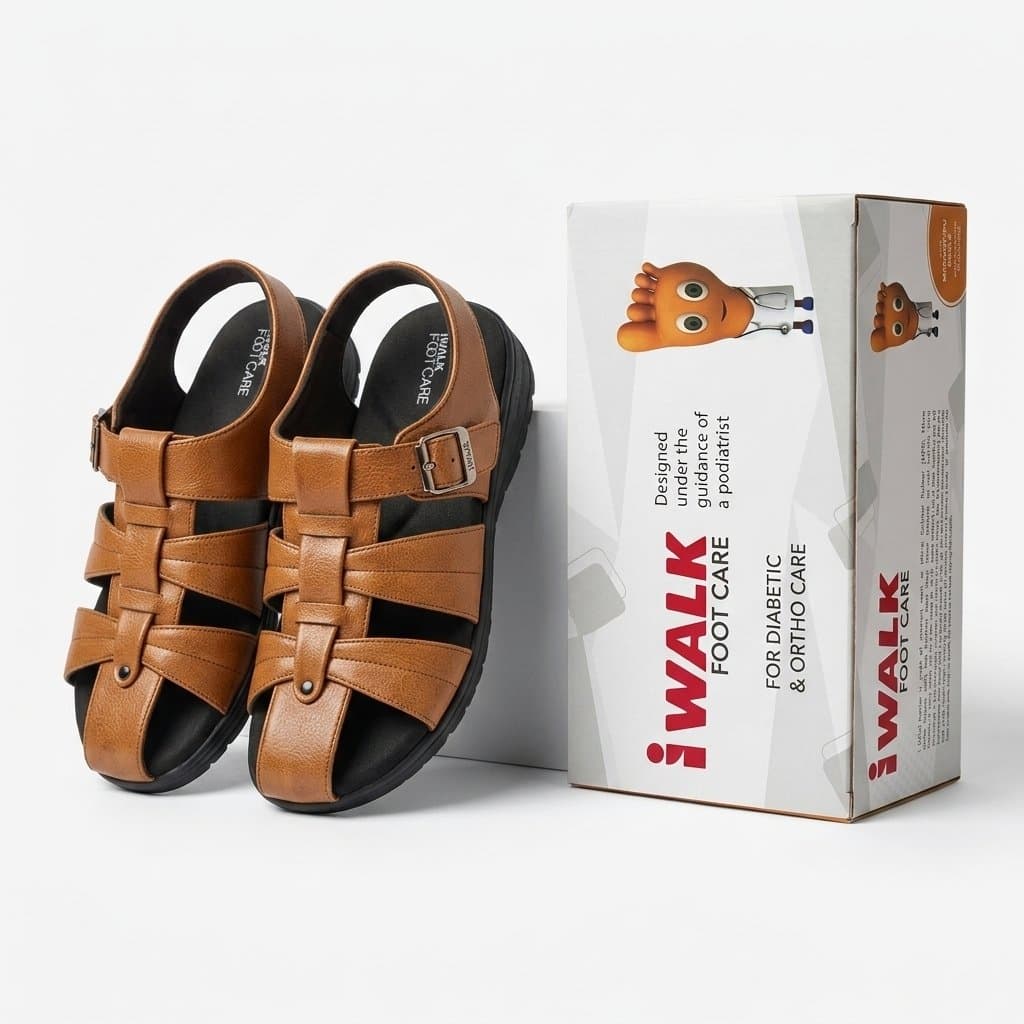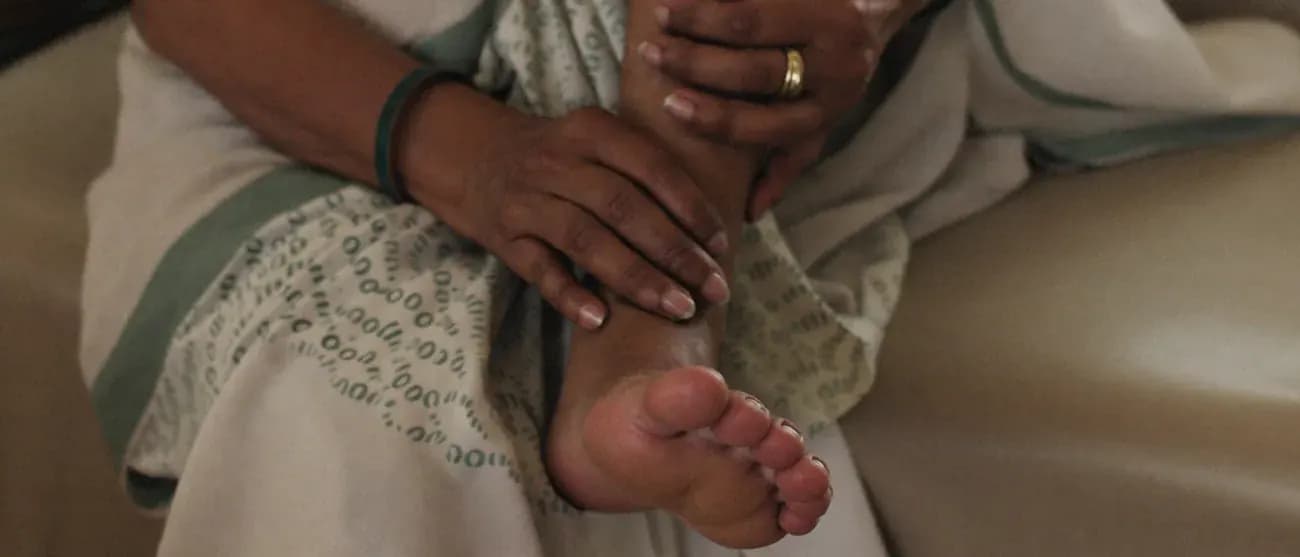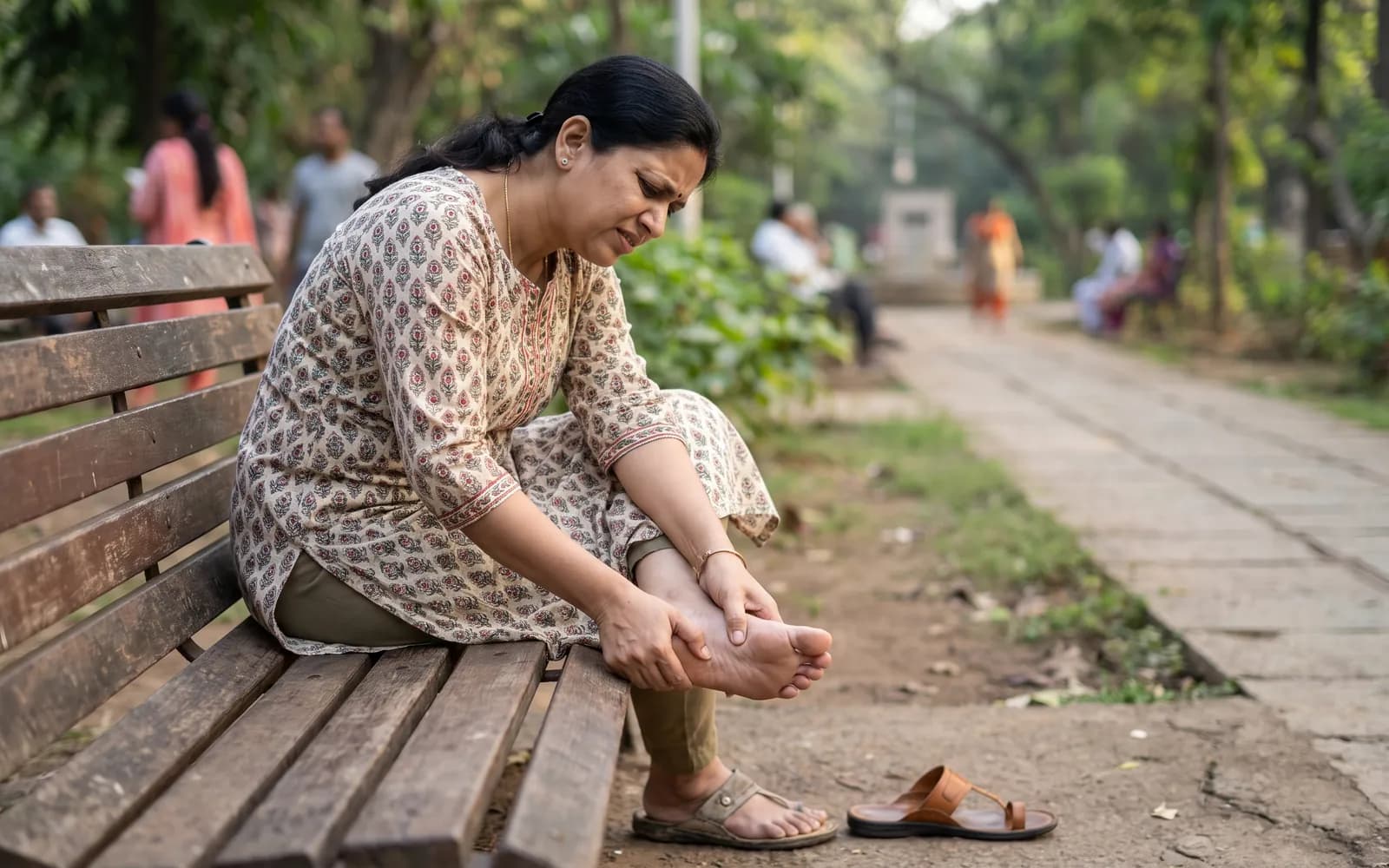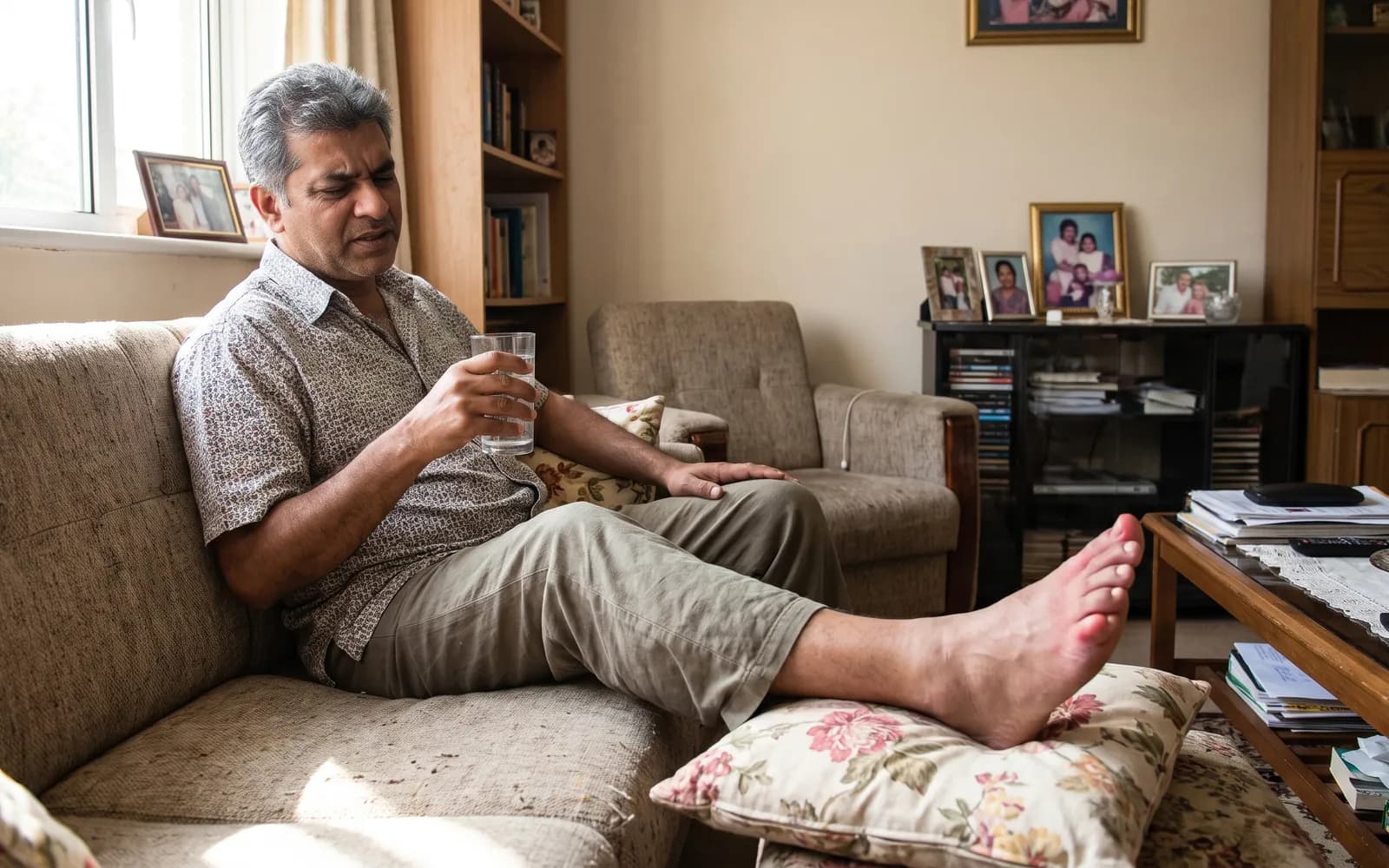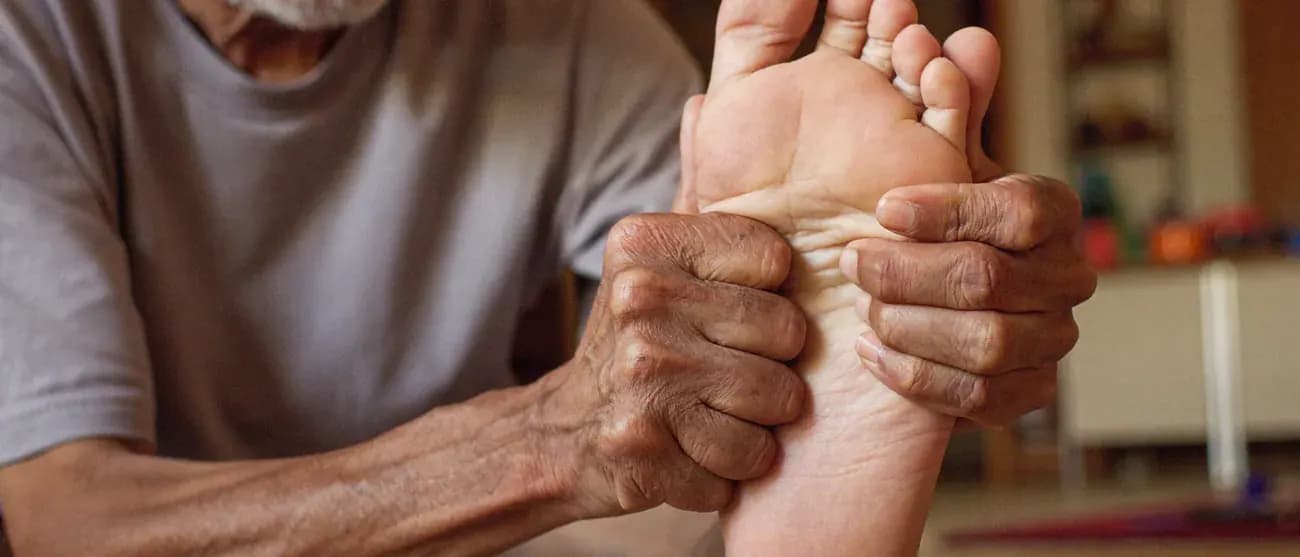
Stand on a wet floor and look at your footprint. If almost the entire sole shows, with little or no curve on the inside, you may have flat feet (fallen arches). Many people with flat feet never have pain. Others get tired, aching feet, heel pain, or pain in the shins, knees or back after standing or walking. For them, footwear with proper arch support is usually the first and simplest step.
Flexible vs rigid flat feet
- Flexible flat feet: the arch appears when you sit or stand on tiptoe and flattens when you stand. This is the most common type.
- Rigid flat feet: there's no arch in any position. This needs a doctor's assessment.
- Adult-acquired flat feet: arches that drop later in life — linked to age, weight gain, pregnancy or tendon strain. See a doctor if one foot changes shape or becomes painful.
Symptoms that suggest your arches need support
- Aching arches or heels after standing
- Feet that tire quickly on walks
- Inner ankle swelling or pain
- Shoes that wear out on the inner edge
- Knee or lower-back ache after long days
How arch support footwear helps
A contoured footbed supports the arch from below, so the foot doesn't roll inwards with every step. That reduces strain on the plantar fascia, the inner ankle tendons and — further up — the knees. Good arch-support footwear combines:
- A contoured MCP footbed with a defined arch
- A cupped heel that keeps the heel upright
- A stable, non-twisting sole
- Secure straps or a closed back
What to avoid
- Completely flat, thin slippers and flip-flops
- Very soft, squashy footwear with no structure
- Worn-out pairs that tilt inwards
- Long periods barefoot on hard floors
Simple exercises
These are commonly suggested to strengthen the small foot muscles (stop if they cause pain):
- Towel scrunches — curl a towel towards you with your toes, 2–3 minutes a day.
- Short-foot exercise — gently lift your arch without curling your toes; hold 5 seconds, repeat 10 times.
- Heel raises — rise onto your toes slowly, 10–15 times.
- Calf stretches — tight calves make flat feet worse.
A physiotherapist can tailor a programme — we offer home physiotherapy in Chennai.
Flat feet at work and on walks
- Long standing: choose a cushioned arch-support sandal or shoe and stand on a soft mat where possible.
- Walking for exercise: a closed walking shoe or walker sandal with a firm heel counter gives the most stability.
- At home: keep a supportive indoor pair — hard floors are hardest on flat feet.
- Travel and pilgrimages: break in new footwear before the trip, and take a second pair.
Common myths about flat feet
- "Flat feet always need treatment." Not true — many people with flat feet have no symptoms and need nothing special.
- "Softer footwear is better." Very soft, unstructured footwear can let the foot roll in more. Support matters as much as softness.
- "Arch support will make my muscles weak." Supportive footwear used alongside simple strengthening exercises is a sensible combination.
- "It's only a foot problem." Flat feet can contribute to ankle, knee and even back discomfort, which is why improving foot mechanics can help elsewhere.
When to see a doctor
See a doctor if one foot becomes flatter than the other, if there's pain or swelling on the inside of the ankle, or if pain limits your walking despite supportive footwear.
Key takeaways
- Flat feet only need treatment if they cause symptoms.
- Choose contoured arch support + heel cup + stable sole.
- Pair footwear with simple strengthening exercises. Also read plantar fasciitis footwear. Shop men's and women's arch-support footwear.