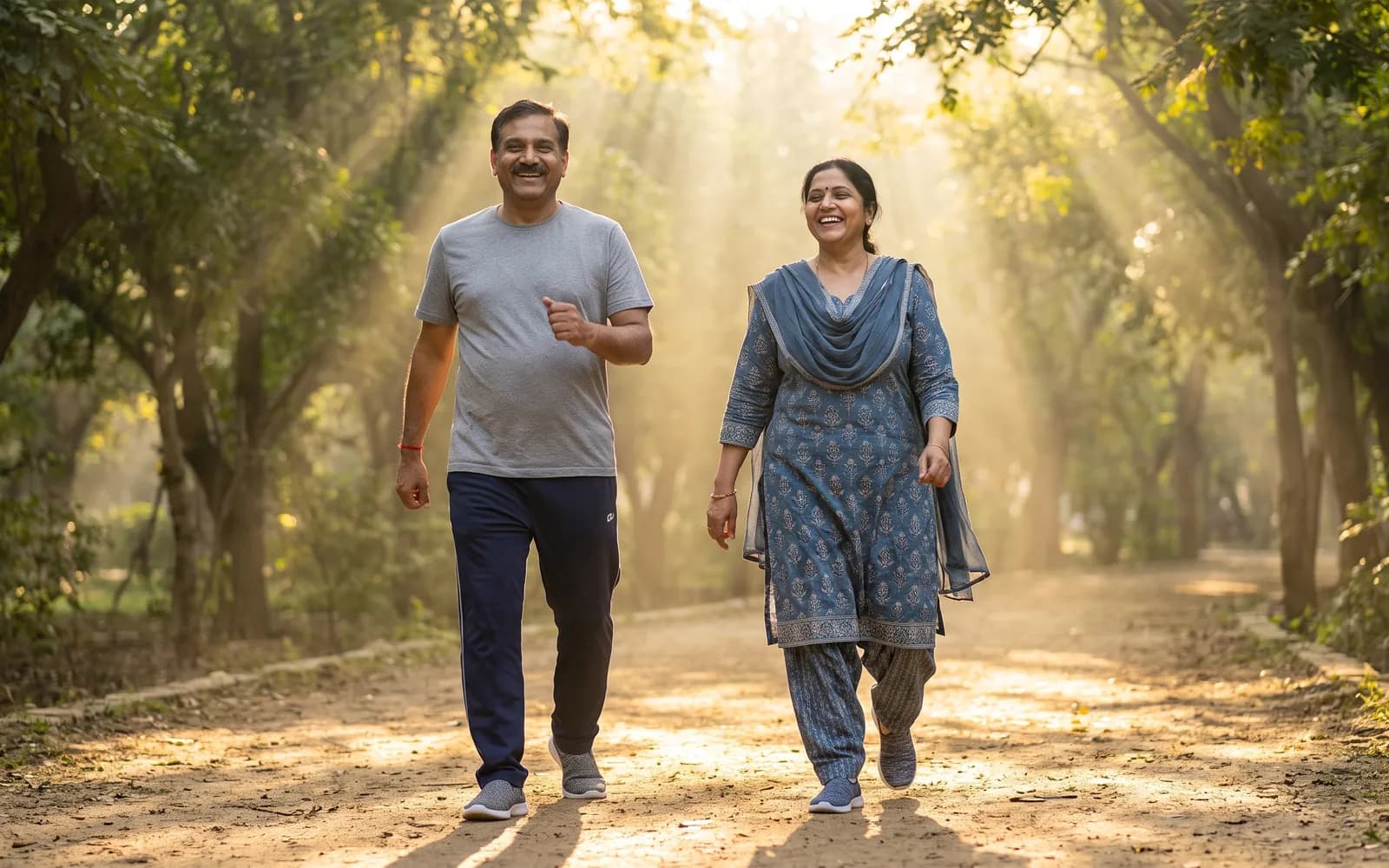
Walking is the most popular exercise in India — in parks, on beach promenades, on apartment terraces and around the colony. Yet many people walk in old sports shoes, rubber chappals or fashion sneakers, and then wonder why their heels, knees or back hurt.
This guide explains what the best walking shoes need, how they differ from running and sports shoes, and how to choose a pair for your feet — including if you have heel pain, knee pain, flat feet or diabetes.
Walking shoes vs running shoes vs sports shoes
| Walking shoe | Running shoe | Casual sports shoe | |
|---|---|---|---|
| Heel | Cushioned, stable for heel strike | Very thick, high | Often thin |
| Flex | Bends at the ball of the foot | Bends easily | Varies |
| Weight | Light | Very light | Often heavy |
| Purpose | Steady daily walks | Fast running | Looks / casual |
When you walk, your heel lands first and you roll through to your toes. A walking shoe is built for exactly that: a cushioned, stable heel and a sole that flexes under the ball of the foot.
What to look for in walking shoes
Cushioned, shock-absorbing sole. This protects heels, knees and lower back on hard tracks and roads.
Breathable upper. In Indian heat and humidity, a knit or mesh upper keeps feet cooler and drier, which helps prevent fungal infections and blisters.
Light weight. Heavy shoes tire your legs and make you less likely to walk regularly.
Firm heel counter. The back of the shoe should hold your heel steady, not collapse when you press it.
Room for the toes. You should be able to wiggle all your toes. A cramped toe box causes corns and black toenails.
Easy on and off. A slip-on walking shoe is handy for older walkers and anyone who struggles with laces.
Walking shoes for men
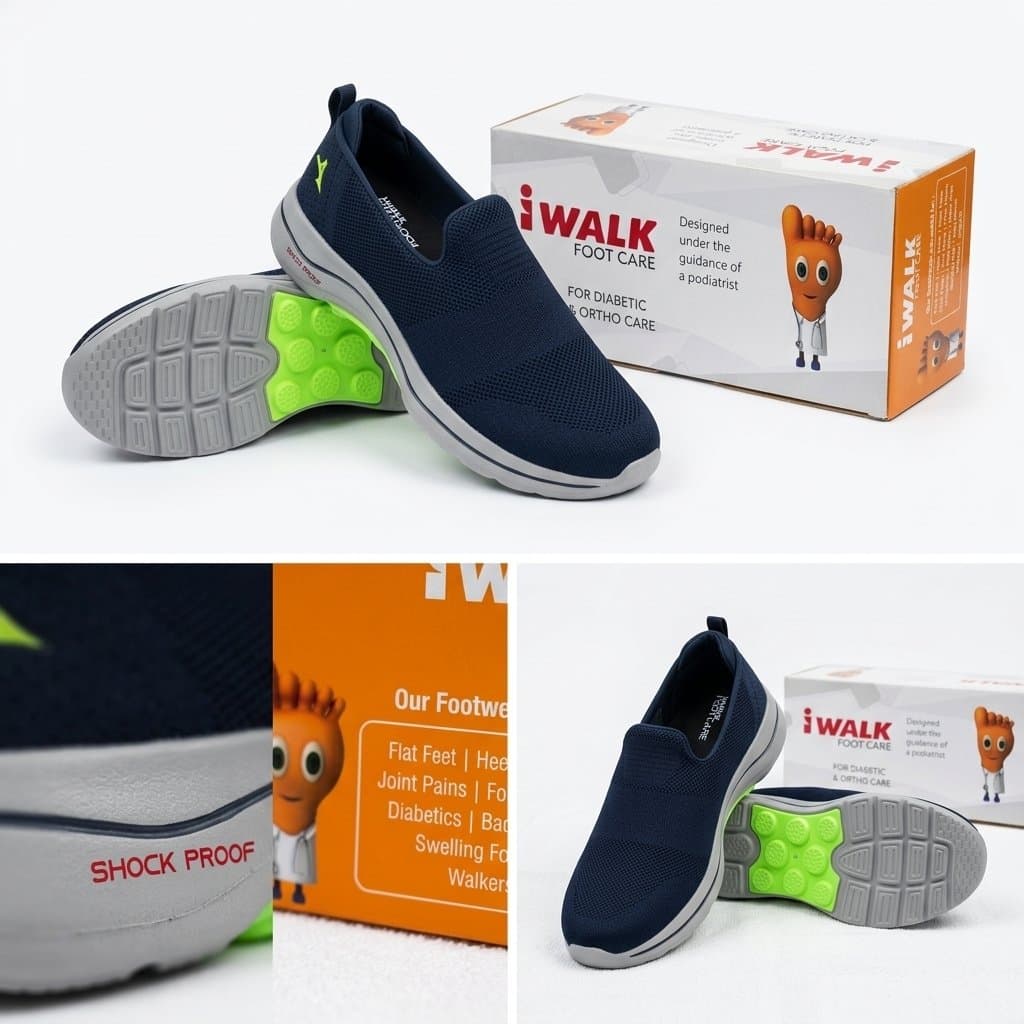
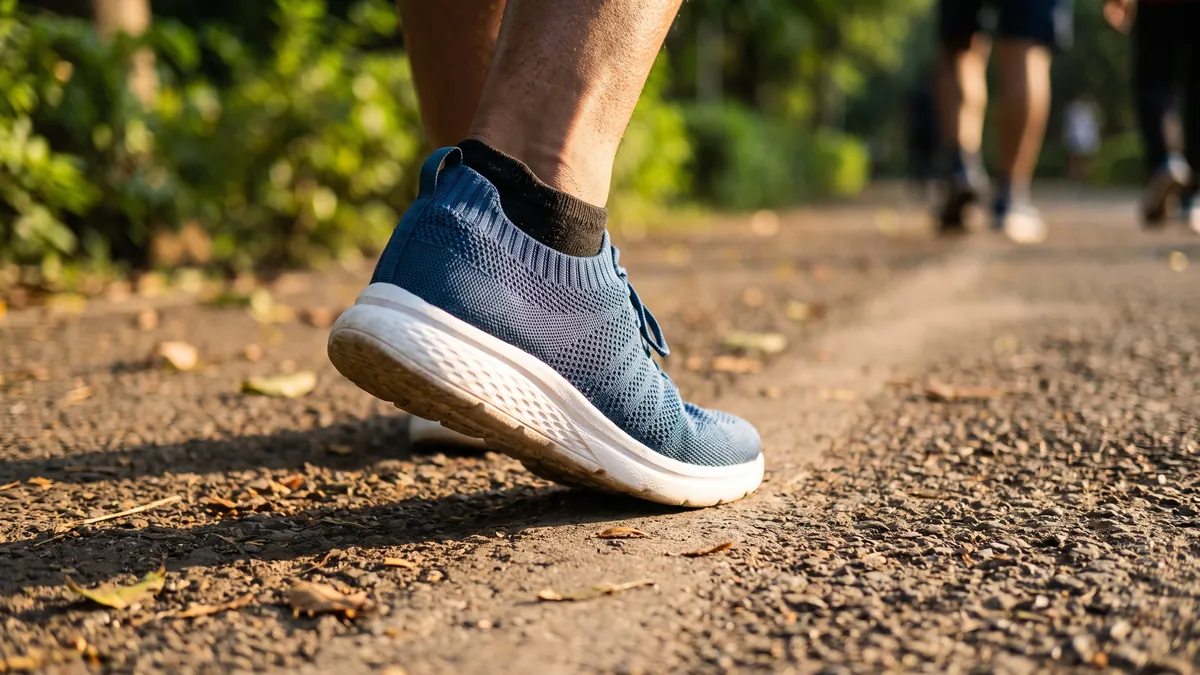
Men's feet are often broader and heavier, so cushioning and width matter most. The iWALK Men's Walking Shoe has a breathable knit upper, a cushioned footbed and a shock-absorbing rubber sole in a slip-on design — orthopedic and diabetic-friendly. Sizes run from 6 to 13.
Walking shoes for women
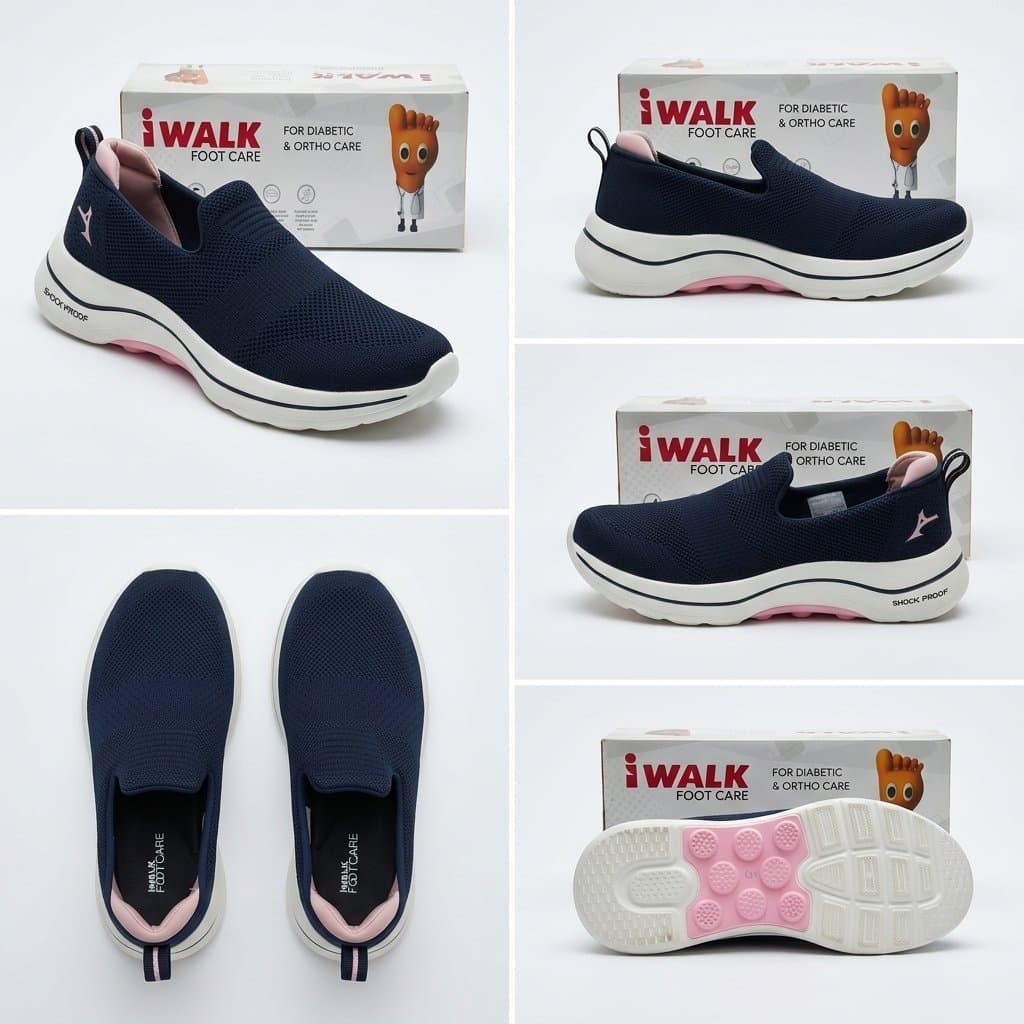
Women often need a slightly narrower heel and a lighter shoe. The iWALK Women's Walking Shoe offers the same breathable knit and cushioned, shock-absorbing sole in a women's fit.
Walking shoes for specific problems
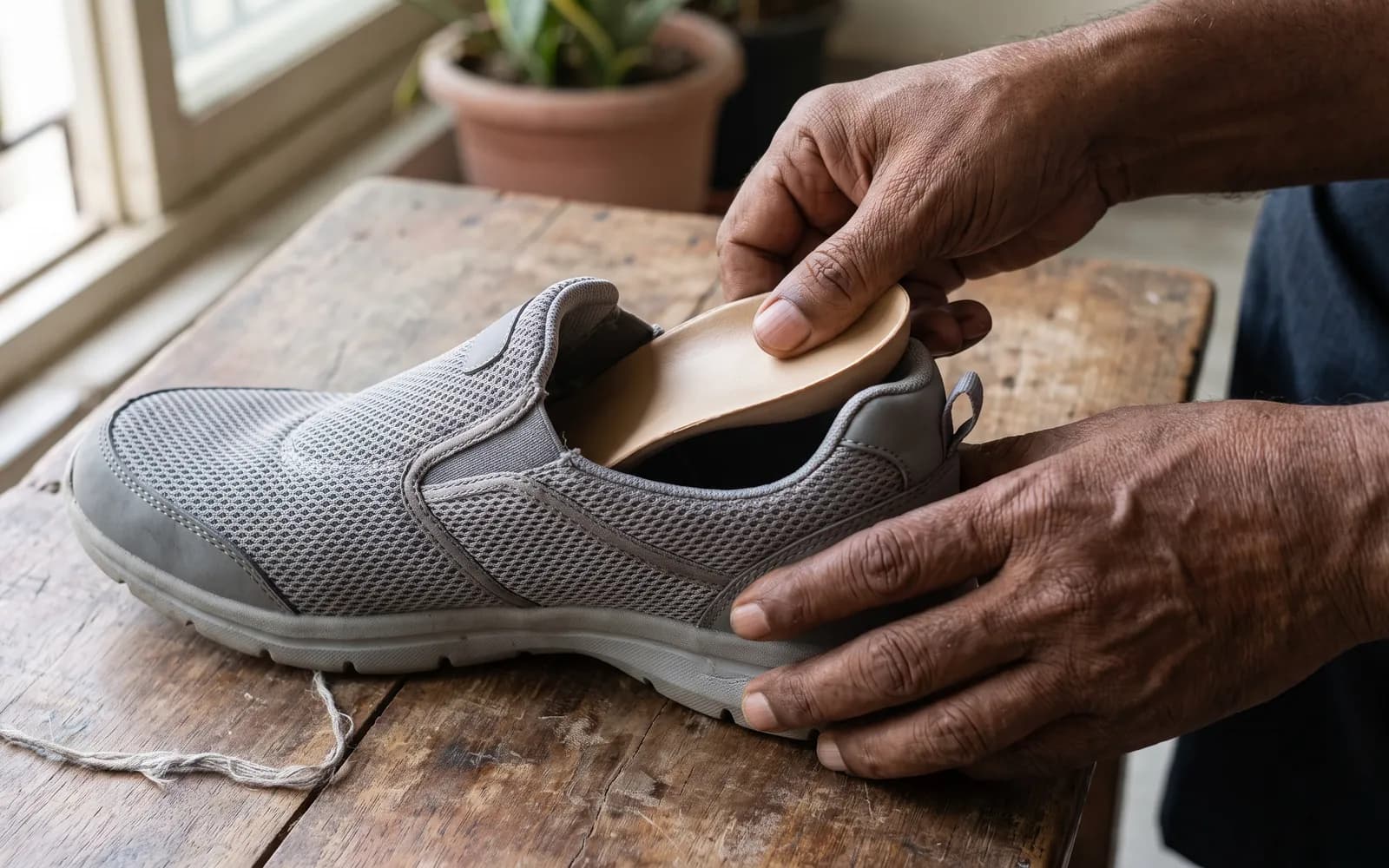
Heel pain or plantar fasciitis: extra heel cushioning plus arch support. If your shoe's own insole is flat, add an arch support insert. See walking footwear for heel pain.
Knee pain: shock absorption matters most — avoid thin soles and walk on softer tracks when possible (footwear for knee pain).
Flat feet: a stable heel plus arch support. Our insoles for flat feet guide explains when an insert helps.
Diabetes: soft, seam-free uppers, a roomy toe box, and always wear socks. Check your feet after every walk (walking for diabetes).
How to get the right fit
- Try shoes in the evening after you've been on your feet.
- Wear the socks you walk in.
- Leave about a thumb's width (1–1.5 cm) in front of the longest toe.
- Check the heel doesn't slip up and down as you walk.
- Walk on a hard floor in the shop for a minute or two.
Walking tips for comfortable, pain-free walks
- Start gradually — 15–20 minutes, then add 5 minutes a week.
- Warm up with ankle circles and a calf stretch.
- Walk early or late to avoid the midday heat.
- Prefer even surfaces — park tracks over broken pavements; firm sand over soft sand.
- Replace walking shoes every 600–800 km or roughly once a year if you walk daily; flattened cushioning is a common cause of new pain.
Walking shoes or orthopedic sandals?
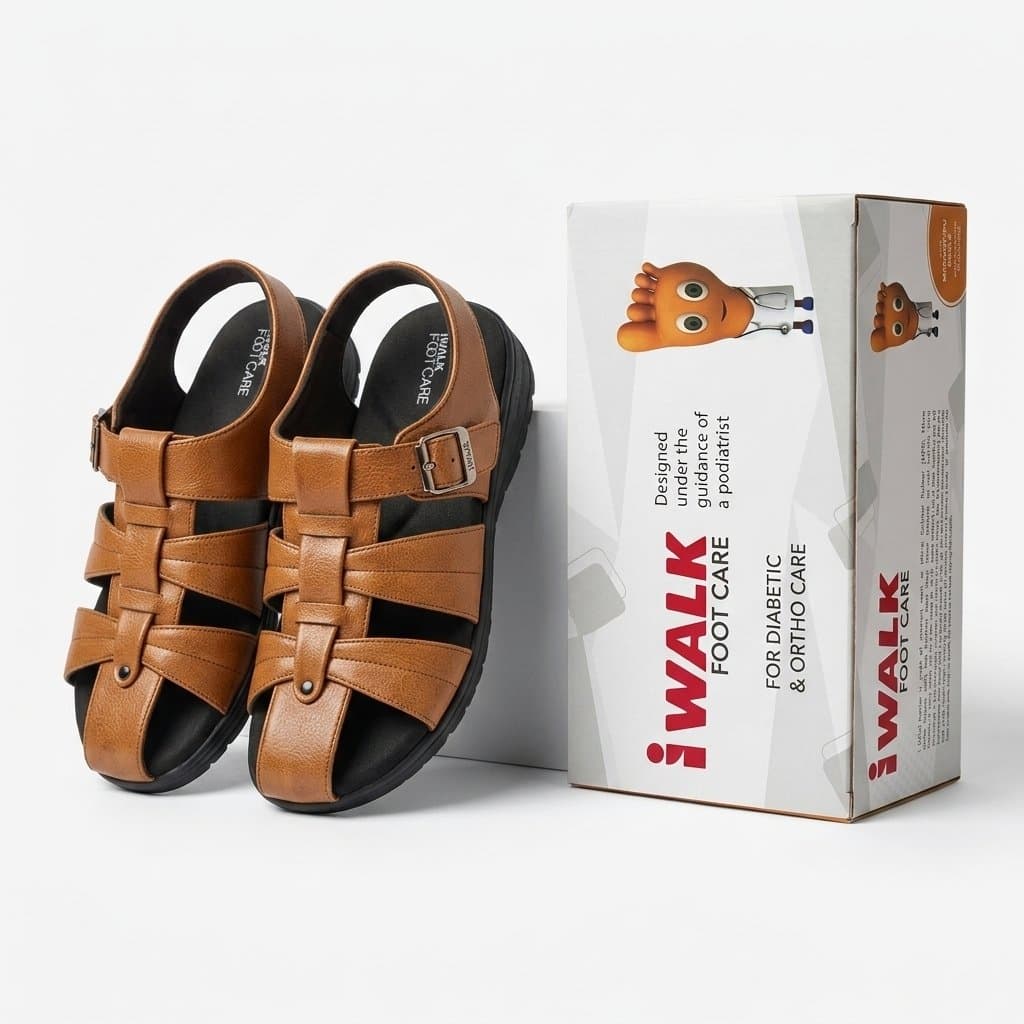
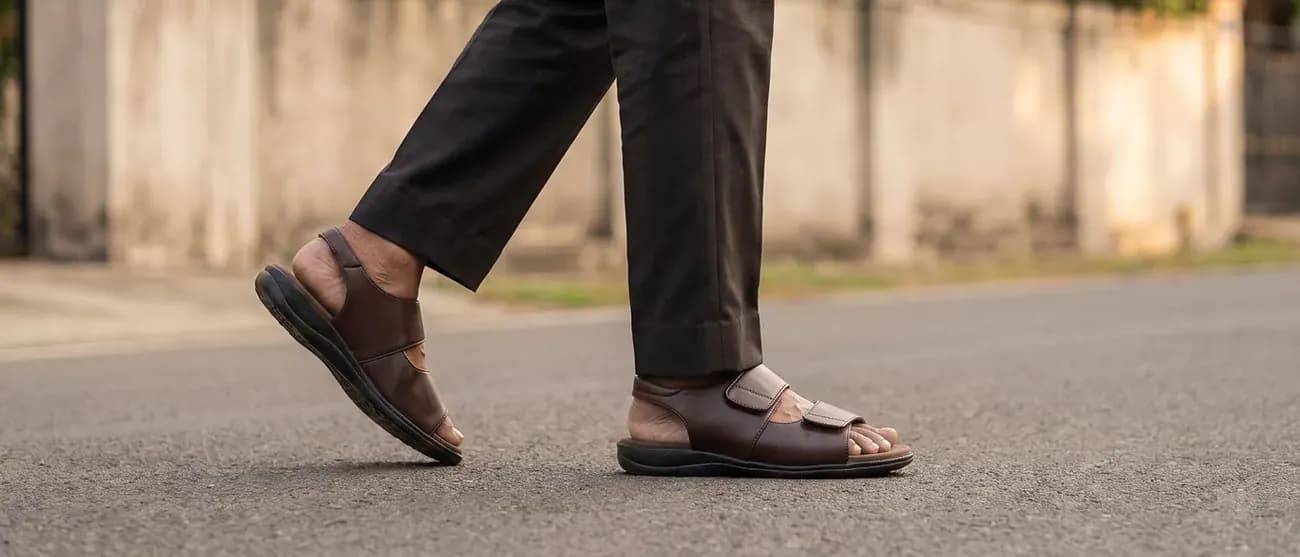
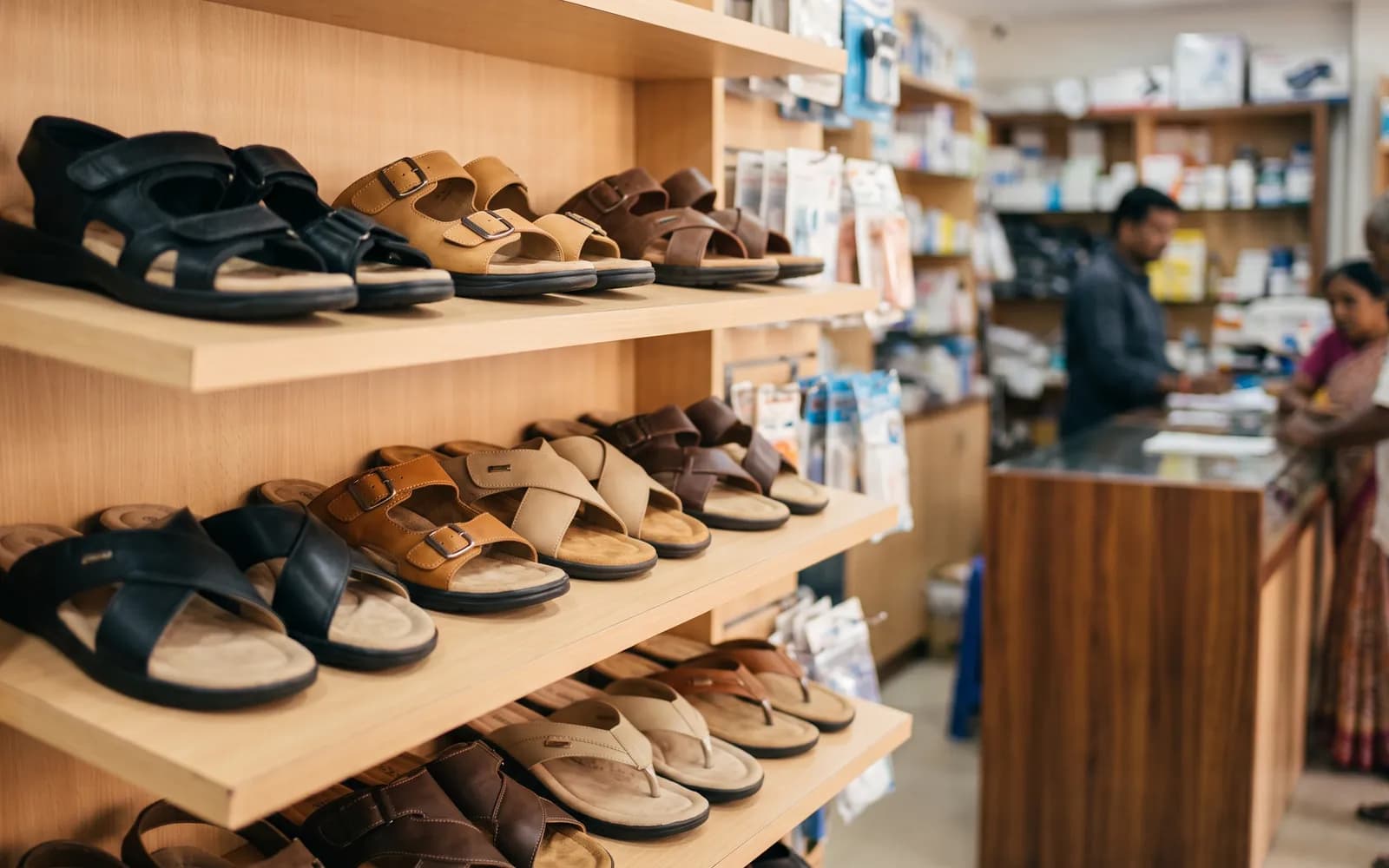
For dedicated exercise walks, a closed walking shoe gives better protection and stability. For short errands and around the neighbourhood, a supportive sandal such as the AJM Walker is cooler and easier. Many of our customers keep one of each.
Buying walking shoes for a parent? Slip-on walking shoes are easier for older walkers. WhatsApp us their usual chappal size and we'll help convert it to a shoe size.
Key takeaways
- The best walking shoes have a cushioned, stable heel, a breathable upper, light weight and room for the toes.
- Walking shoes are built for heel-to-toe rolling, unlike running or casual sports shoes.
- Add an arch support insert for flat feet or heel pain.
- Shop walking shoes and supportive sandals for men and women.