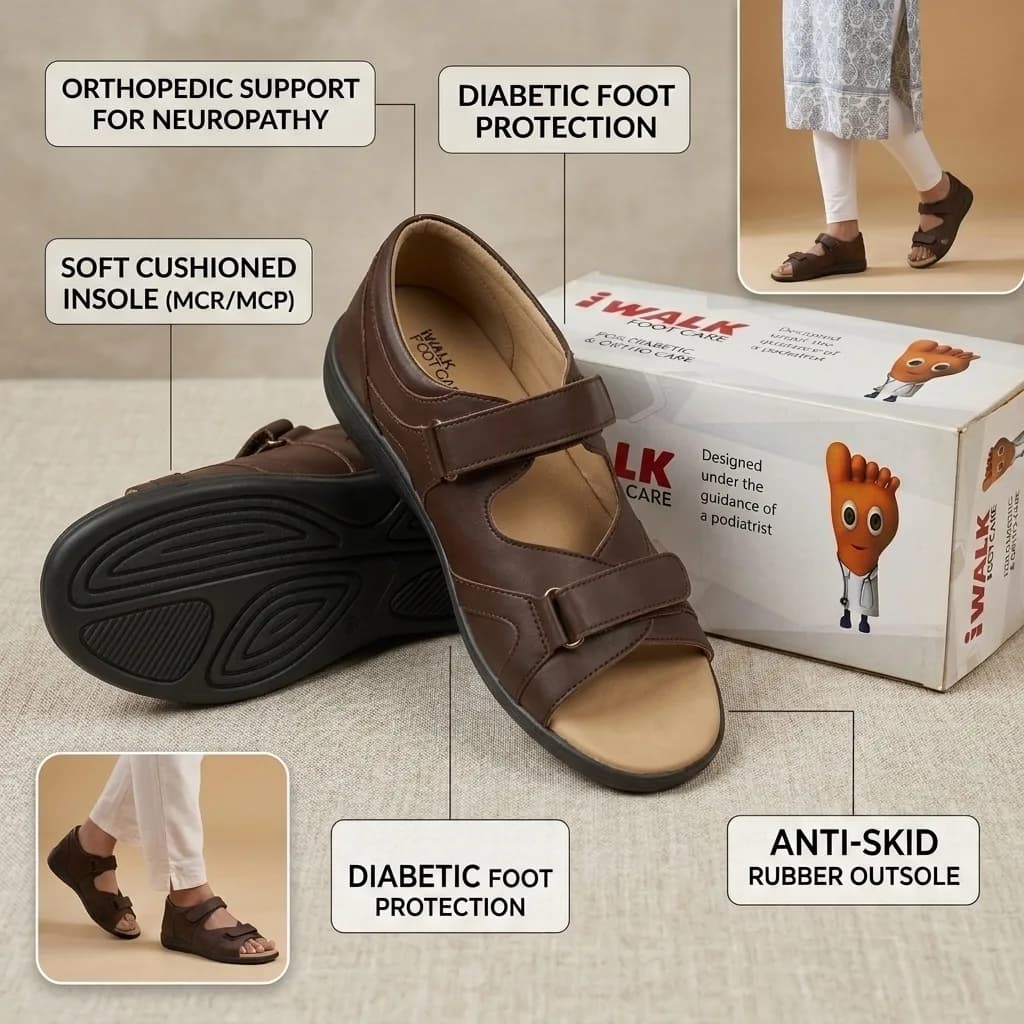
Many men put up with foot pain for years — "it's just age" or "it's the job". But heel pain, aching arches, knee strain and diabetic foot risks are often made worse by flat, hard footwear. Orthopedic footwear for men now comes in styles you can wear to the office, a wedding or the morning walk.
Who benefits most
- Men with diabetes — protection from pressure and rubbing (diabetic footwear guide)
- Heel pain / plantar fasciitis — common in men who stand or walk a lot (read more)
- Knee or back ache aggravated by hard soles (footwear and knee pain)
- Shopkeepers, security staff, drivers, teachers and field workers on their feet all day
- Senior men who need stable, easy-to-wear footwear
Four styles compared
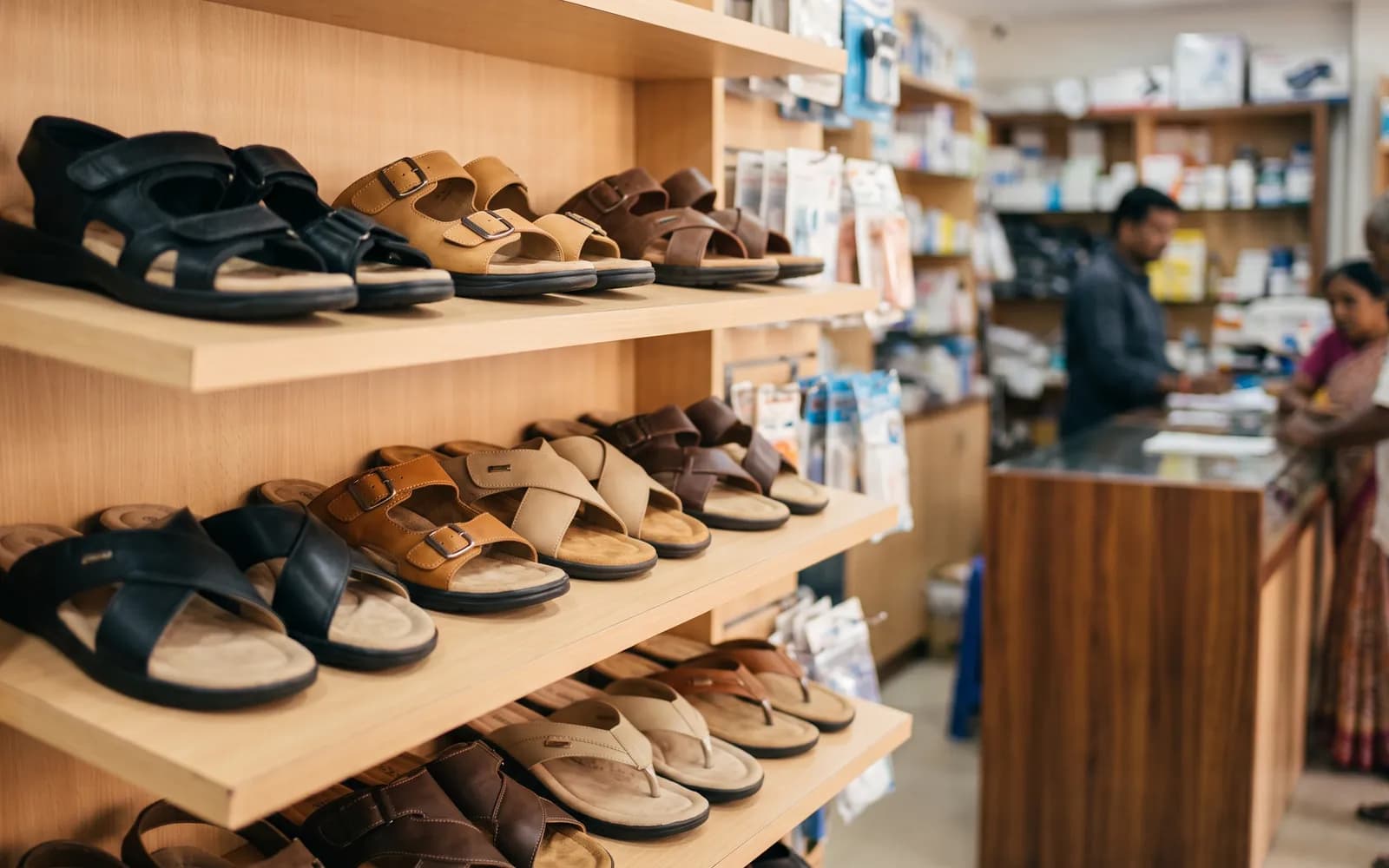
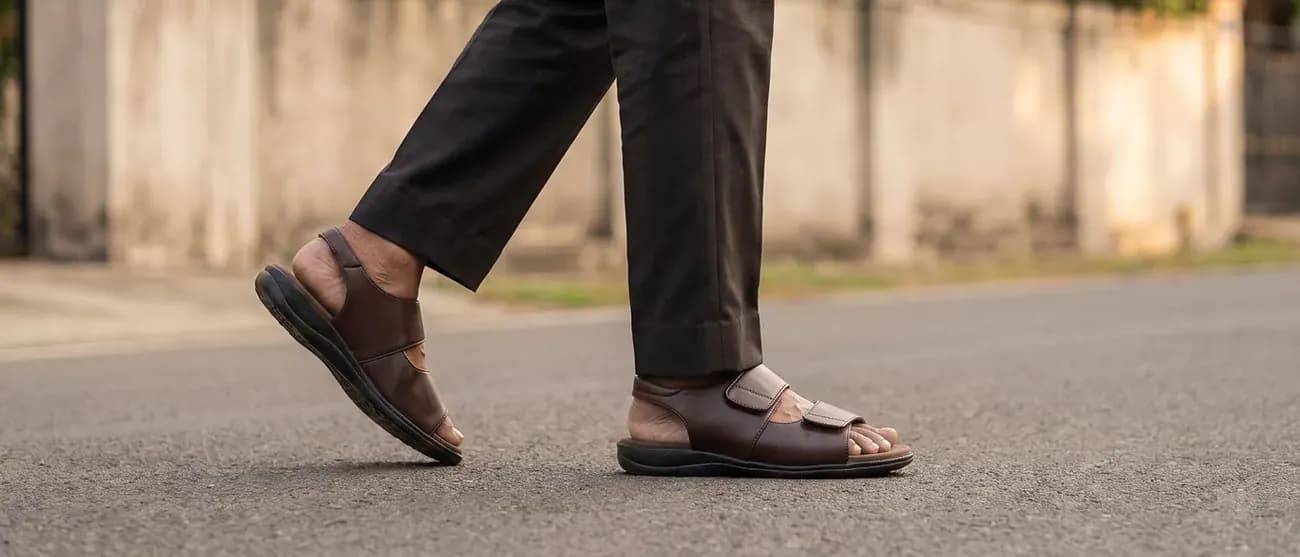
1. Strap sandals (everyday)
Cool, breathable and adjustable — ideal for Chennai weather. Good for home, errands and office wear with trousers. Choose velcro or buckle straps so you can adjust through the day.
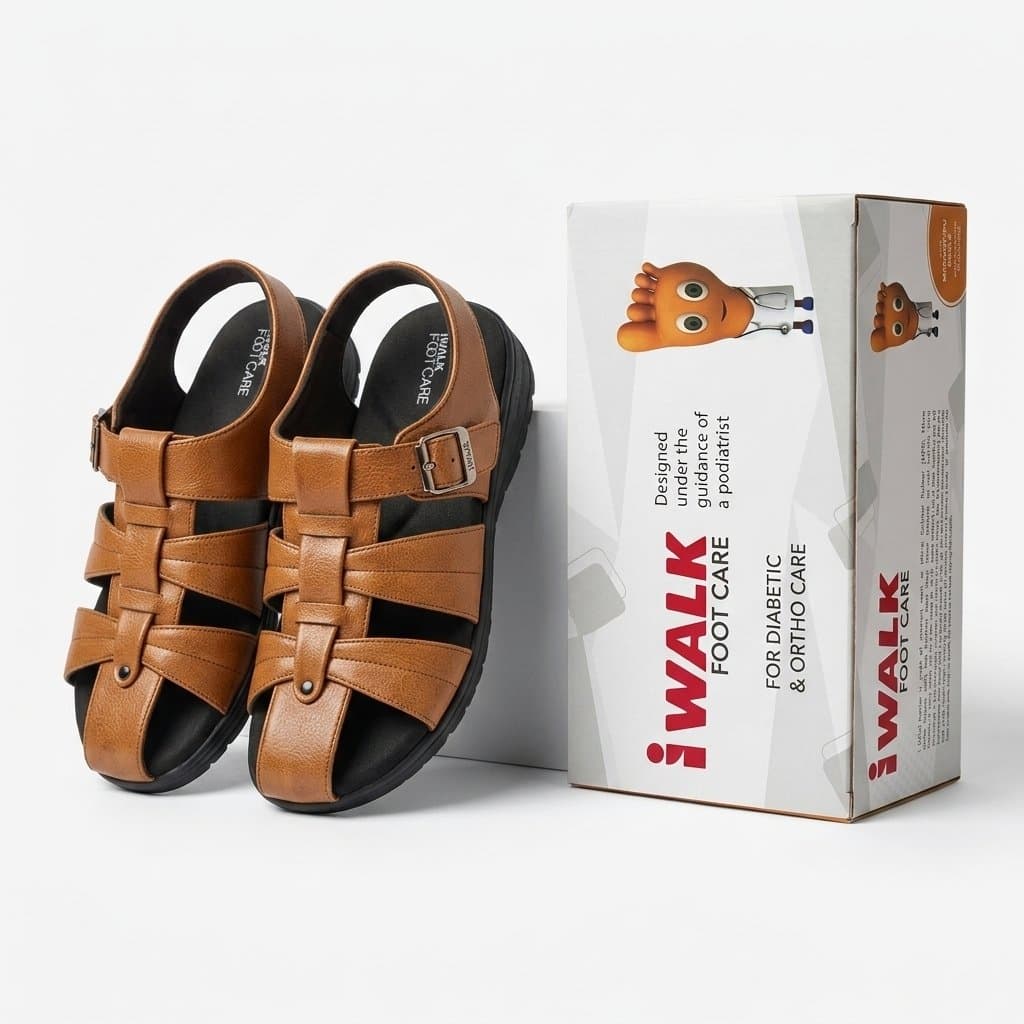
2. Closed "walker" styles
Covered toes protect against knocks and dust while the open sides stay airy. A strong choice for diabetic men and for longer walks. See the AJM Walker.
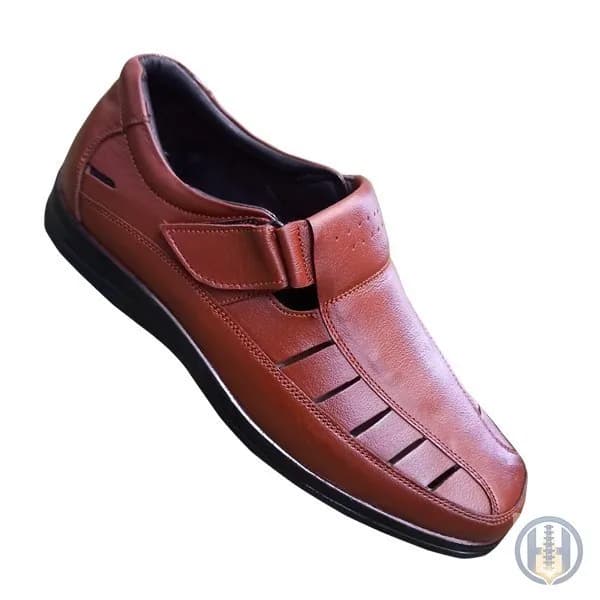
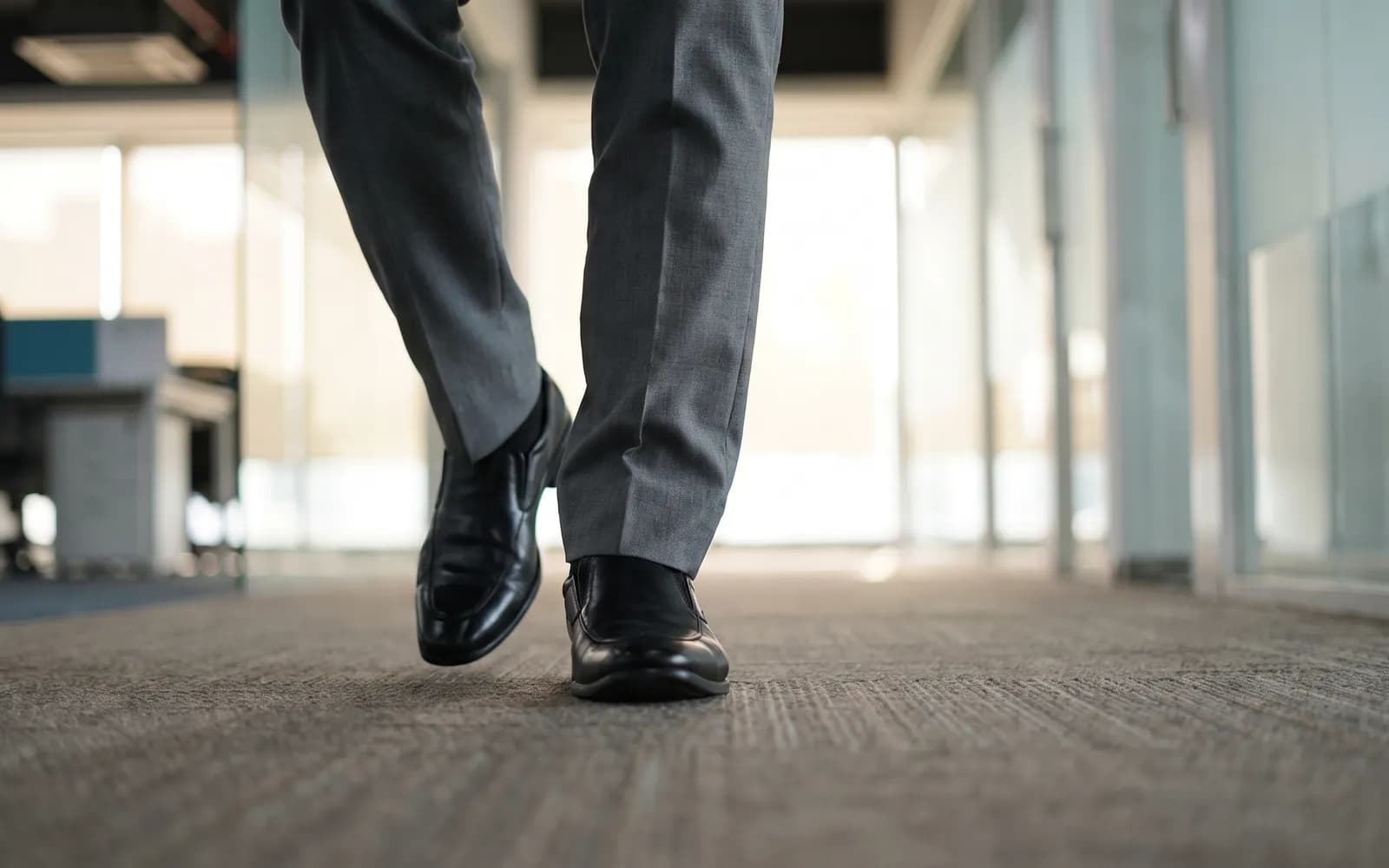
3. Leather slip-ons and roman sandals
Smart enough for formal and festive occasions. Genuine leather uppers soften with wear; look for the same cushioned MCP footbed inside.
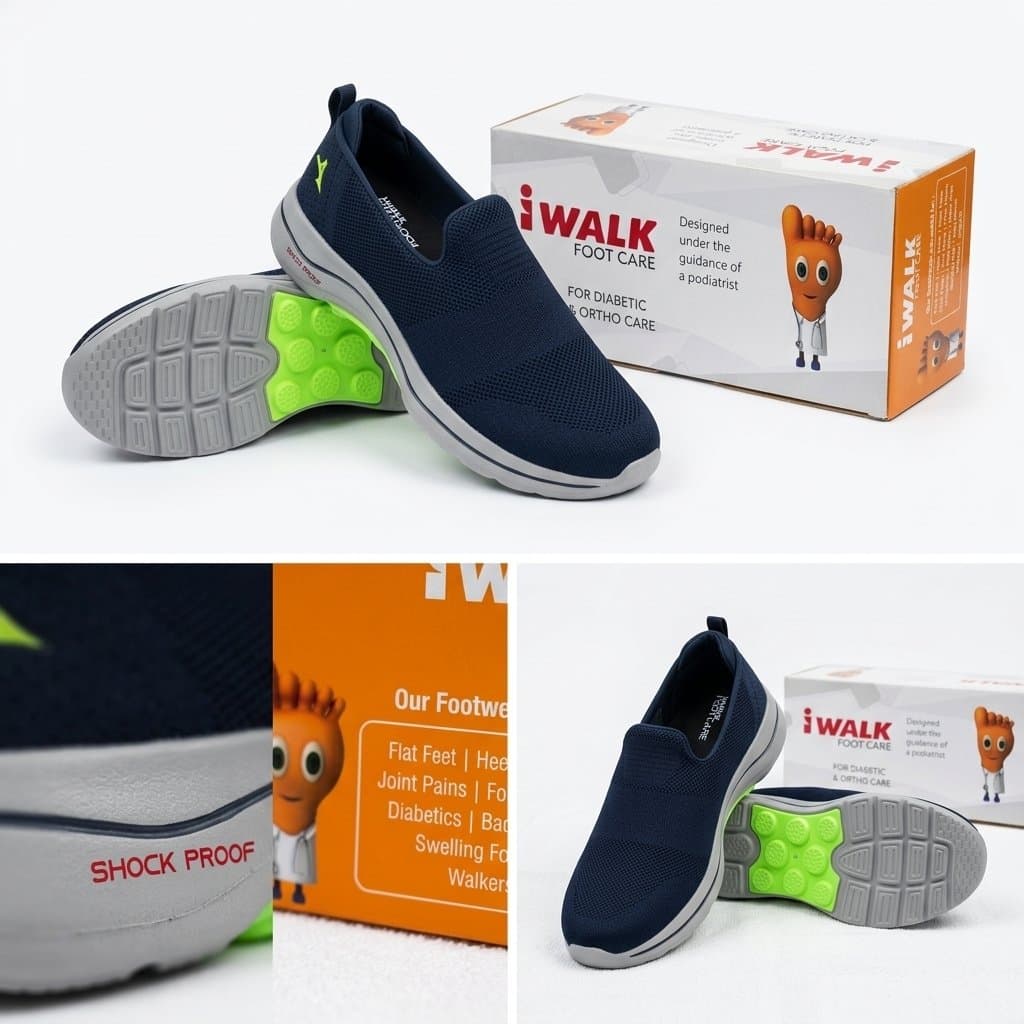
4. Walking shoes
Best for morning walks, travel and long days on your feet. Choose a cushioned, flexible sole with a firm heel counter and a roomy toe box.
Features every men's orthopedic pair should have
- MCP-cushioned footbed with arch support
- Wide, roomy toe box — men's feet are often broad
- Firm heel grip — no slipping
- Durable, grippy outsole — for wet roads and tiled floors
- Adjustable fastening
How many pairs do you need?
Most men do well with two: a strap sandal for daily use and a closed walker or walking shoe for longer walks. If you attend many functions or work in an office, add a leather slip-on.
Footwear for men who stand all day at work
Security staff, shopkeepers, pharmacists, factory and warehouse workers, chefs and teachers often spend 8–12 hours on their feet. Hard, flat footwear turns that into heel pain, aching arches and sore knees. What helps:
- A cushioned, shock-absorbing sole — especially on concrete or tiled floors
- Arch support to stop the arch collapsing through the day
- A roomy toe box for feet that swell by evening
- Two pairs to rotate so the footbed can recover overnight
- Short breaks to sit or walk — standing still is harder on feet than walking
Signs it's time to replace your pair
- The footbed has a permanent dent where your heel sits
- The sole is worn down more on one side
- Straps no longer hold your foot firmly
- You're getting new aches after walking
- The pair has been in daily use for about a year
Men with diabetes: extra care
Men are often less likely to check their feet daily. If you have diabetes, look at your feet every evening, never walk barefoot, and choose seam-free, roomy footwear. Our diabetic foot care checklist takes just five minutes a day.
Sizing tips for men
Men's feet are often wider than standard footwear allows. If regular chappals feel tight at the sides, look for adjustable straps and a roomier toe box rather than simply going up a size, which can make the heel slip.
Key takeaways
- Choose style by activity: sandal for daily, walker/shoe for walking, leather for formal.
- Never compromise on the footbed: MCP + arch support.
- Browse the full range of men's diabetic & orthopedic footwear — prices start around ₹700.