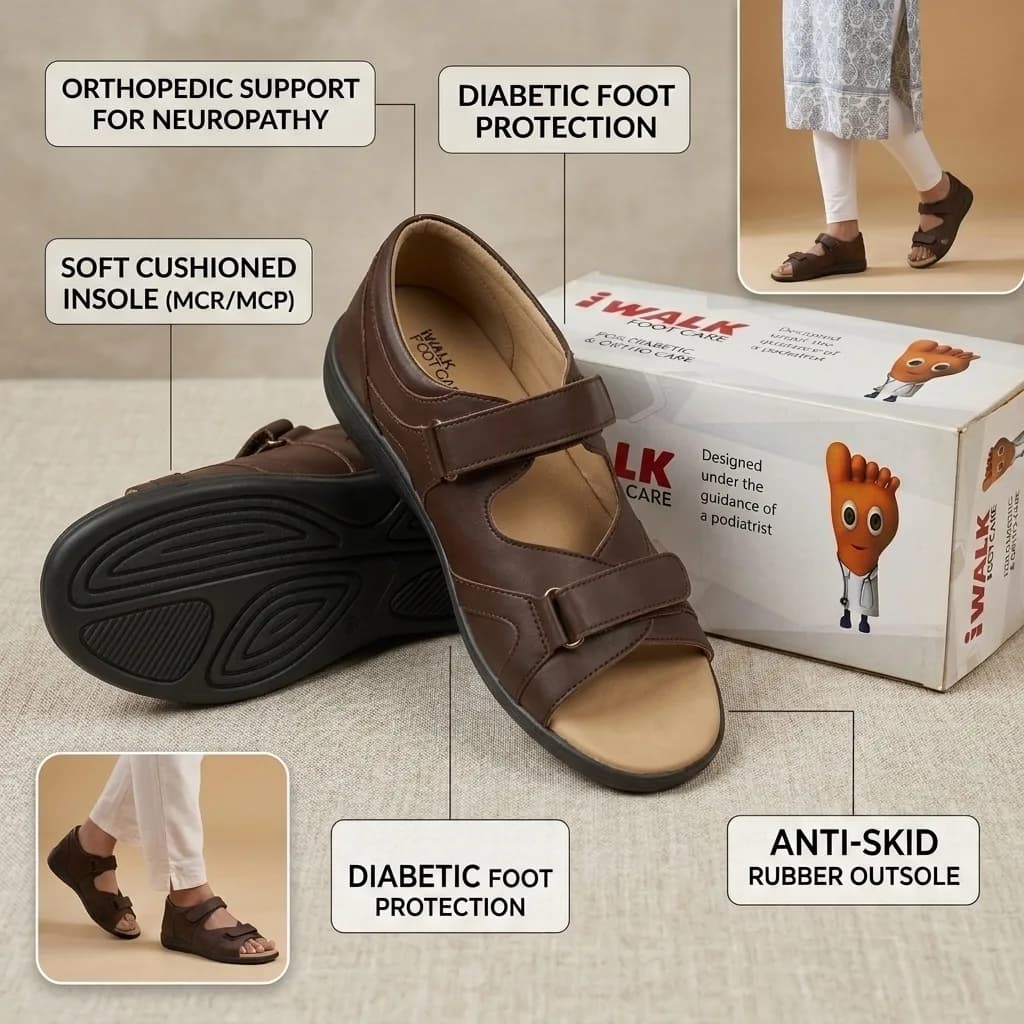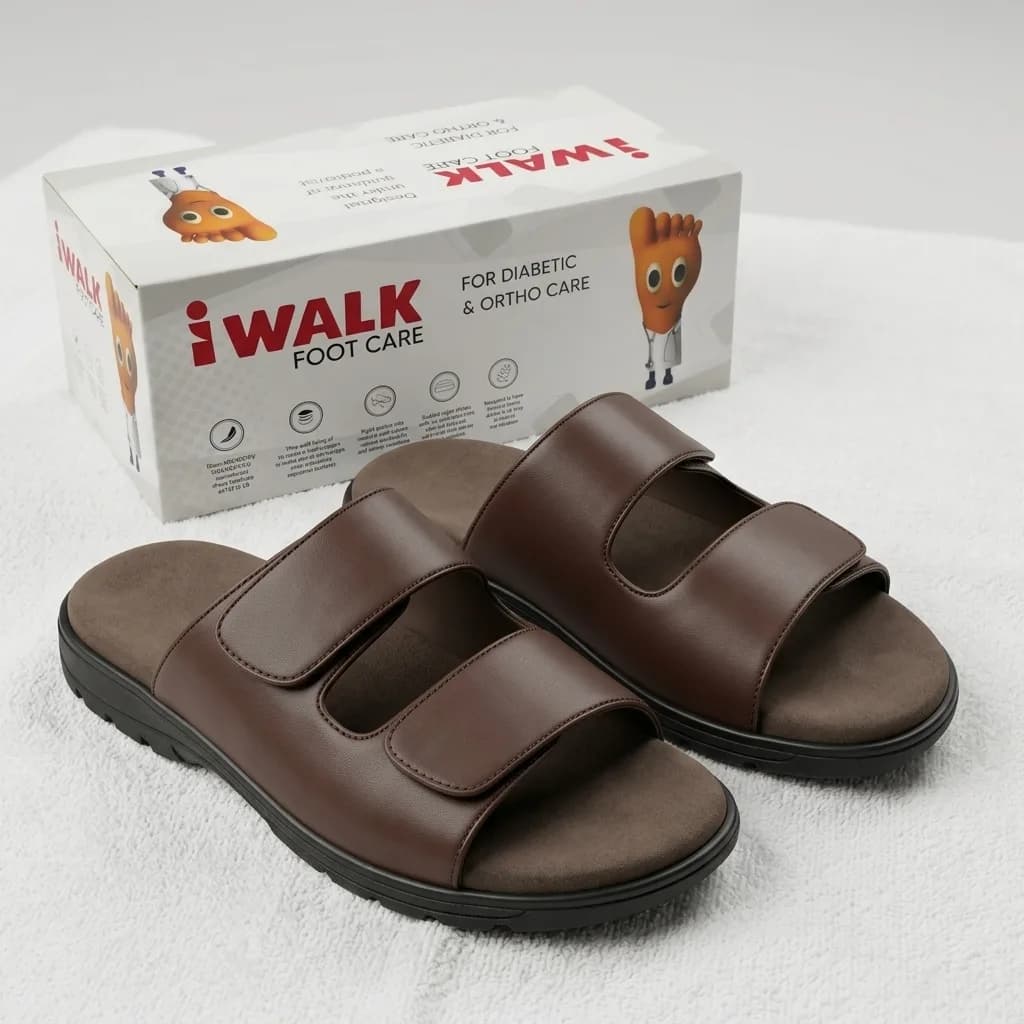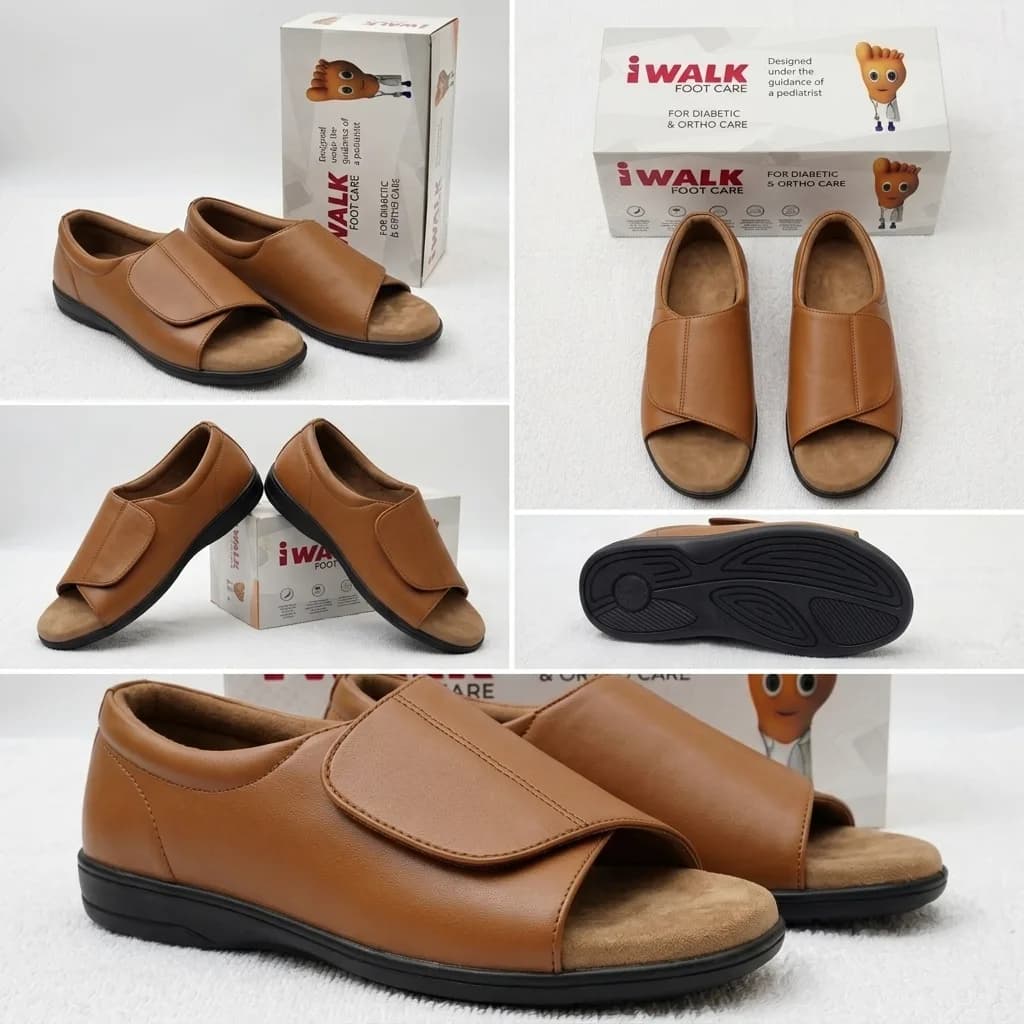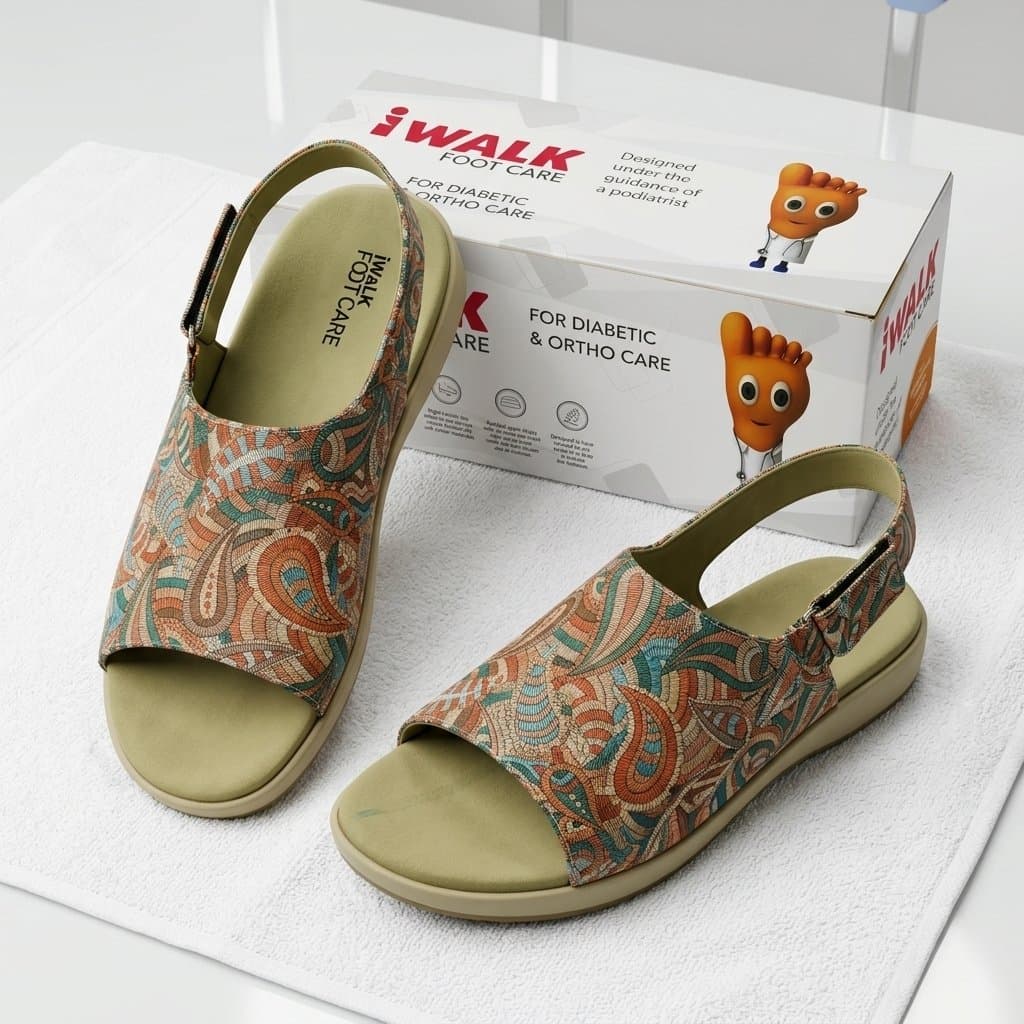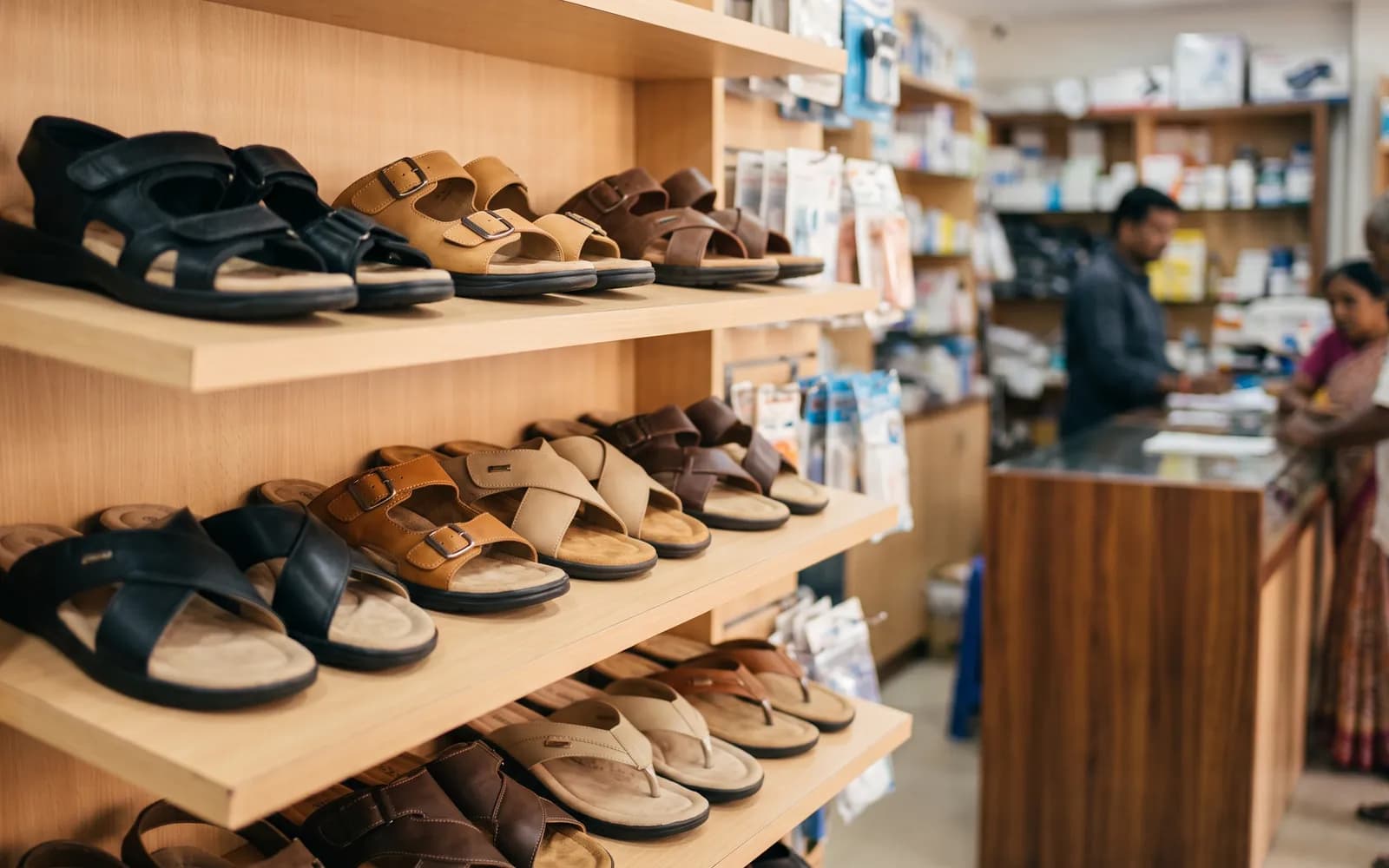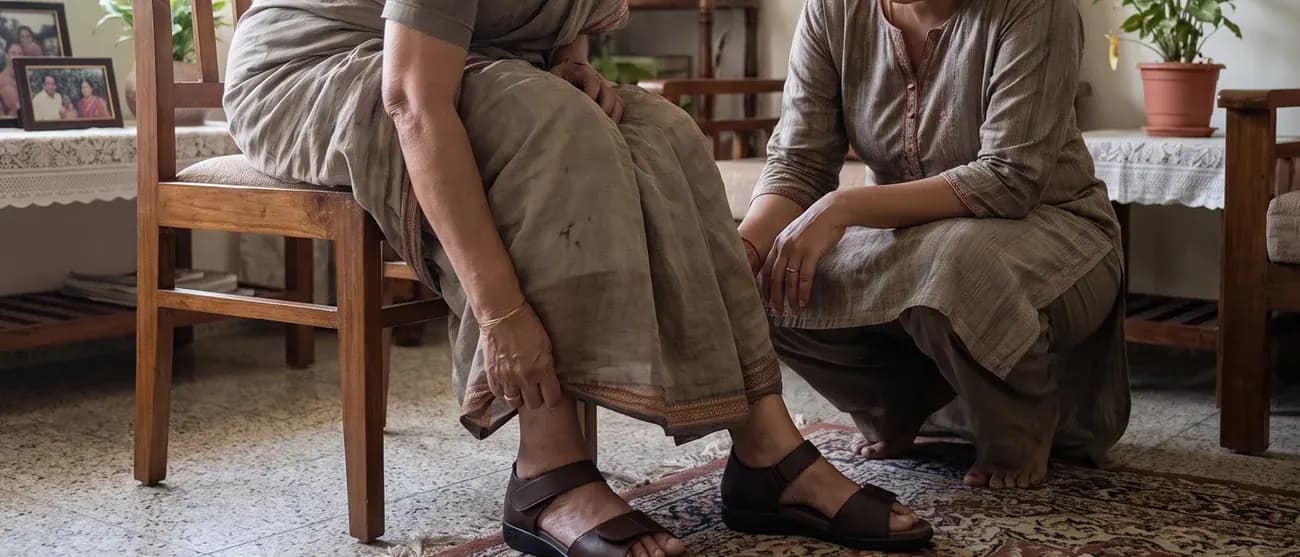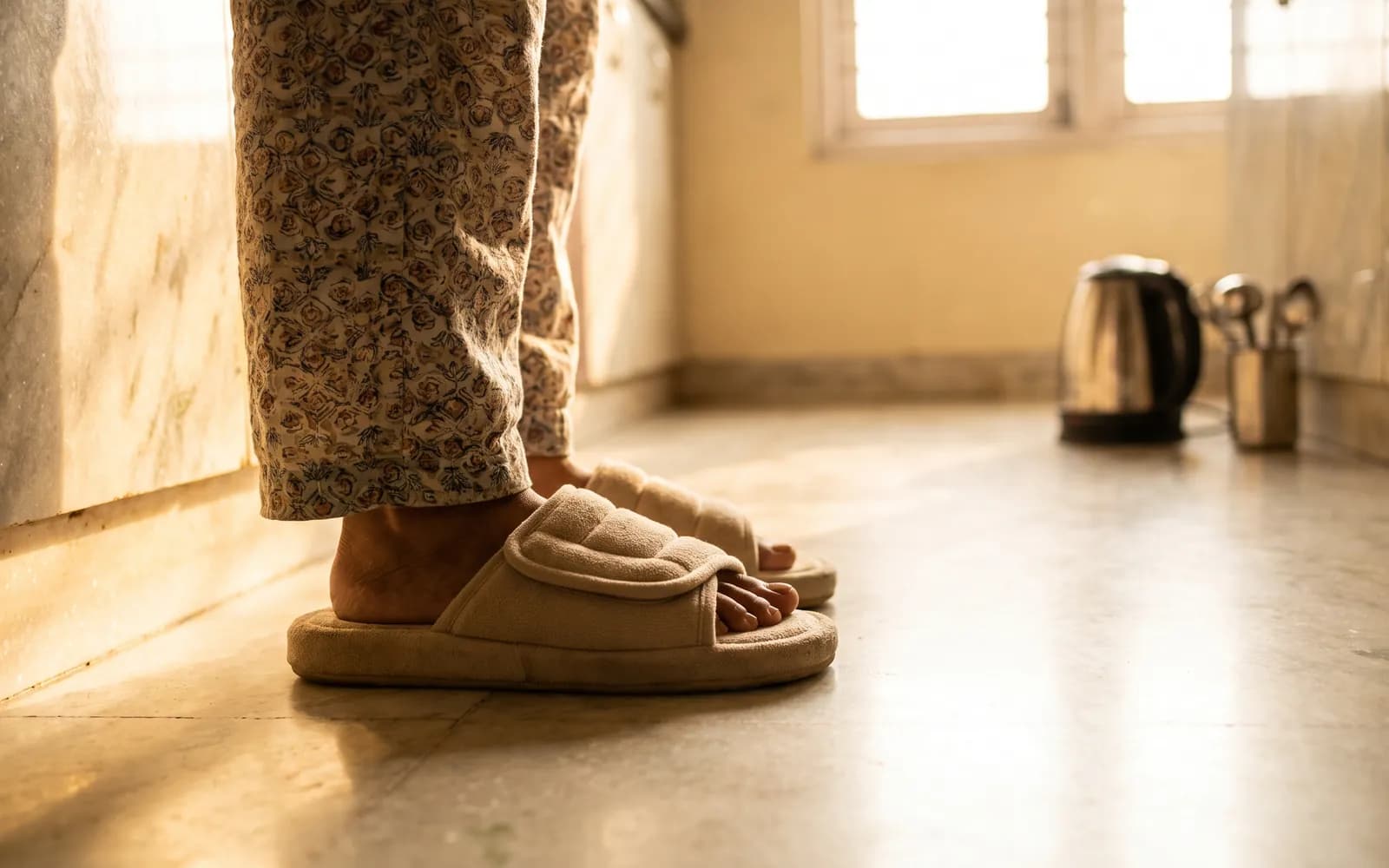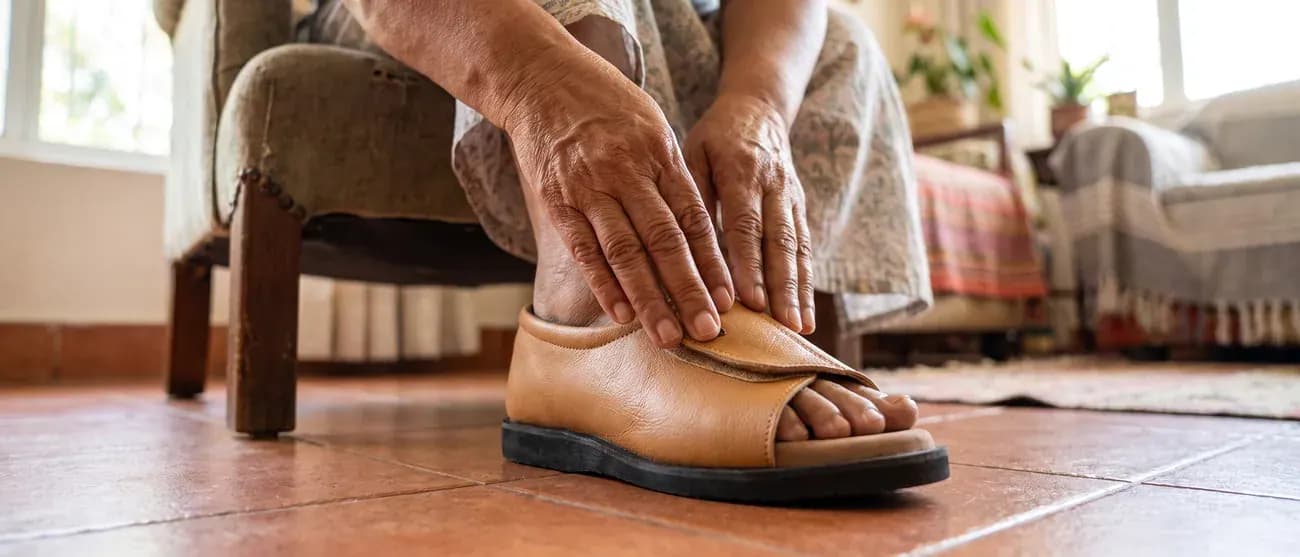
If you or a parent lives with diabetes, your doctor has probably said it already: protect your feet. Diabetes can reduce feeling in the feet and slow healing, so a small blister from a hard strap can turn into a wound that takes weeks to heal. The right footwear is one of the simplest daily protections — but walk into any footwear shop in Chennai and almost everything is labelled "soft" or "ortho". This guide explains what genuinely matters.
Why people with diabetes need different footwear
Ordinary chappals are designed for looks and price. Diabetic footwear is designed around three risks:
- Pressure points — hard insoles concentrate body weight under the heel and the ball of the foot, where ulcers often start.
- Rubbing and friction — stiff straps and inside seams rub skin that may not feel pain in time.
- Swelling through the day — feet often swell by evening, so a pair that fits at 10 AM can pinch by 7 PM.
Good diabetic footwear spreads pressure, avoids rubbing and adjusts to swelling. That is the whole idea.
The 7 features to check before you buy
- A cushioned, pressure-distributing footbed. Look for MCP (micro-cellular) footbeds that mould gently to the foot. All iWALK pairs we stock use an MCP-cushioned footbed. Read our MCR vs MCP guide for the difference.
- Arch support. A contoured arch shares the load across the whole sole instead of just heel and forefoot.
- A roomy toe box. Toes should never touch the front or sides. Cramped toes are a common cause of corns and pressure sores.
- Adjustable straps (velcro or buckle). They let you loosen the pair as feet swell and tighten for support in the morning.
- Soft, seam-free lining. Micro Touch–type linings with few hard stitches reduce friction on sensitive skin.
- A shock-absorbing, non-slip outsole. Chennai roads, wet bathroom floors and temple steps all demand grip.
- A firm heel grip. Your heel should not slide out; a sliding heel means the toes claw to hold the chappal, which strains the foot.
Getting the fit right
- Shop or measure in the evening, when feet are at their largest.
- Measure both feet — one is often slightly bigger. Buy for the bigger foot.
- Leave roughly a thumb's width between your longest toe and the front edge.
- If you have lost some feeling in your feet, don't trust "it feels fine" — check the fit with your eyes and a measurement. Our foot measuring guide walks you through it.
Open sandal, slip-on or closed shoe?
- Sandals with straps are cool for Chennai's heat and easy to adjust — ideal for daily home and outdoor use.
- Slip-ons with a wide velcro strap suit elders who find buckles difficult.
- Closed walker styles and walking shoes protect toes from knocks and dust — better for longer walks and travel.
Many customers keep two pairs: a sandal for home and short errands, and a closed pair for walking.
What does diabetic footwear cost in Chennai?
Genuine diabetic and orthopedic footwear usually costs more than street chappals because of the footbed and construction. At Hi-Light, pairs start at around ₹700 for everyday orthopedic sandals and go up to about ₹4,800 for leather slip-on shoes, with most diabetic sandals in the ₹1,500–₹2,000 range. Replace a pair when the footbed flattens or the sole wears unevenly — usually every 8–12 months with daily use.
Where to try diabetic footwear in Chennai
Our store at No. 23, Medavakkam Main Road, Adambakkam (near Santhosh Super Market) stocks genuine iWALK Foot Care diabetic and orthopedic footwear for men and women. You can also order online with Cash on Delivery or UPI, and we ship across India. Not sure about your size? Send your foot measurement on WhatsApp and we'll confirm before you order. Coming from Velachery, Madipakkam or Nanganallur? See our store guide.
Common mistakes when buying diabetic footwear
- Buying the same size as your old chappals. Feet change with age and diabetes — measure again.
- Choosing thong (toe-post) designs. The post between the toes can rub a blister you may not feel.
- Going too soft. A squashy footbed with no structure lets the foot sink and roll. You want cushioning and support.
- Ignoring the inside. Run your fingers around the lining and footbed — any ridge, seam or rough edge you feel will rub your skin.
- Wearing new pairs all day on day one. Start with an hour or two, then check your feet for red marks before increasing wear time.
- Waiting until the old pair is completely broken. A flattened footbed stops protecting you long before the straps fail.
A quick checklist to take to the shop
- Cushioned MCP footbed with arch contour
- At least a thumb's width of room in front of the longest toe
- Adjustable straps that don't press on bony points
- Smooth, seam-free lining
- Grippy, flexible sole that bends at the ball of the foot
- Heel that stays in place when you walk
Key takeaways
- Choose cushioned MCP footbed + arch support + roomy toe box + adjustable straps.
- Fit your shoes in the evening and to the larger foot.
- Inspect your feet daily — footwear helps, but it doesn't replace daily foot care.