For older adults, footwear is about safety as much as comfort. Falls are a leading cause of injury in seniors, and loose slippers, worn-out soles and walking barefoot on wet floors are common triggers. If you're buying footwear for your amma, appa, thatha or paati, this checklist will help.
Why elderly feet need special care
With age, the fat pad under the heel thins, feet can widen and swell, balance and eyesight may weaken, and conditions like diabetes, arthritis and neuropathy become more common. Footwear has to compensate for all of these.
The safety checklist
- Non-slip outsole — with a textured tread for bathroom, kitchen and temple floors.
- Closed back or a secure heel strap — backless slippers are a common cause of trips.
- Low, wide heel — stable, never high or narrow.
- Light weight — heavy footwear makes older people shuffle.
- No worn-out soles — replace pairs as soon as the tread smooths out.
The comfort checklist
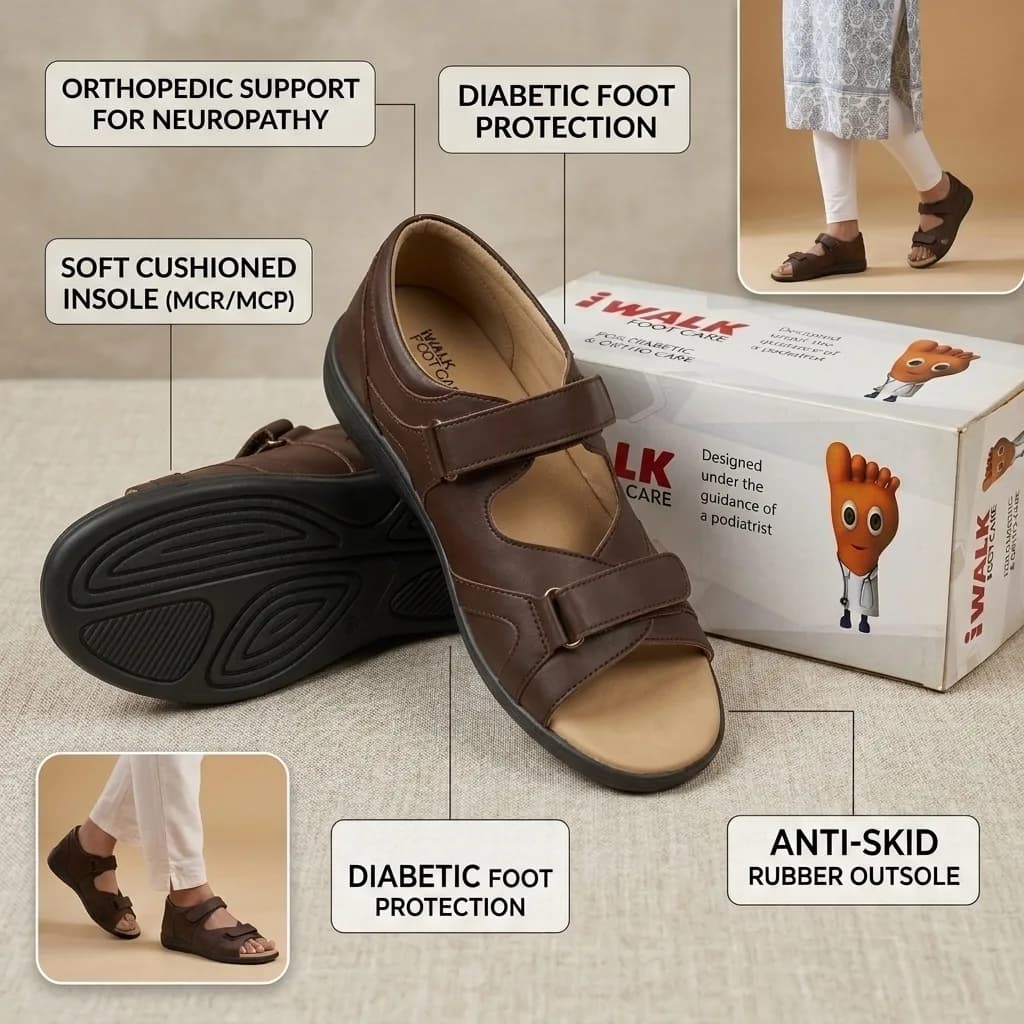
- Cushioned MCP footbed — makes up for the thinning heel pad.
- Arch support — reduces tired, aching feet.
- Roomy toe box — for bunions, swelling and arthritic toes.
- Soft, seam-free lining — essential for diabetic skin.
Easy on, easy off
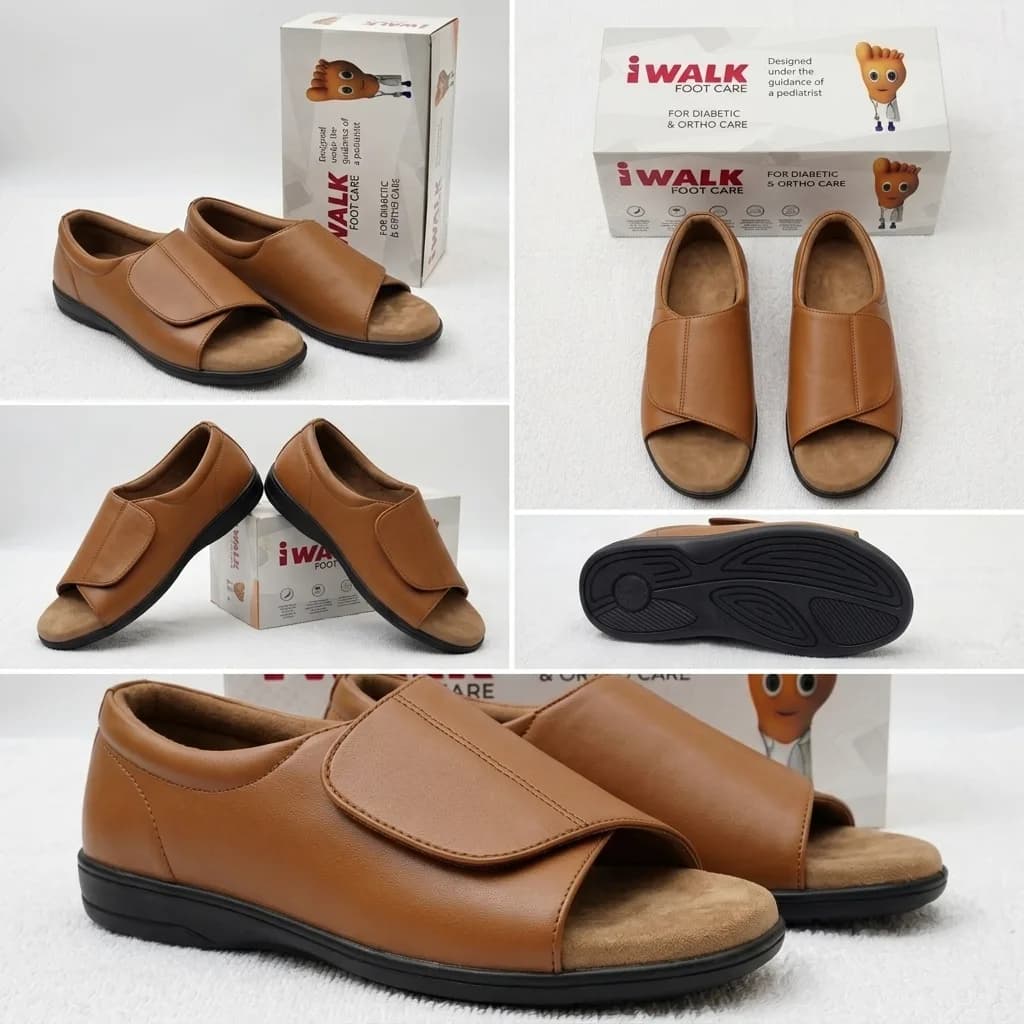
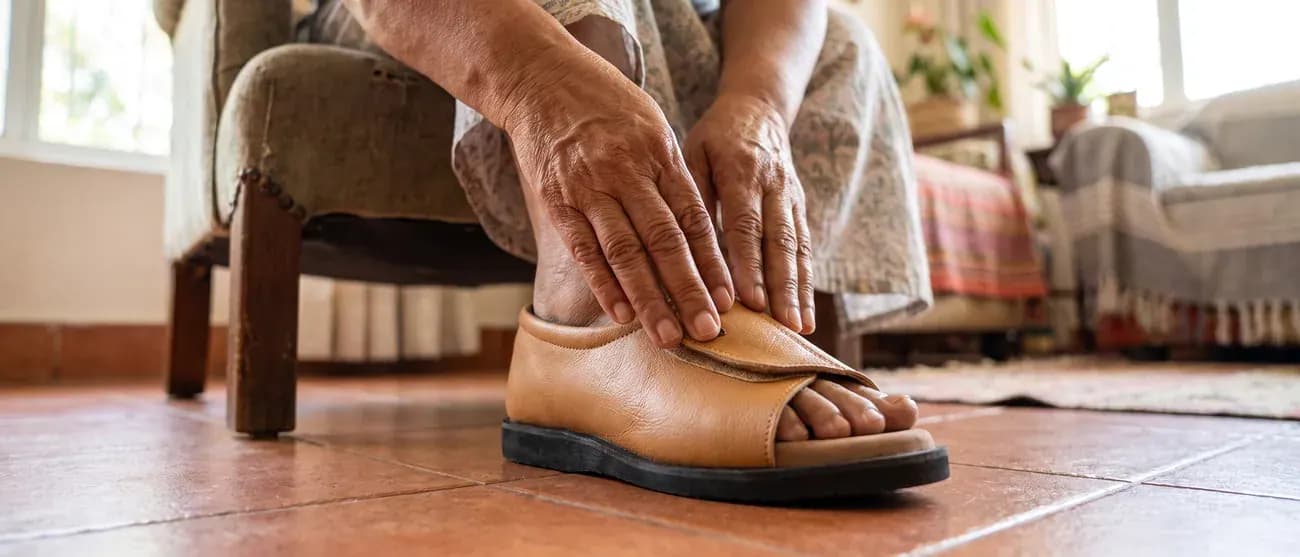
Many seniors struggle with buckles and laces. Choose wide velcro straps that can be opened fully, so the foot slides in without bending too much. Fuller-coverage slip-ons such as the AJL Majestic are a family favourite.
Fit tips for families
- Measure their feet again — sizes change with age. See how to measure foot size.
- Fit in the afternoon or evening, when swelling is at its peak.
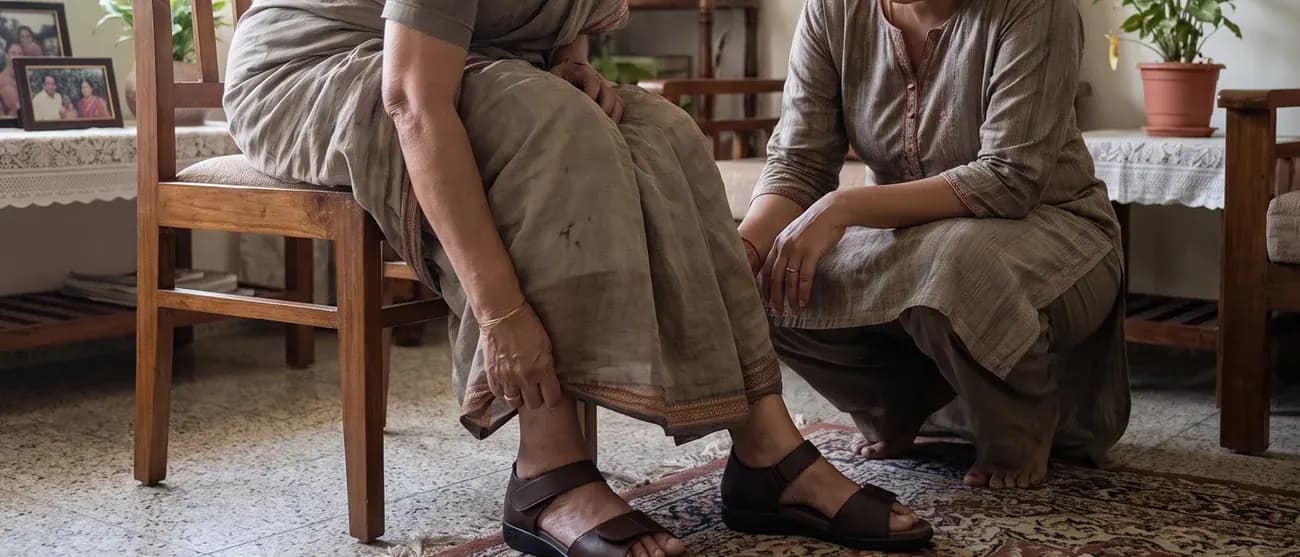
- If your parent has reduced feeling in the feet, check the fit yourself: press at the toe and look for red marks after the first few wears.
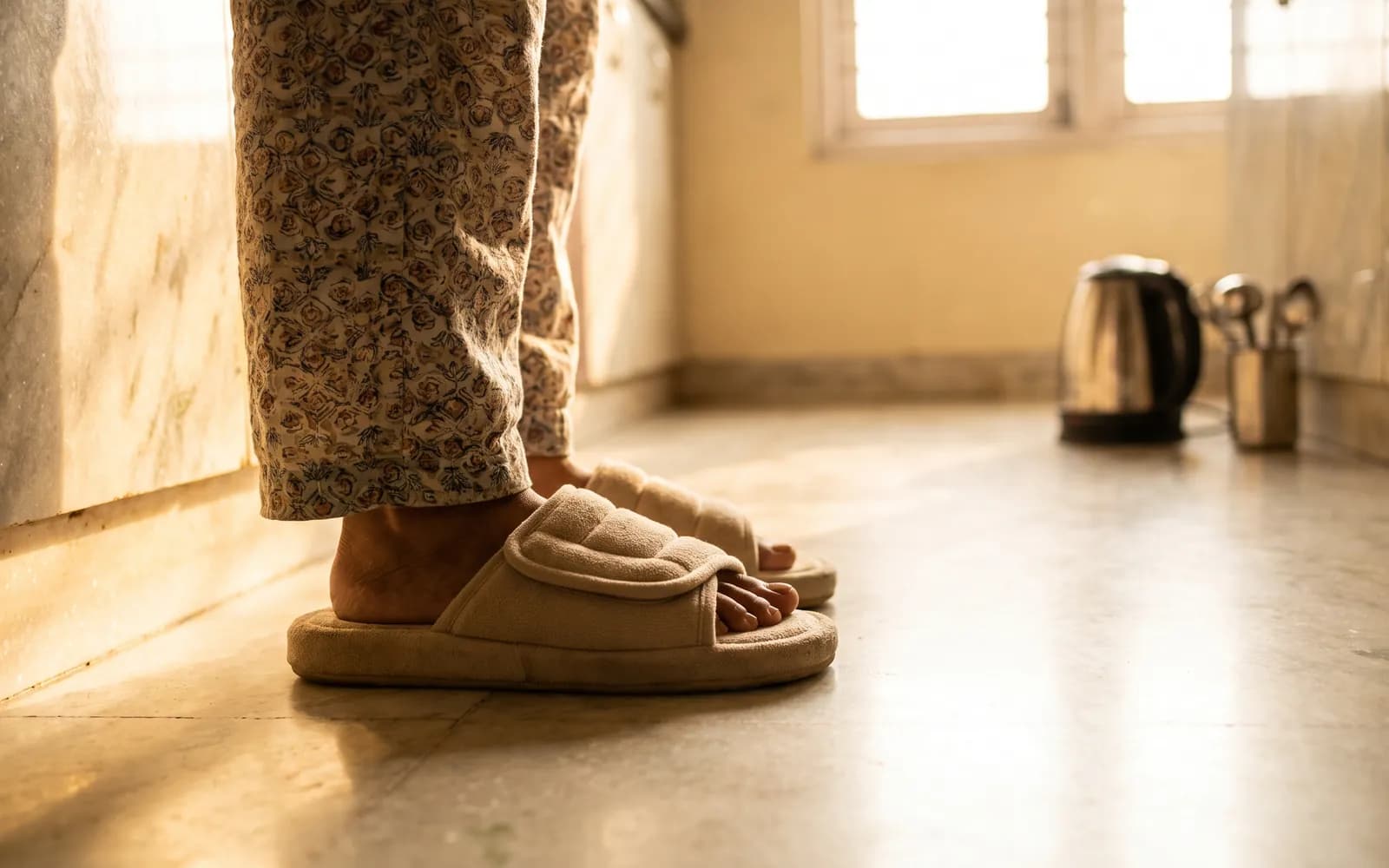
- Buy a pair for inside the home too. Walking barefoot indoors is one of the most common causes of both falls and diabetic foot injuries.
Around the house
- Keep a supportive pair next to the bed for night-time bathroom trips.
- Use anti-skid mats in the bathroom.
- Keep floors dry and well lit.
Special situations
- Arthritis in the toes or ankles: choose extra-roomy toe boxes, very soft uppers and wide velcro openings so the foot can slide in without bending painful joints.
- After a stroke or with weakness on one side: footwear must stay firmly on the foot. Closed-back styles with a wide strap are safest. Our home physiotherapy team can advise on footwear during rehabilitation.
- Using a walker or walking stick: a grippy, stable sole is even more important; avoid very thick soft soles that feel wobbly.
- Diabetes or neuropathy: follow our neuropathy footwear guide — look for seam-free linings and check feet daily.
Signs your parent's footwear needs replacing
- Smooth, worn tread on the sole
- A stretched, loose heel strap
- The footbed has a deep dent under the heel
- They shuffle, trip or complain of new aches
A gift that shows you care
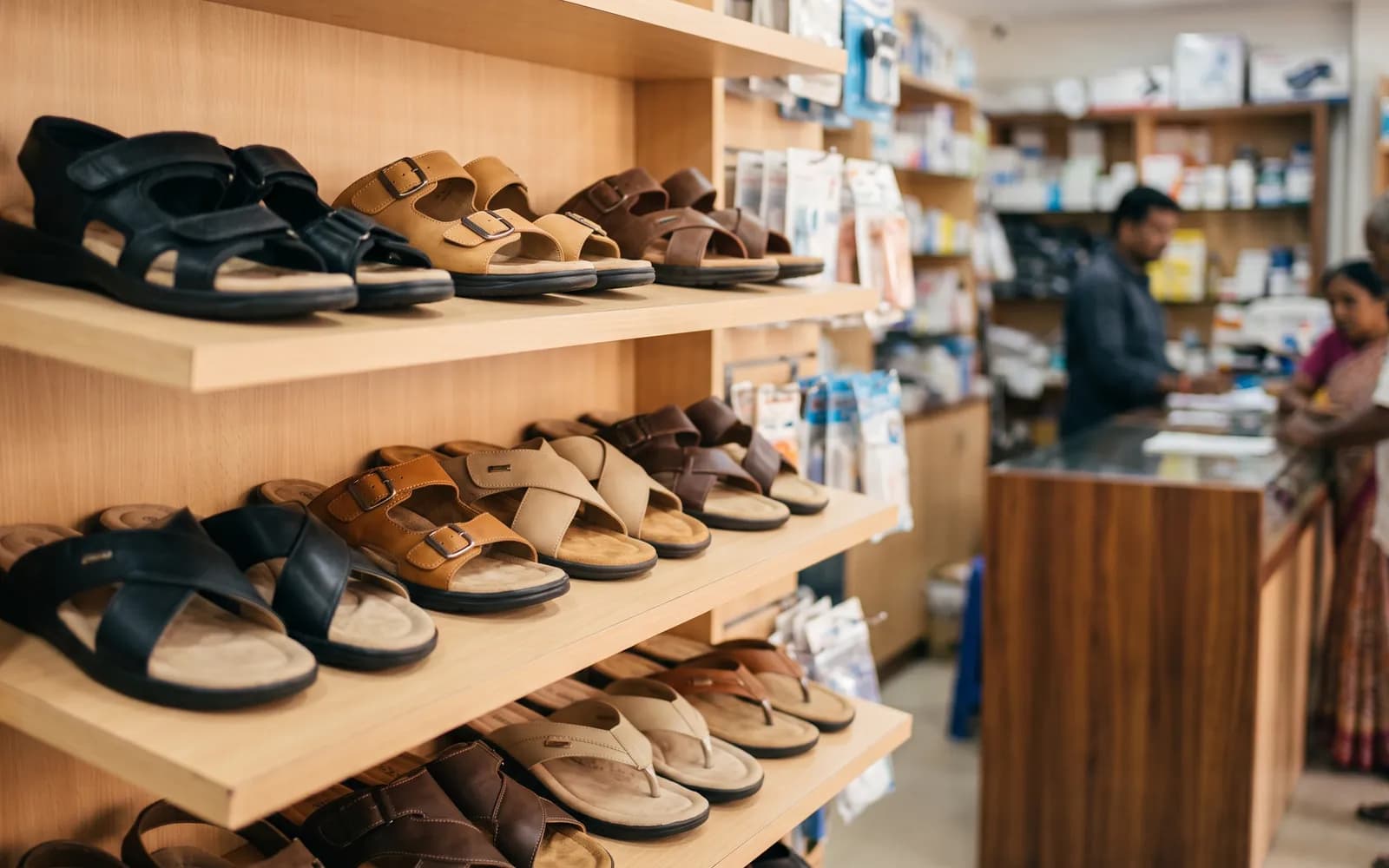
Good footwear is one of the most practical gifts you can give an ageing parent — for birthdays, festivals or a hospital discharge. Bring your parent to our Adambakkam store for a fitting, or send us a photo of their current footwear and their foot length on WhatsApp and we'll suggest suitable pairs.
Key takeaways
- Safety first: non-slip sole, secure heel, low stable heel.
- Comfort next: cushioned MCP footbed, arch support, roomy fit.
- Choose velcro for independence. Visit our Adambakkam store with your parent for fitting help, or WhatsApp us their foot measurement. Also see diabetic foot care tips.