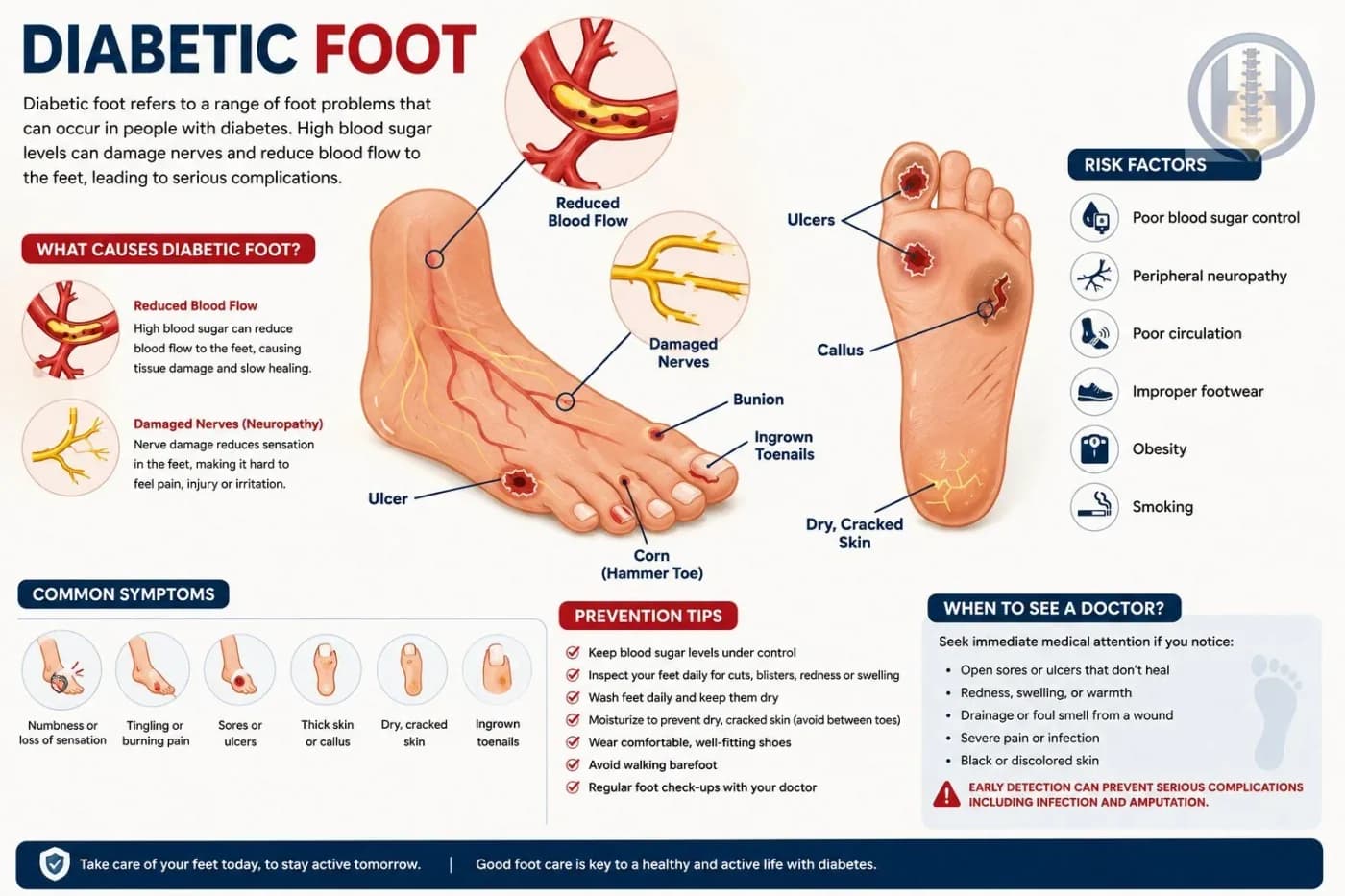
Peripheral neuropathy — nerve damage caused by long-term high blood sugar — is one of the most common complications of diabetes. It usually starts in the toes and feet. Because it affects how well you feel pain, heat and pressure, it changes the rules of foot care.
Early warning signs
- Tingling or "pins and needles" in the toes or feet
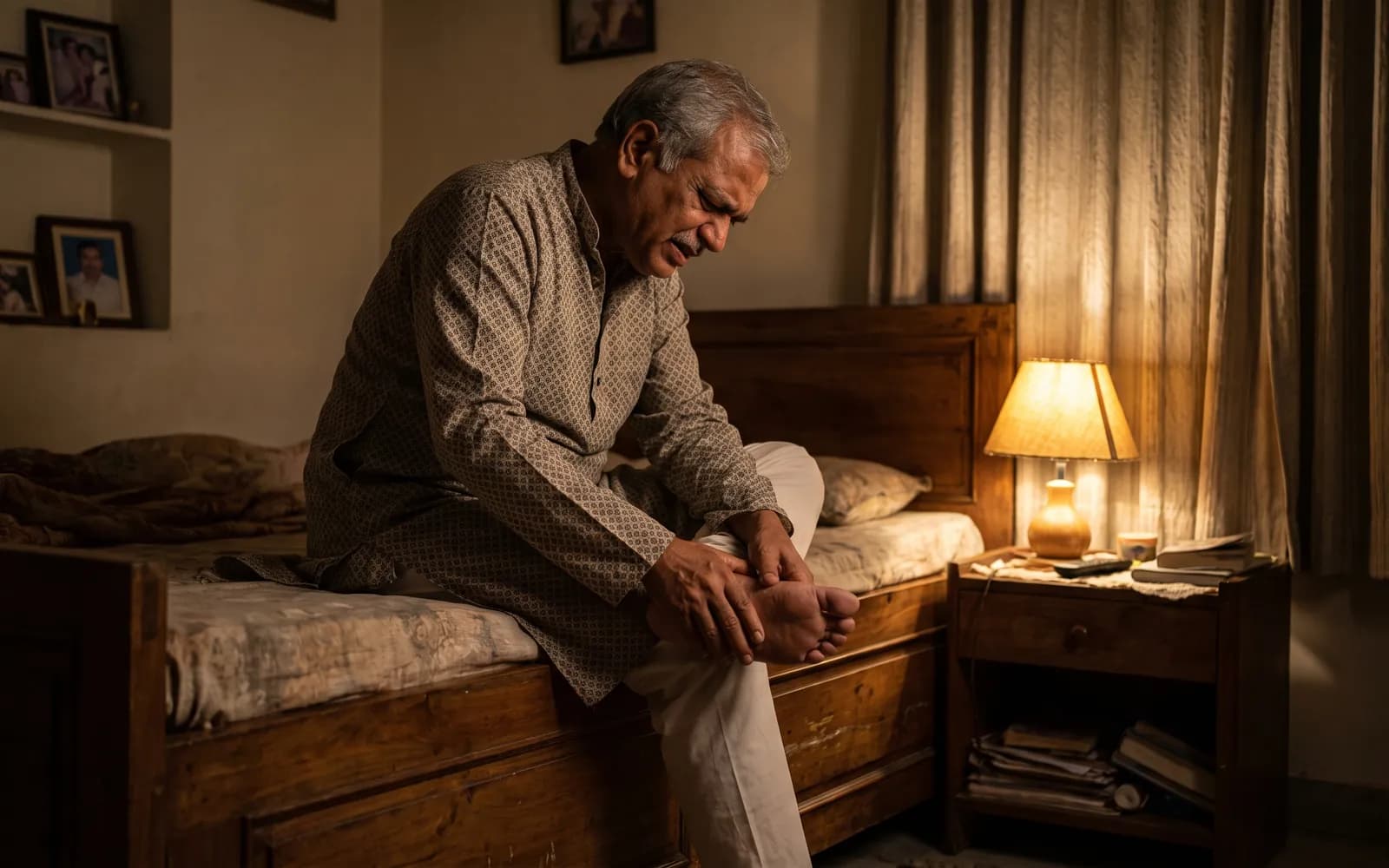
- Burning feet, often worse at night
- Numbness or a feeling of wearing socks when you aren't
- Sharp or electric-shock pains
- Reduced sense of hot and cold
- Unsteadiness, especially in the dark
If you notice any of these, tell your doctor. Early diagnosis and better blood sugar control can slow progression.
Why neuropathy raises the risk of foot injuries
When you can't feel your feet properly:
- A stone in your chappal or a tight strap can rub a wound without you noticing.
- Hot floors or hot water can burn the skin.
- A small cut can go unnoticed and become infected.
Combined with slower healing in diabetes, small injuries can become serious ulcers. That's why daily checks and protective footwear matter so much.
Daily care for feet with neuropathy
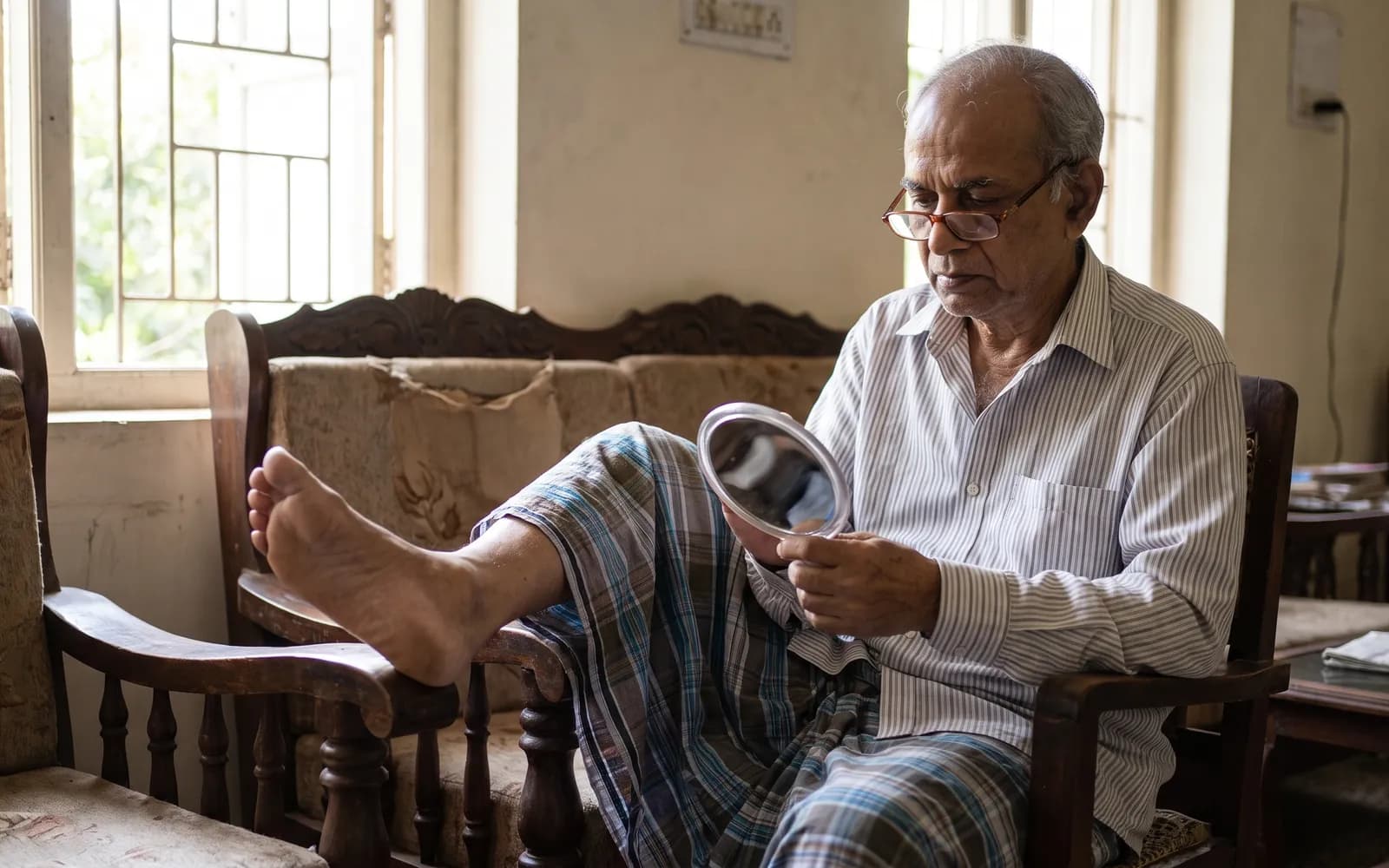
- Inspect your feet every day — soles and between the toes. Use a mirror or ask family.
- Test bath water with your elbow or a thermometer.
- Never walk barefoot, indoors or outdoors.
- Shake out footwear before putting it on.
- Avoid heating pads and hot water bottles on your feet.
- Follow our full daily diabetic foot care checklist.
Footwear features for numb feet
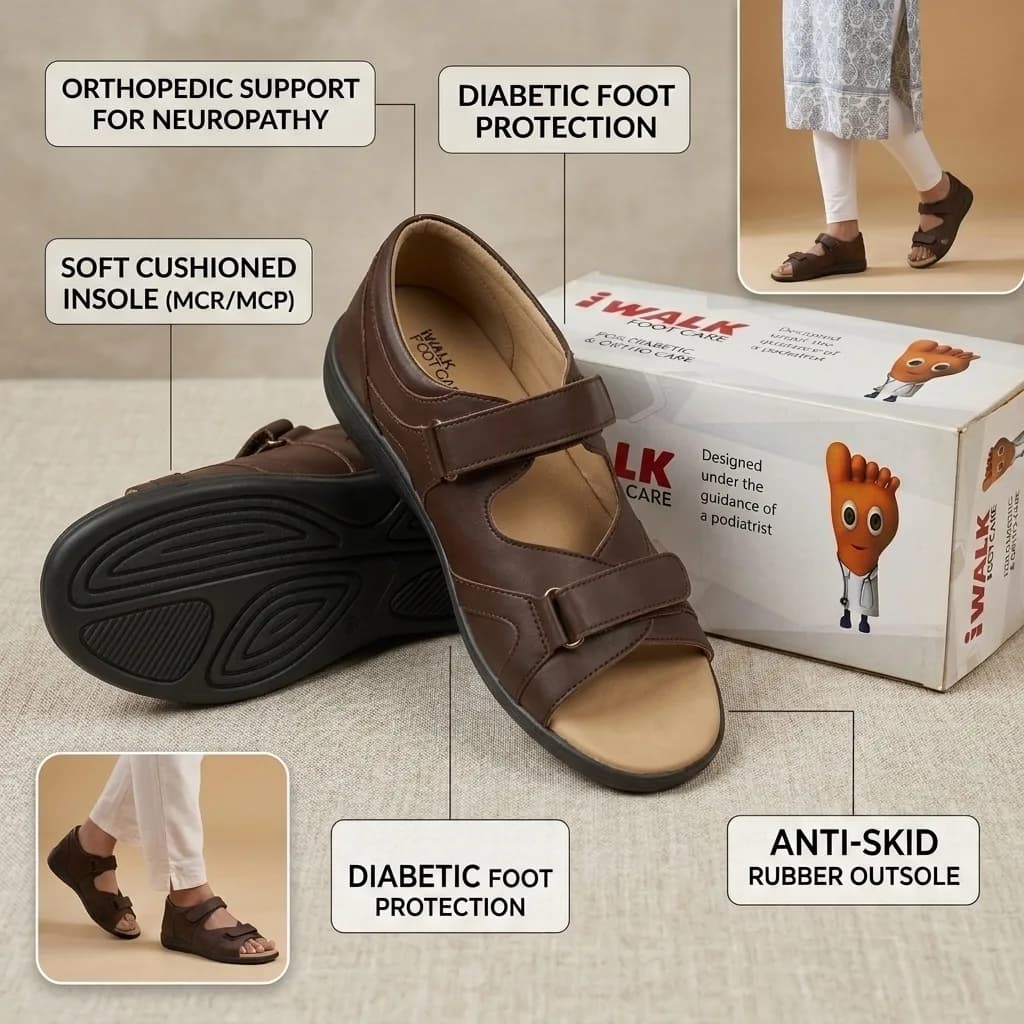
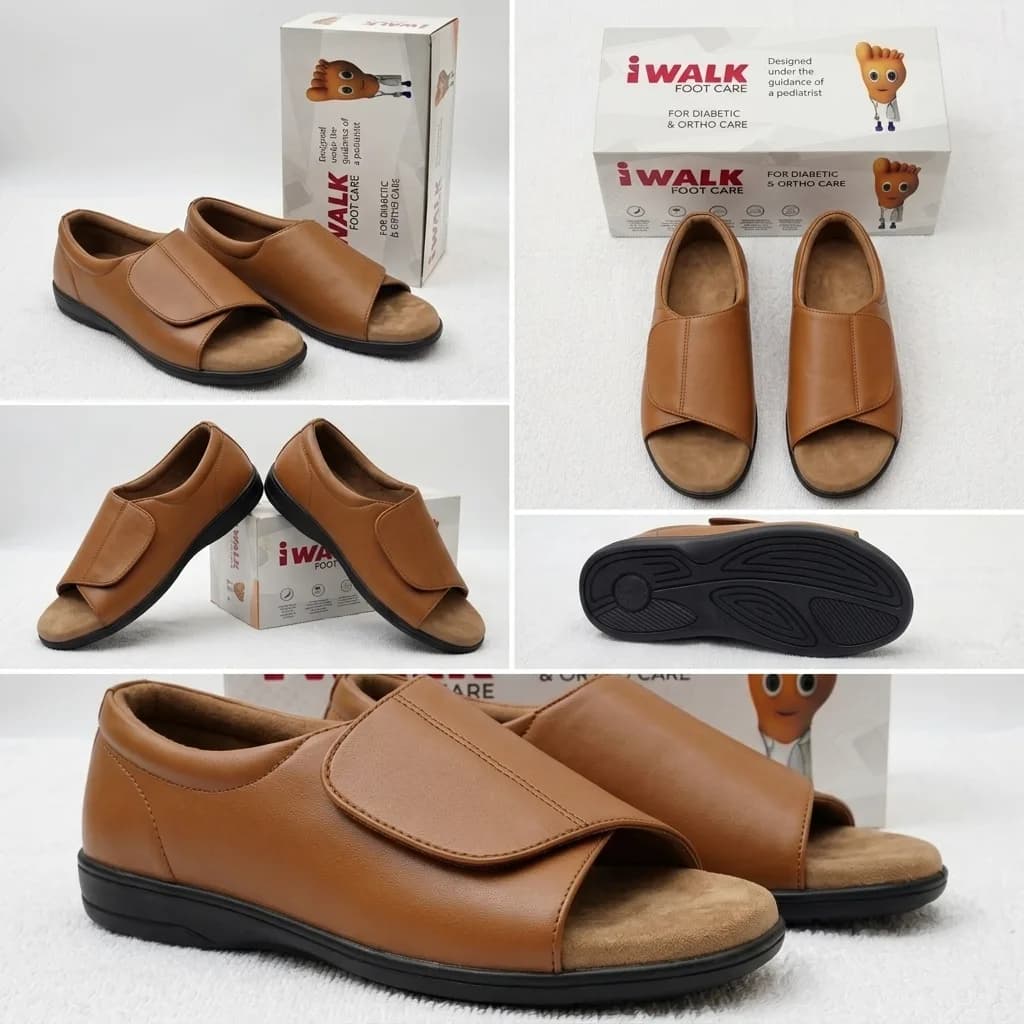
- Roomy, deep toe box — no pressure on toes you can't feel.
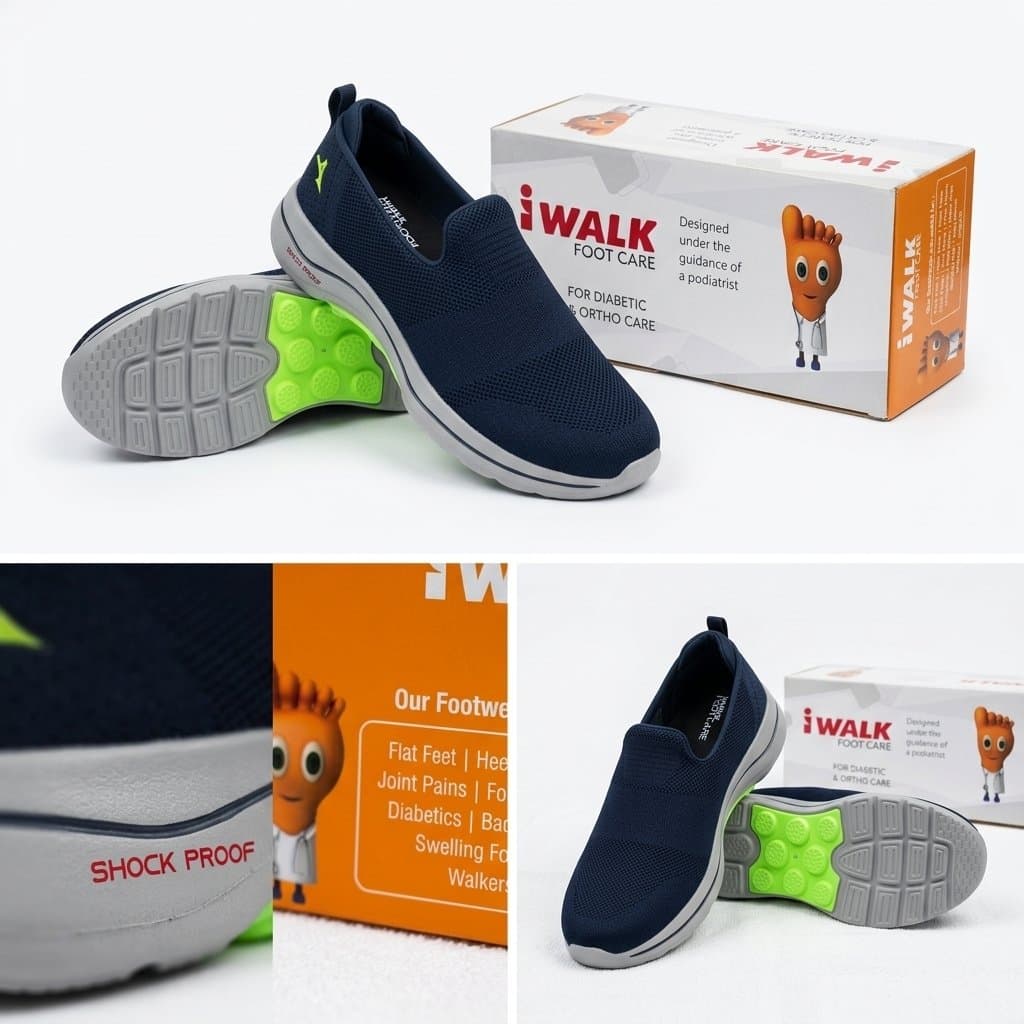
- Cushioned MCP footbed — spreads pressure away from high-risk spots.
- Seam-free, soft lining — no hidden ridges.
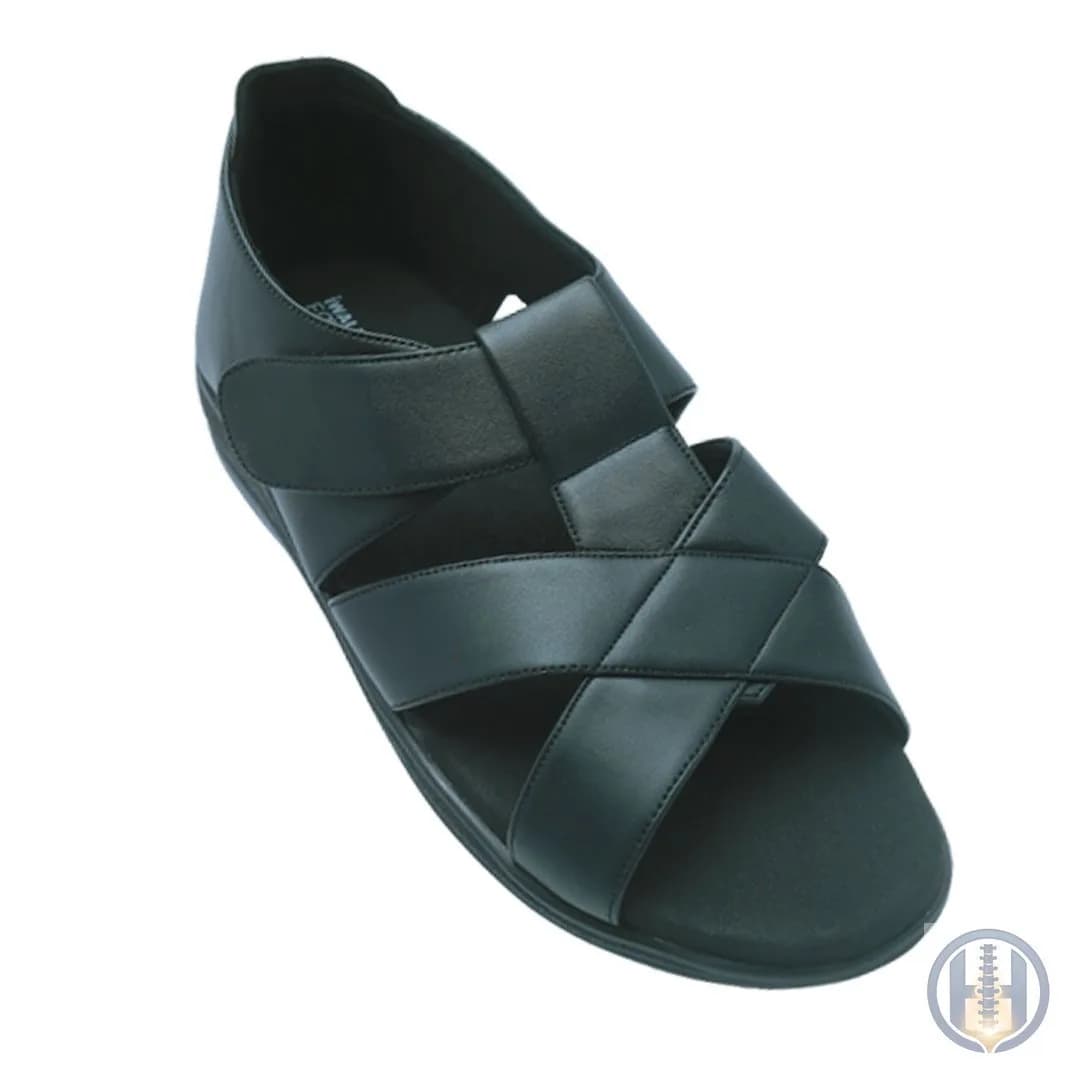
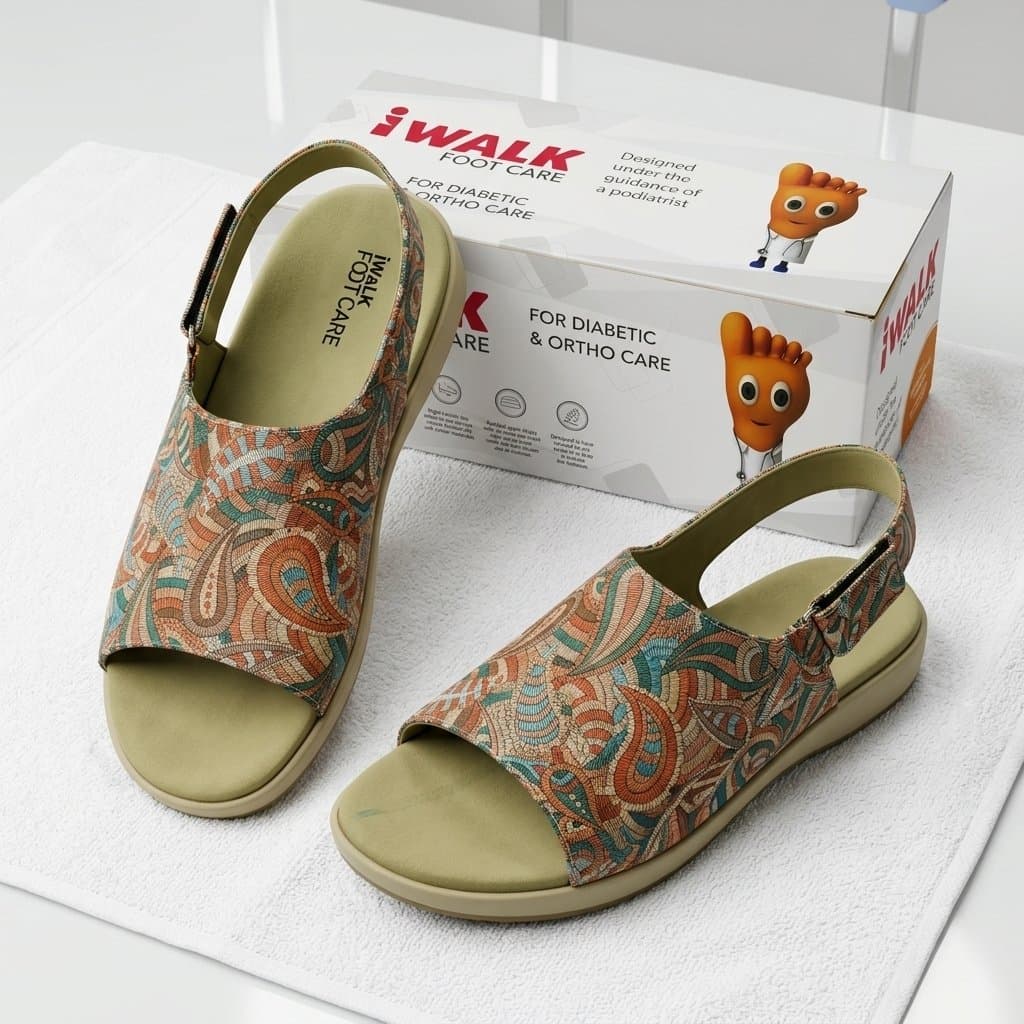
- Adjustable straps — secure without being tight.
- Closed toe or covered styles for outdoors — protection from knocks and sharp objects.
- Firm heel grip — neuropathy can affect balance.
Fit rule: don't choose footwear by "it feels comfortable". Measure your feet (how to measure), check for red marks after the first hour of wear, and increase wearing time gradually.
When to see a doctor urgently
Any wound, blister, colour change, swelling or warmth in a numb foot should be shown to a doctor promptly — don't wait for pain, because it may never come.
Choosing socks with neuropathy
With closed shoes, socks are part of your protection:
- Seamless or flat-seam toes so there's no ridge pressing on the toes
- Soft cotton or cotton blends that absorb sweat in Chennai's humidity
- Non-binding tops — tight elastic can restrict circulation
- Light colours so any drainage from a wound is easier to notice
- Change daily, and immediately if damp
Making your home safer
- Wear footwear indoors at all times, including at night.
- Keep floors clear of pins, broken glass and small objects; sweep regularly.
- Use night lights between the bedroom and bathroom.
- Avoid sitting close to heaters, hot stoves or on sun-heated floors and terraces barefoot.
- Keep a long-handled mirror in the bathroom for daily foot checks.
Staying active safely
Neuropathy is not a reason to stop moving. Walking, cycling on a stationary bike and chair exercises can all be suitable with your doctor's approval. Protective footwear and a foot check after every session are key — see our walking for diabetes plan.
Key takeaways
- Tingling, burning or numbness = tell your doctor.
- With neuropathy, look instead of feel — daily inspections are essential.
- Choose roomy, cushioned, seam-free footwear. Shop men's and women's diabetic footwear.
General information only — please follow your doctor's advice.