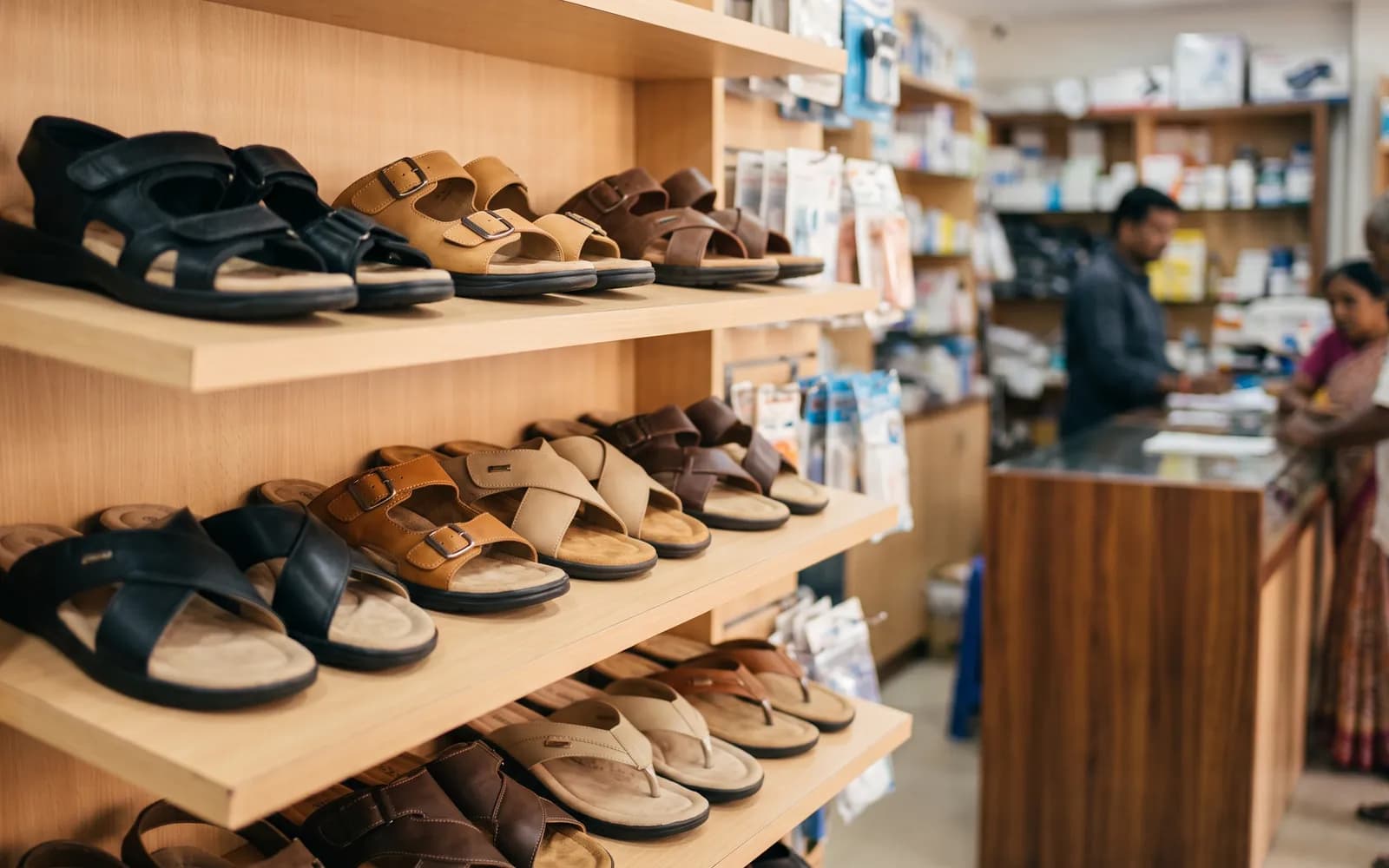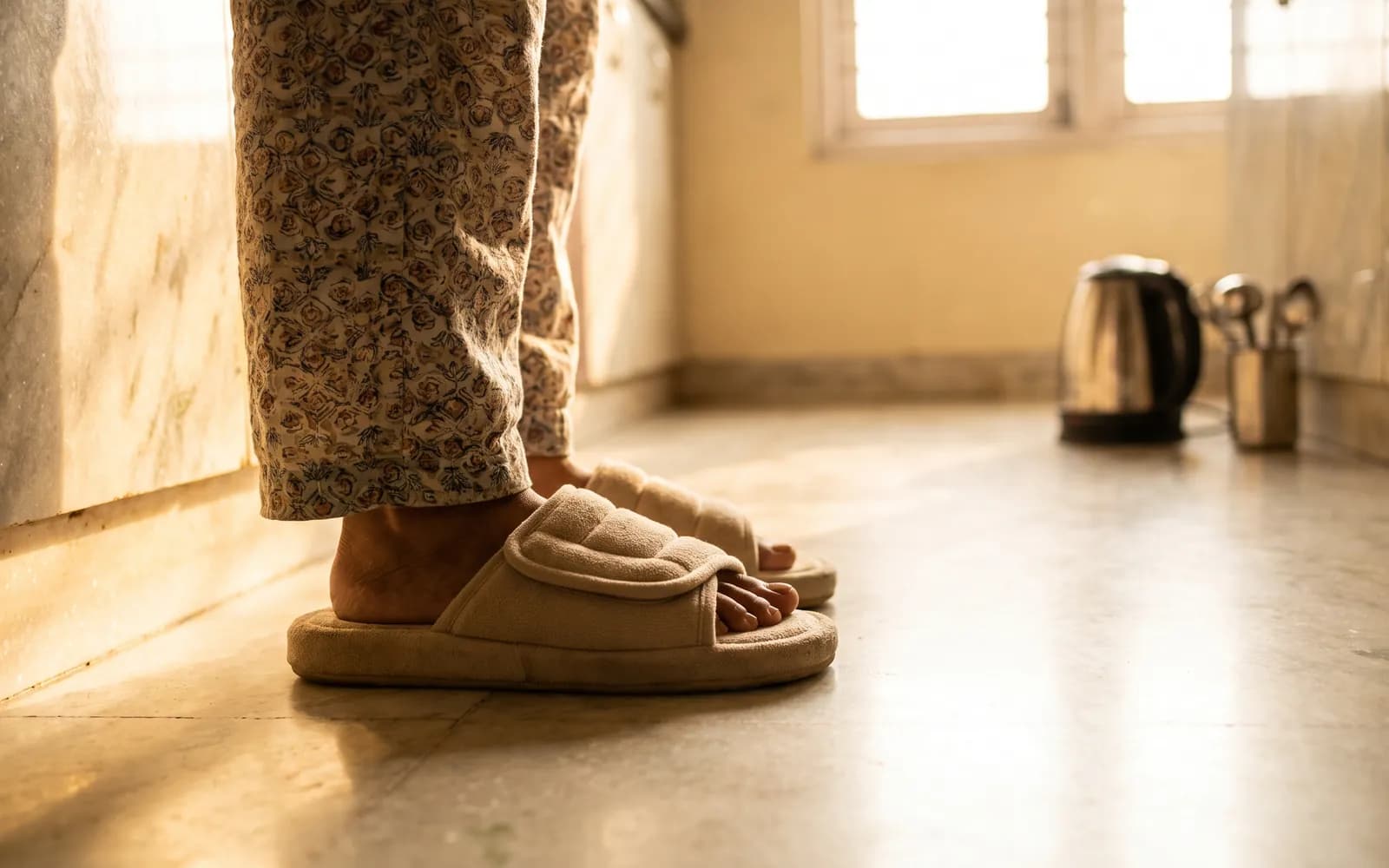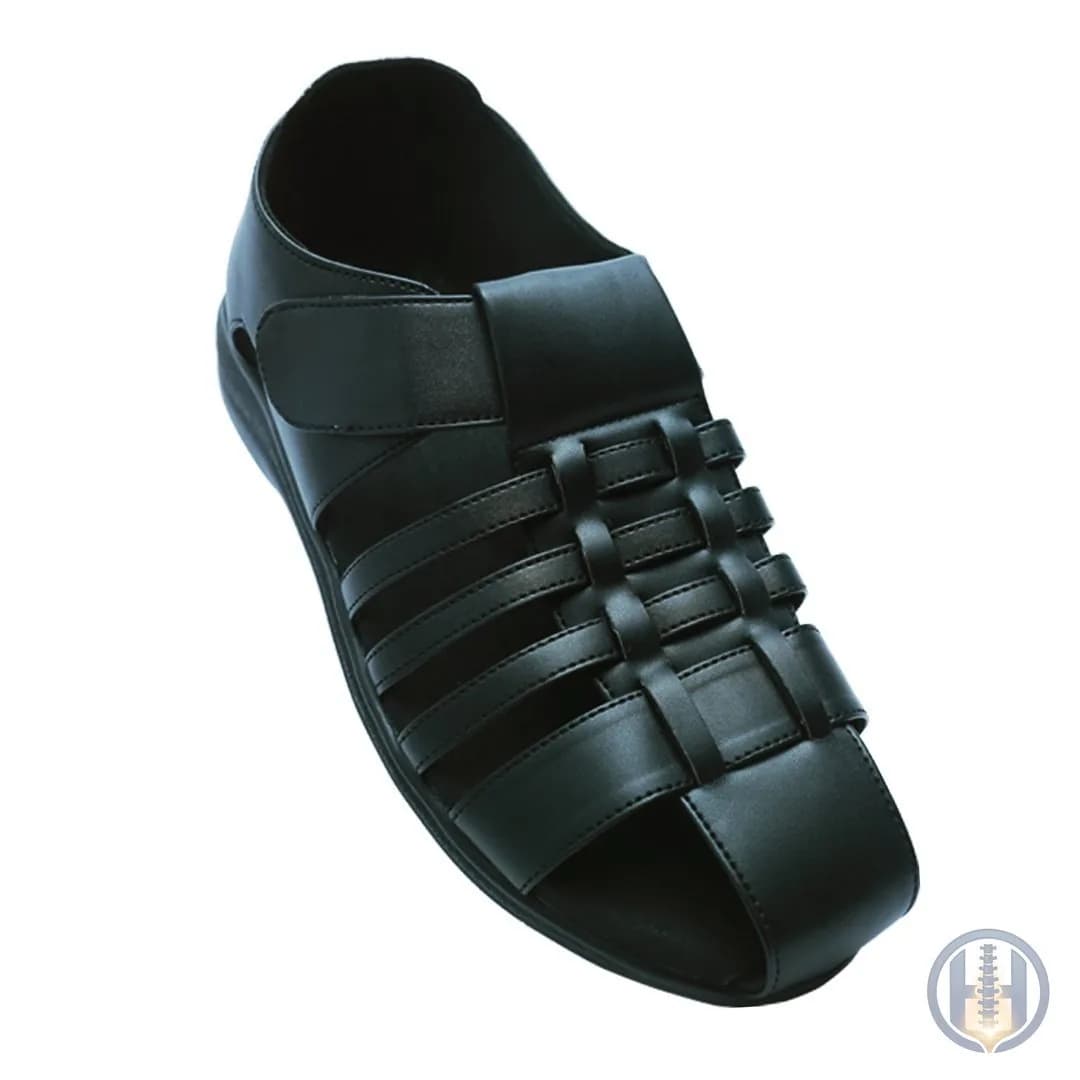
Diabetic and orthopedic footwear protects your feet through its footbed, structure and fit. Over months of daily use, footbeds compress, soles wear and straps loosen — and a worn pair quietly stops doing its job long before it looks "broken". A little care makes your pair last longer, and knowing when to replace it protects your feet.
Daily and weekly care
- Wipe clean with a damp cloth and mild soap. Don't soak or machine-wash — water can weaken bonding and footbed materials.
- Clean the footbed gently to remove sweat and dust; let it air-dry.
- Dry in the shade, never in harsh direct sun or near a stove or heater — heat can harden or deform foam footbeds.
- Alternate two pairs if you wear footwear all day — footbeds recover their cushioning between wears.
- Store them flat in a dry, ventilated place, not crushed under other footwear.
Caring for different materials
- Micro Touch / synthetic uppers: wipe with a damp cloth; avoid harsh detergents.
- Leather: wipe clean, let dry naturally, and use a leather conditioner occasionally. Keep leather pairs for dry days in the monsoon (monsoon foot care).
- Velcro straps: remove lint and hair with an old toothbrush; fasten straps closed when not in use so they don't collect fluff.
- Knit walking shoes: brush off dust; spot-clean; air-dry with paper stuffed inside.
After rain or getting wet
Rinse off mud, remove excess water, stuff with newspaper and dry in a ventilated shady spot. Never wear a pair that's still damp inside — it can rub and encourage fungal infection.
Signs it's time to replace your pair
- The footbed has a permanent dent where your heel sits
- The arch feels flatter than when new
- The sole is worn unevenly — more on one side or at the heel
- Straps no longer hold the foot firmly or velcro doesn't grip
- New aches in your heel, arch, knee or back
- Visible cracks in the sole or separation of layers
- Red marks or rubbing that weren't there before (important for diabetic feet)
How long does orthopedic footwear last?
With daily use, most pairs last around 8–12 months. Heavy use — standing jobs, long daily walks — may need replacement in 6 months. Pairs used only at home or occasionally last longer. For people with diabetes, it's safer to replace a little early than late (diabetic vs regular footwear).
Replace with the same model?
If a model suited you well, re-ordering the same one is easiest — check your size again first, as feet change (measuring guide). If your needs have changed — new heel pain, swelling or a diabetes diagnosis — ask us on WhatsApp for a suggestion.
A quick monthly footwear check
Once a month, take two minutes to check each pair:
- Press the heel area of the footbed — does it still spring back?
- Look at the sole from behind — is it worn more on one side?
- Bend the pair — does it still flex at the ball of the foot, not in the middle?
- Test the straps — does the velcro grip firmly; are buckles and stitching intact?
- Feel inside — any rough edges, loose stitching or worn lining that could rub?
If two or more checks fail, it's time to plan a replacement.
Keep a home pair and an outdoor pair
Using separate pairs for home and outdoors keeps the home pair clean and makes both last longer. It also means you're never tempted to walk barefoot indoors — an important habit for people with diabetes and heel pain.
Don't keep "spare" old pairs in use
It's tempting to keep a worn-out pair for "the garden" or "quick trips". But worn pairs are exactly what bring heel pain back. Retire them once the footbed has flattened, and replace them with a fresh supportive pair. Our price-wise guide helps you choose within your budget.