Most men buy slippers on price and looks, wear them until they fall apart and never think about them again. Then one morning there is a sharp pain in the heel, or the knees start aching after a walk to the shop. Often the humble gents chappal is part of the problem.
This guide explains what makes the best slippers for men — not just comfortable for a week, but supportive for months — and suggests ortho slippers for different needs and budgets.
What makes a men's slipper "comfortable"?
Real comfort comes from support, not just softness:
- Arch support — a visible rise under the middle of the foot.
- Cushioned heel that springs back after you press it.
- Stable sole that doesn't twist or fold in the middle.
- Broad, secure strap so your toes don't grip to keep the slipper on.
- Grip for wet bathroom and tiled floors.
- Right width — many Indian men have broad feet, and a narrow slipper pushes the foot over the edge.
A thin rubber hawai slipper offers none of these. That's fine for a quick trip to the bathroom, but not for a full day.
Types of men's ortho slippers
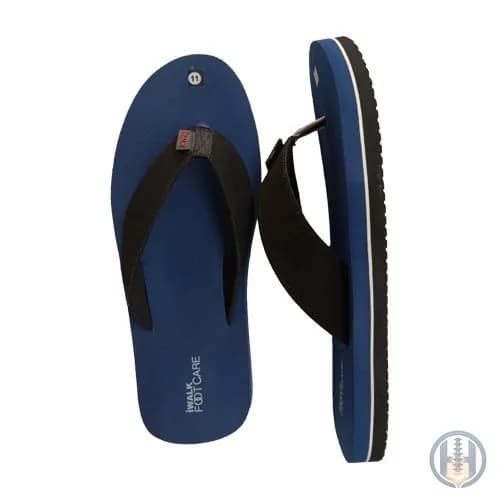
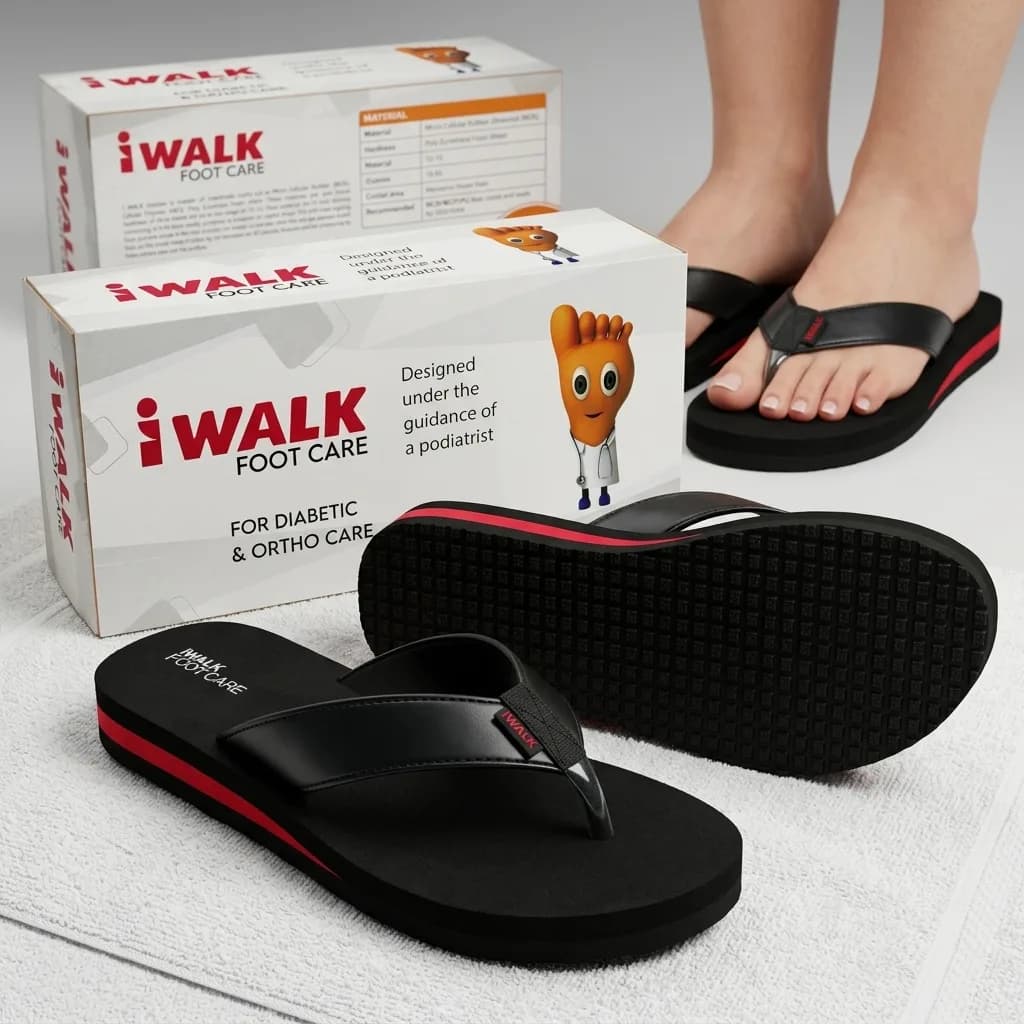
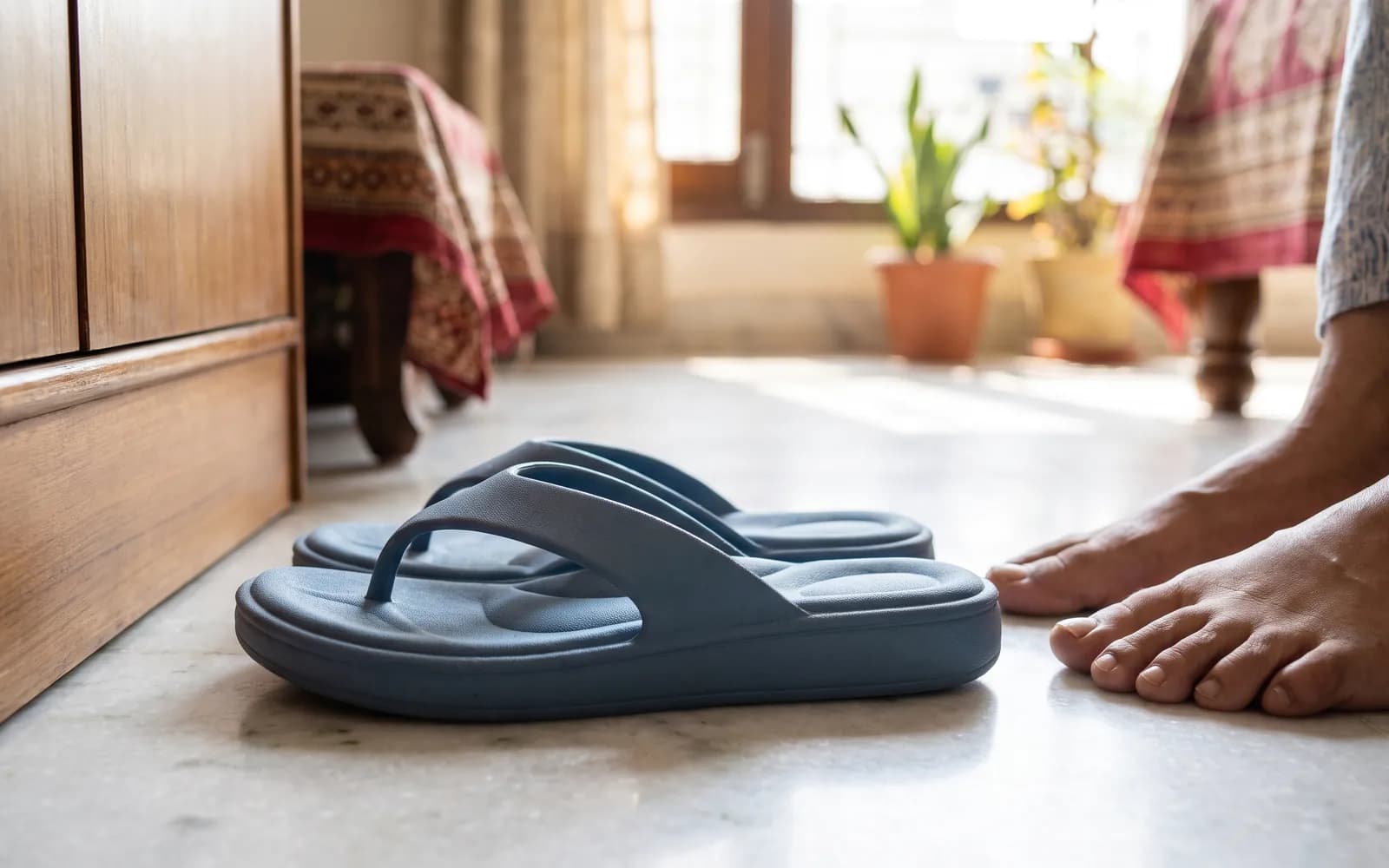
Orthopedic flip-flops (around ₹700)
The AJM 800 and AJM 810 use an arch-support MCP footbed with a lab-tested non-slip or anti-skid sole. Ideal for home use, flat feet and anyone stepping up from rubber slippers.
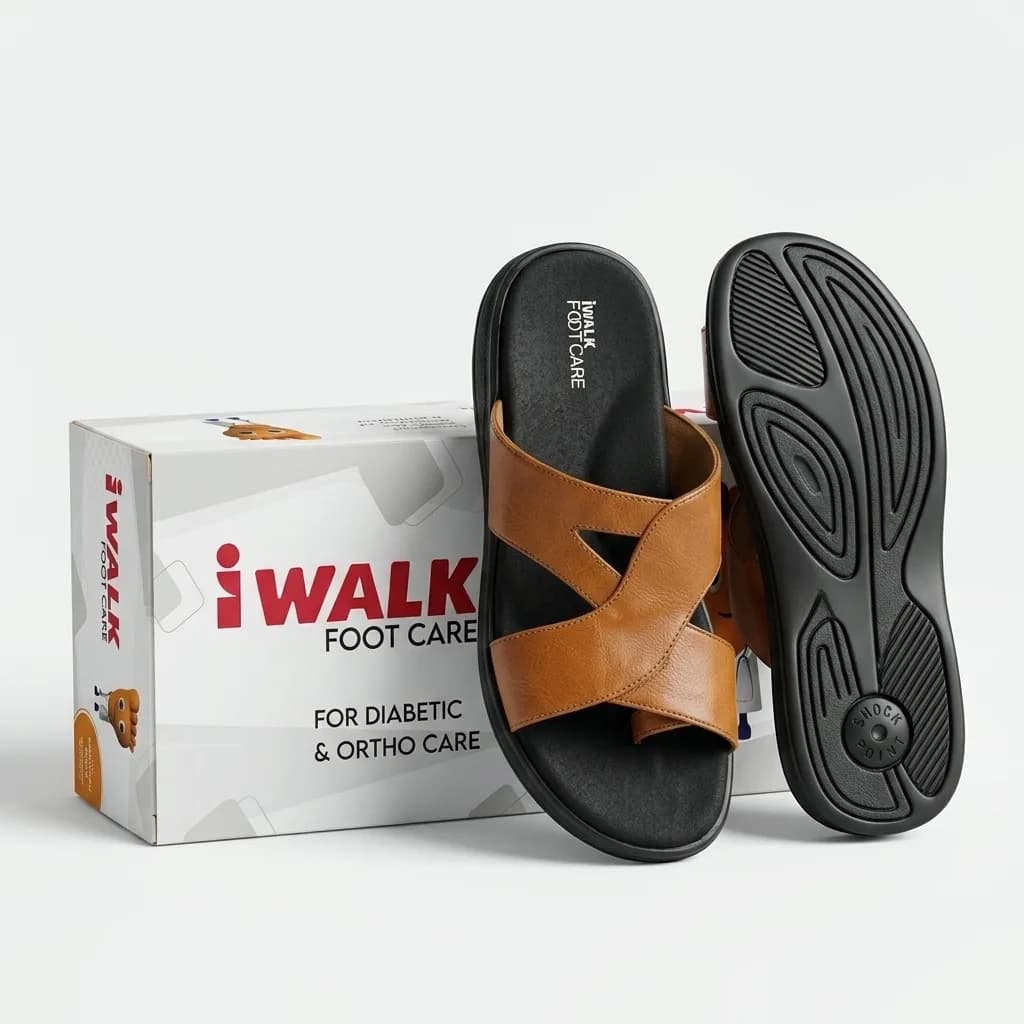
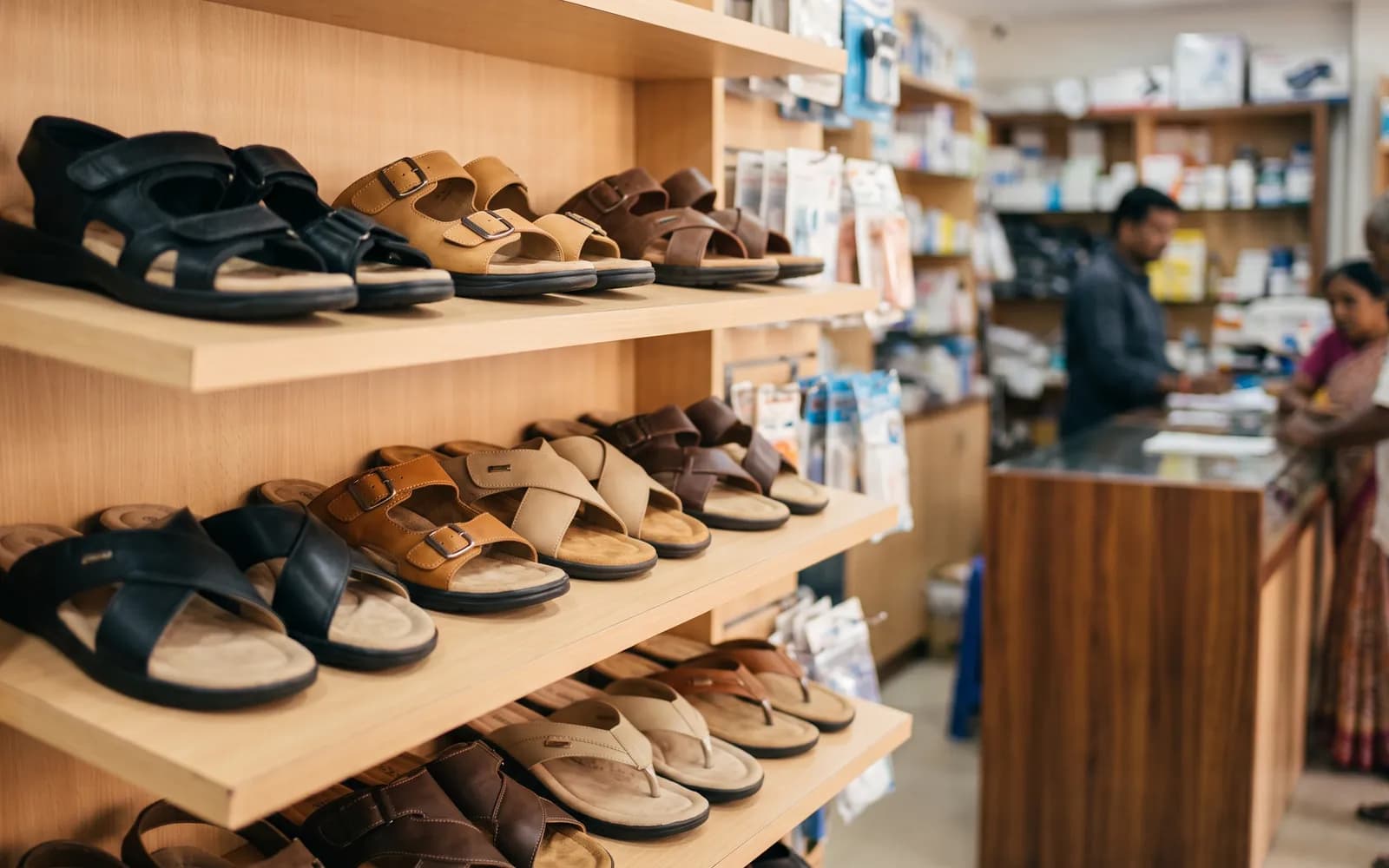
Slides (around ₹1,550)
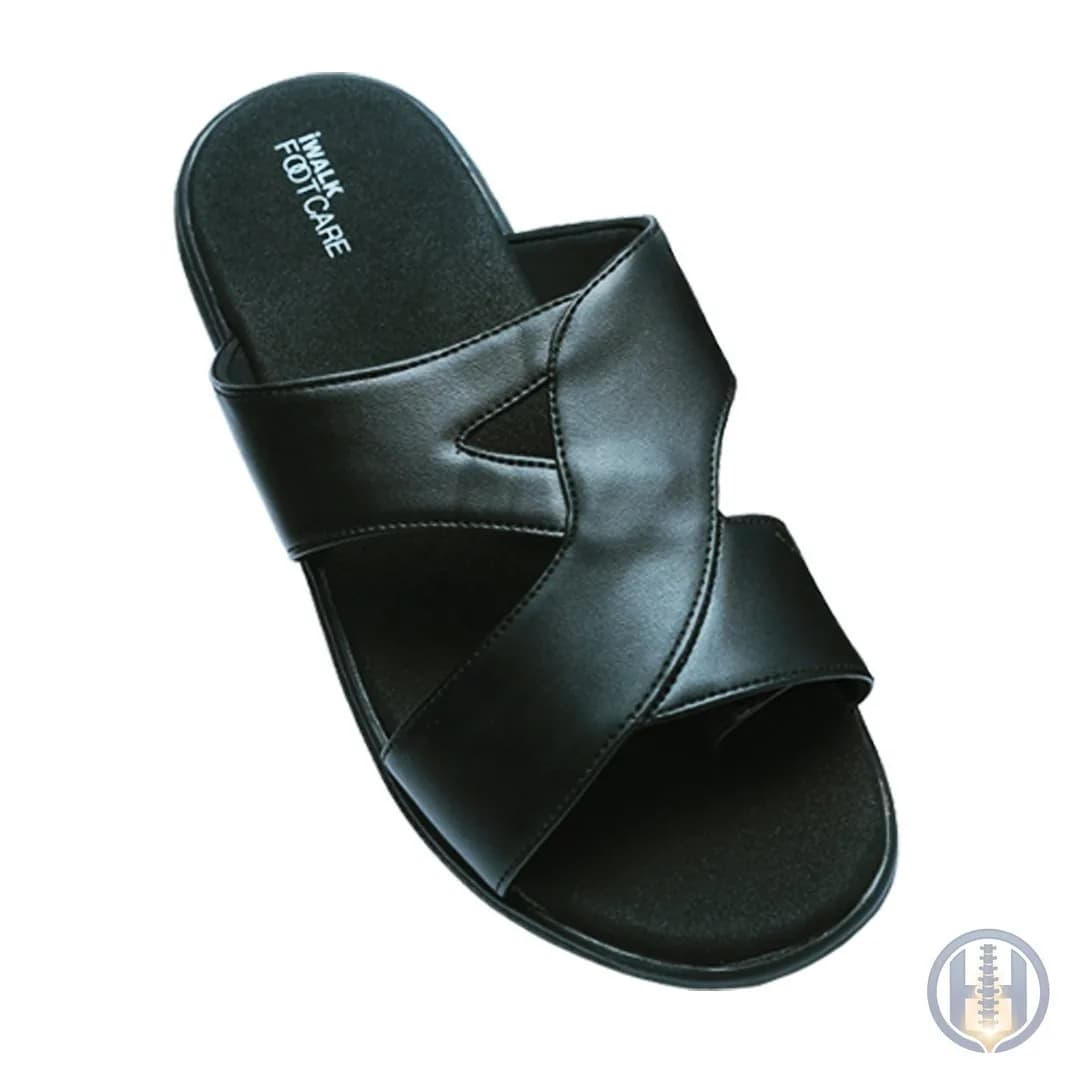
No toe post, so they are easy to slip on and comfortable for people who dislike thong designs. The AJM 05 cross-band slide is popular for daily wear around the house and neighbourhood.
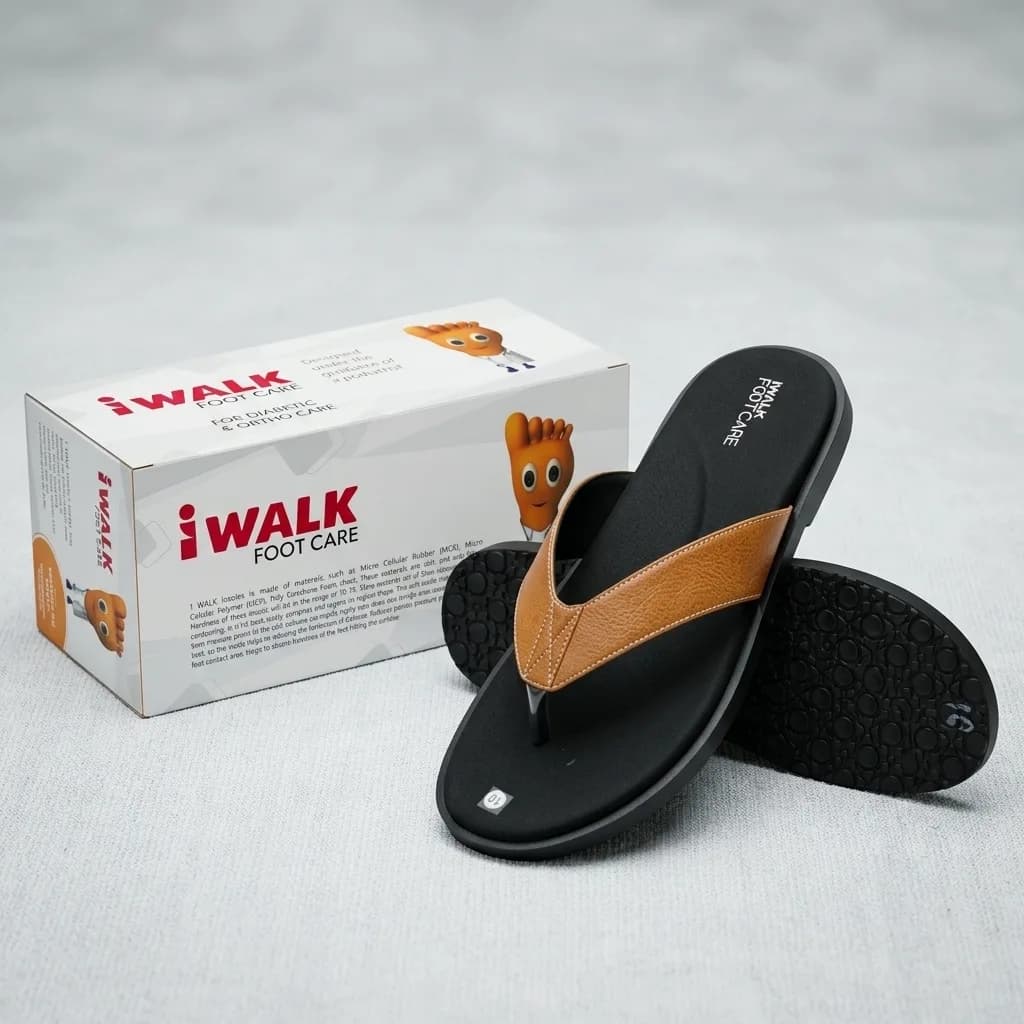
Thong-style diabetic slipper (around ₹1,550)
The AJM 02 has softer construction for sensitive feet while keeping the familiar flip-flop shape.
Diabetic slip-ons and buckle slides (around ₹1,550–₹1,750)
For diabetes, neuropathy or ongoing heel pain, step up to the AJM 08 slip-on or the AJM 18 double-buckle slide, both with soft Micro Touch uppers.
Best slippers for men by problem
| Problem | What to look for | Example |
|---|---|---|
| Heel pain / plantar fasciitis | Deep heel cup, firm arch | AJM 18, AJM 05 |
| Flat feet | Strong arch contour | AJM 800 |
| Knee pain | Shock-absorbing footbed | AJM 810, AJM Walker |
| Diabetes / neuropathy | Soft lining, no hard seams | AJM 08 |
| Swollen feet | Adjustable velcro | AJM 09 |
| Wide feet / bunions | Wide toe box | AJM 12 |
| Slippery floors | Lab-tested non-slip sole | AJM 800, AJM 810 |
Read more in our guides to heel spur, knee pain and footwear for men.
Doctor chappal for men: are they worth it?
If you stand for long hours, walk a lot, are overweight, have diabetes or already feel heel or knee pain, yes. A genuine orthopedic slipper spreads your weight across the whole sole instead of concentrating it on the heel and ball of the foot. Many of our customers tell us the difference is noticeable within the first week.
What isn't worth it is a cheap "doctor slipper" with a flat, squashy sole. Our doctor chappal guide explains how to tell the difference in the shop.
Getting the size right
- Measure your feet in the evening, when they are slightly larger.
- Leave about 1 cm in front of the longest toe.
- Make sure your heel sits fully on the footbed, not hanging over the back.
- Men's iWALK sizes run from 6 to 14, so larger feet are well covered.
Use our step-by-step foot measuring guide.
How long do men's slippers last?
With daily use, a good MCP ortho slipper typically lasts 9–12 months. Replace it when the arch looks flattened, the heel is worn on one side, or the strap has stretched. Rotating two pairs — one for home and one for outdoors — makes both last longer.
Buying for your father? Orthopedic slippers make a practical, much-used gift. Read our gift guide for parents, and WhatsApp us his usual size and any foot problems for a recommendation.
Key takeaways
- The best slippers for men have arch support, a cushioned heel, a stable sole and a secure strap.
- Genuine ortho flip-flops start around ₹700; diabetic slides around ₹1,550–₹1,750.
- Match the slipper to your problem — heel pain, flat feet, knees or diabetes.
- Browse all men's ortho slippers and sandals with Cash on Delivery.