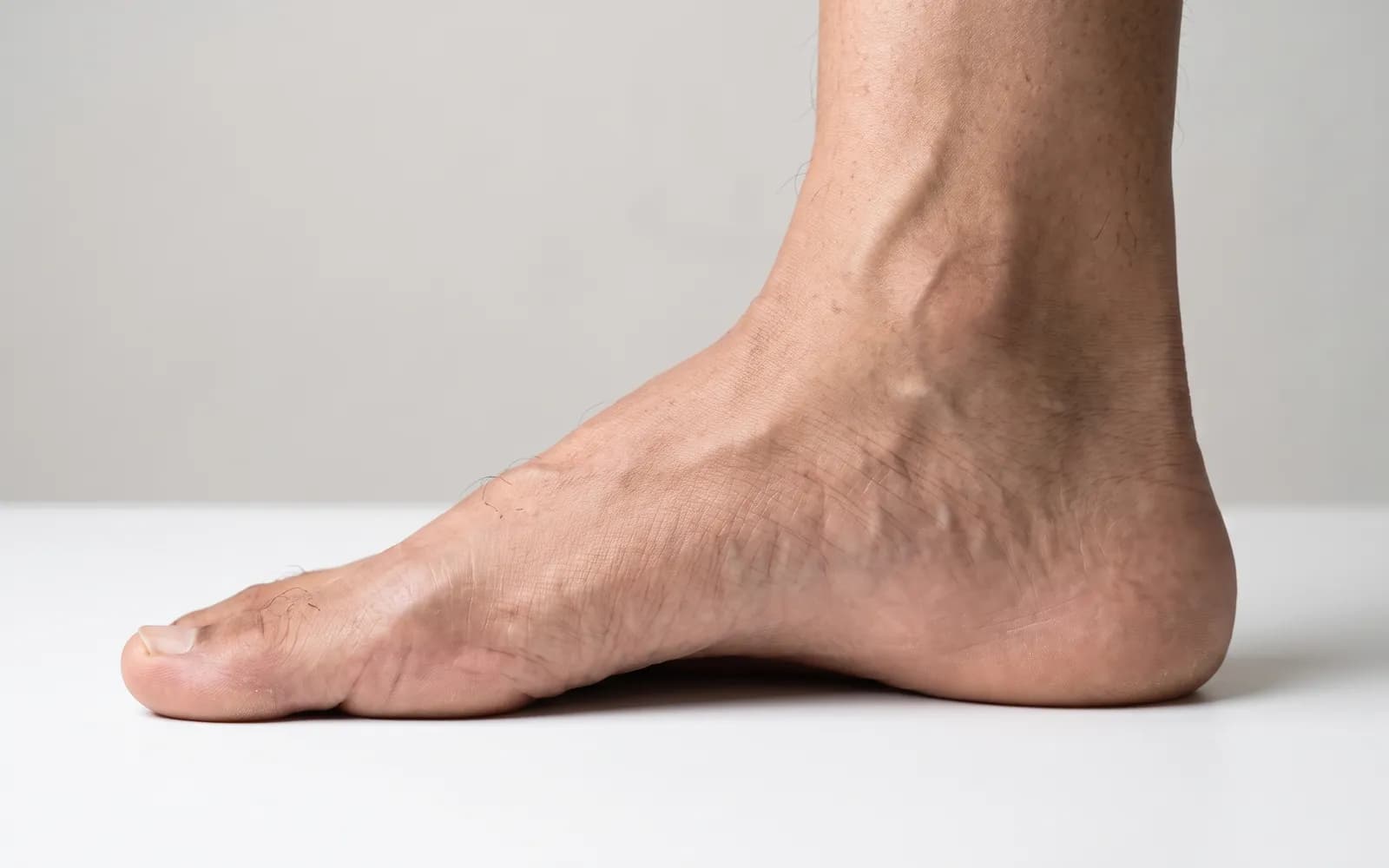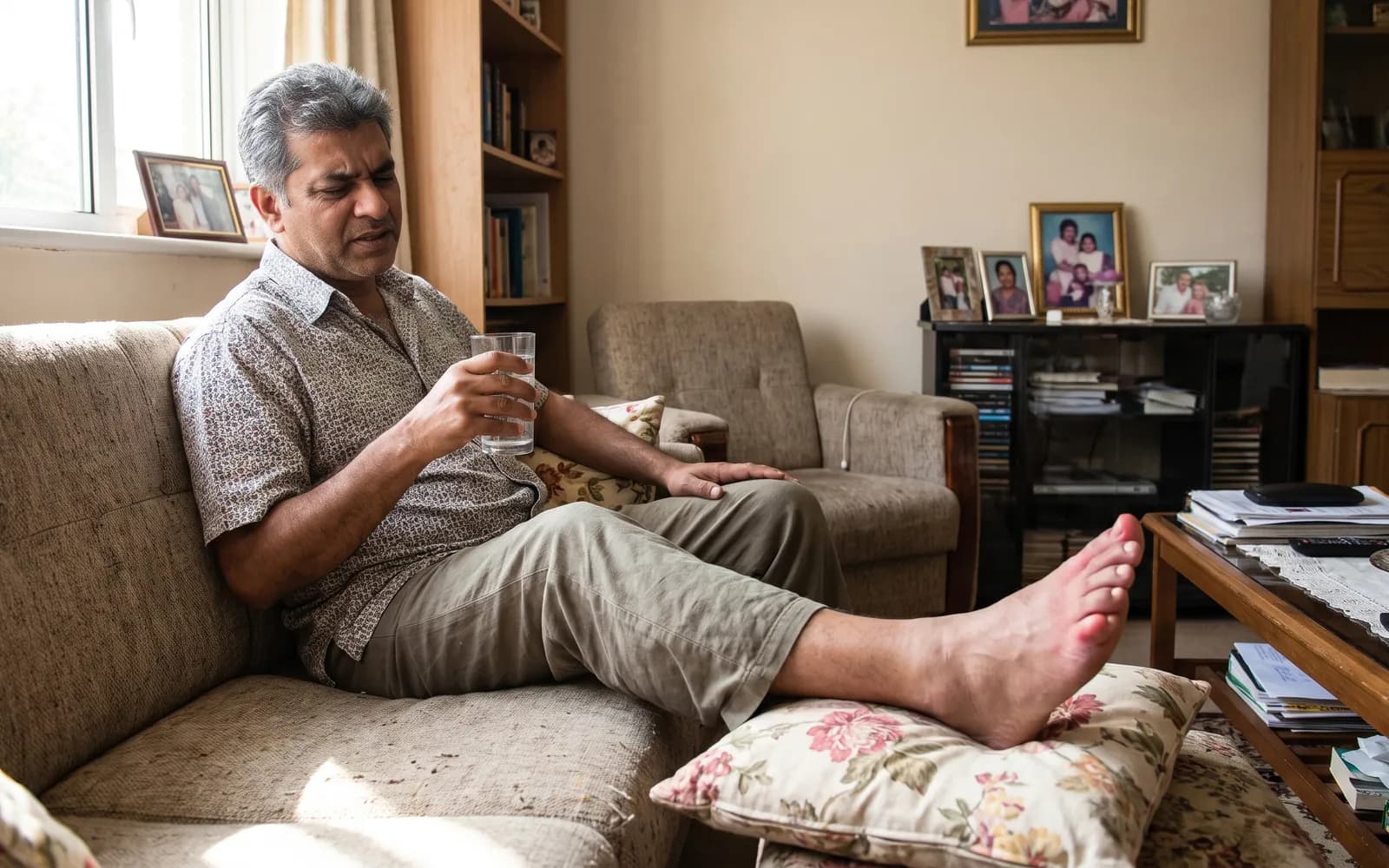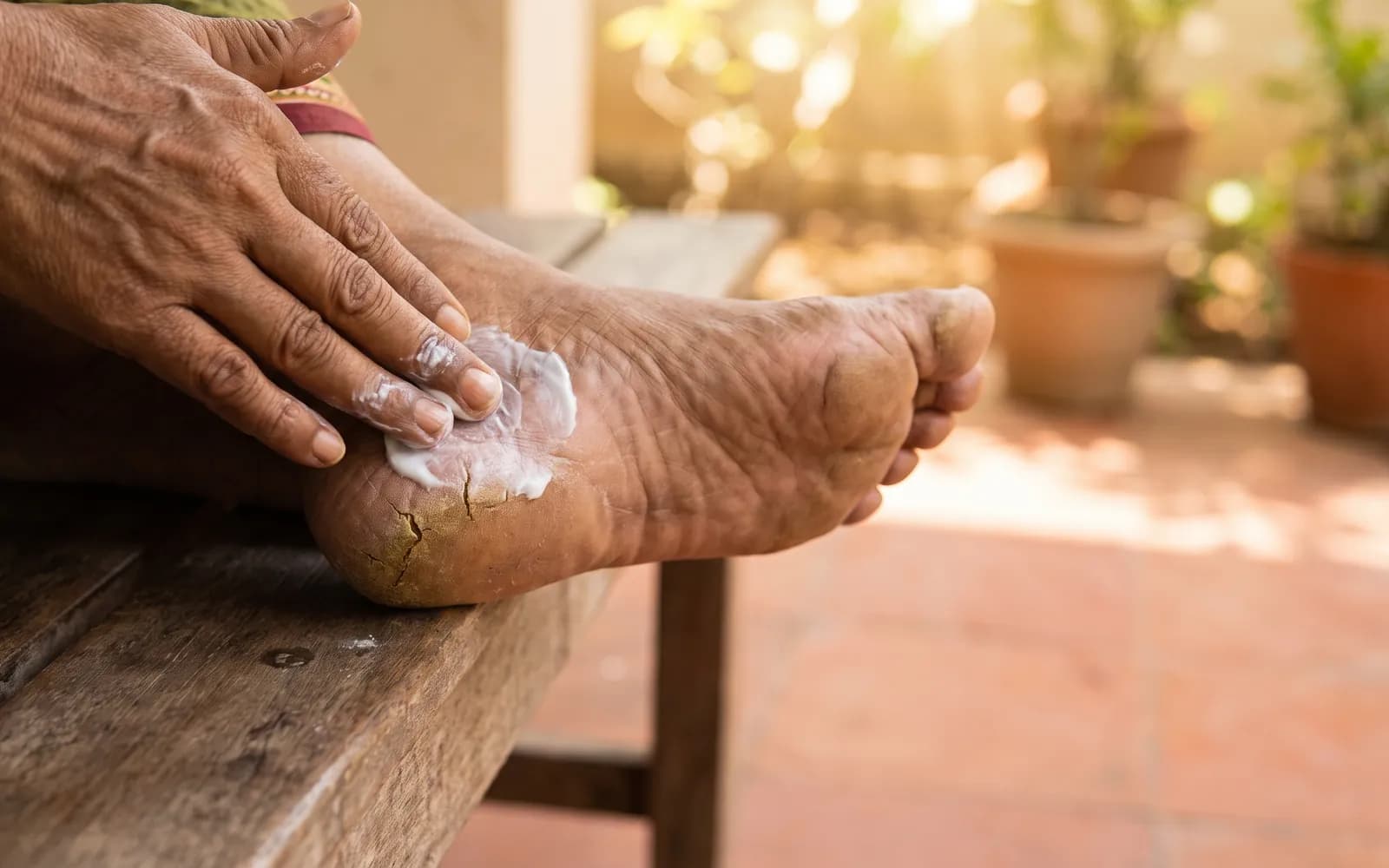
Cracked heels — bivaai or heel fissures — are one of the most common foot problems in India. They start as dry, thickened, yellowish skin around the rim of the heel, then split into cracks that can catch on sarees and bedsheets, hurt when you walk, and sometimes bleed.
The good news: most cracked heels heal with a simple routine and a few changes to your footwear. This guide covers why heels crack, a cracked heels treatment you can do at home, what to look for in a heel crack cream, and important precautions if you have diabetes.
Why do heels crack?
The skin on your heel is thick. When it becomes dry and is under pressure, it can't stretch as the heel expands with every step — so it splits. The common causes:
- Open-back slippers and flip-flops. With nothing holding the heel, the fat pad spreads sideways with every step and the rim of the skin is stretched. This is the single biggest footwear cause we see.
- Walking barefoot, especially on rough or hot floors.
- Dry weather and dehydration — Chennai's heat and air-conditioned offices both dry the skin.
- Long hours standing.
- Body weight, which increases pressure on the heel pad.
- Hard water and harsh soaps.
- Medical conditions such as diabetes (reduced sweating), hypothyroidism, eczema and psoriasis.
A simple nightly routine for cracked heels
Follow this every night for two to three weeks:
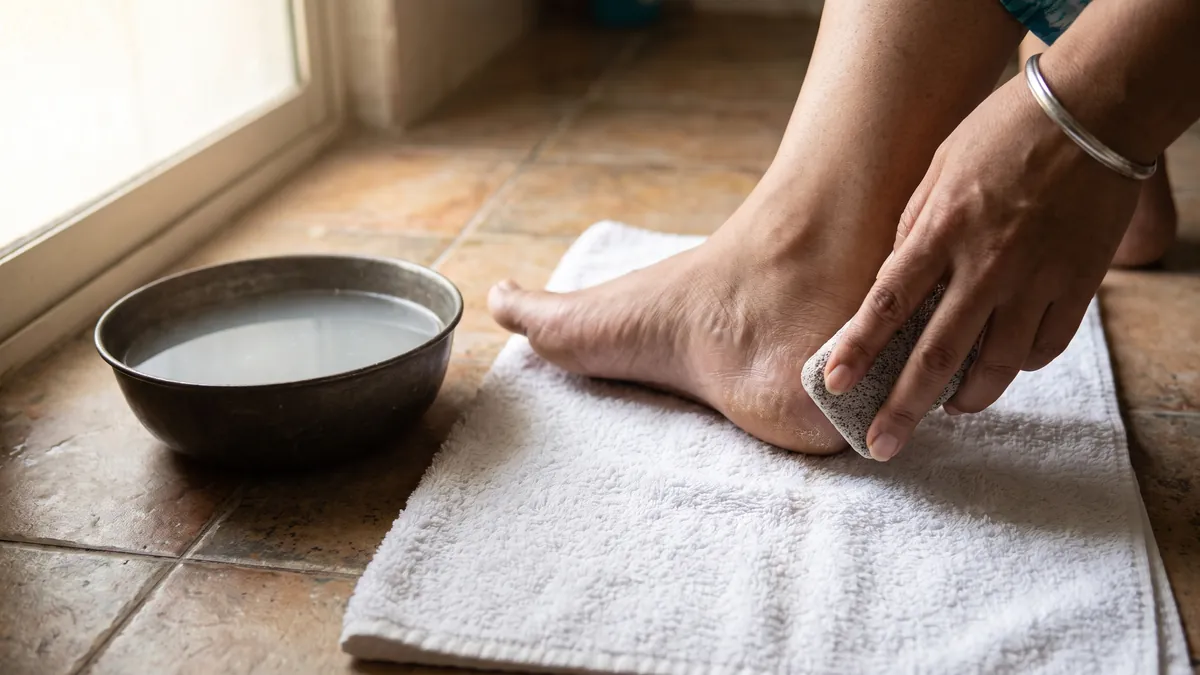
- Soak your feet in lukewarm (not hot) water for 10 minutes.
- Gently smooth the thickened skin with a pumice stone or foot file — a few light strokes only. Never cut hard skin with a blade.
- Pat dry, including between the toes.
- Apply a thick moisturiser to the heels while the skin is still slightly damp.
- Wear cotton socks overnight to lock the moisture in.
What to look for in a heel crack cream
You don't need an expensive product. Look for these ingredients on the label:
| Ingredient | What it does |
|---|---|
| Urea (10–25%) | Softens and thins hard, thick skin |
| Salicylic acid or lactic acid | Gently loosens dead skin |
| Glycerin | Draws moisture into the skin |
| Petroleum jelly, shea butter | Seals moisture in |
For very deep cracks, a pharmacist may recommend a stronger urea cream. Stop any product that stings badly or causes redness.
Home remedies for cracked heels
These traditional remedies are safe for most people as part of the routine above:
- Coconut oil — a good overnight moisturiser.
- Petroleum jelly with a few drops of glycerin under cotton socks.
- Honey — a natural humectant; apply after soaking and wash off after 20 minutes.
- Ripe banana or aloe vera gel as a softening mask once or twice a week.
- Drink enough water through the day, especially in summer.
Avoid lemon juice on open cracks (it stings and dries) and never use sharp tools.
The footwear fix for cracked heels
Creams treat the skin; footwear removes the cause.
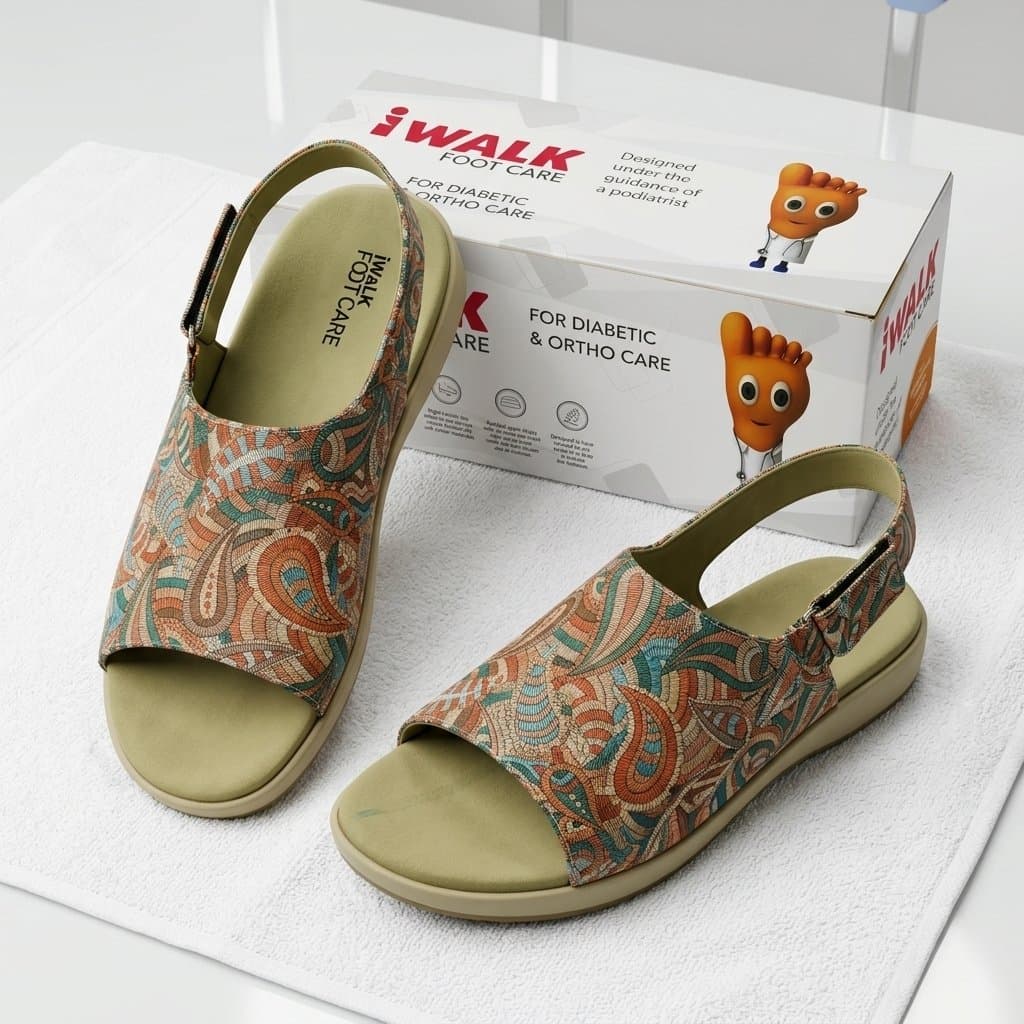
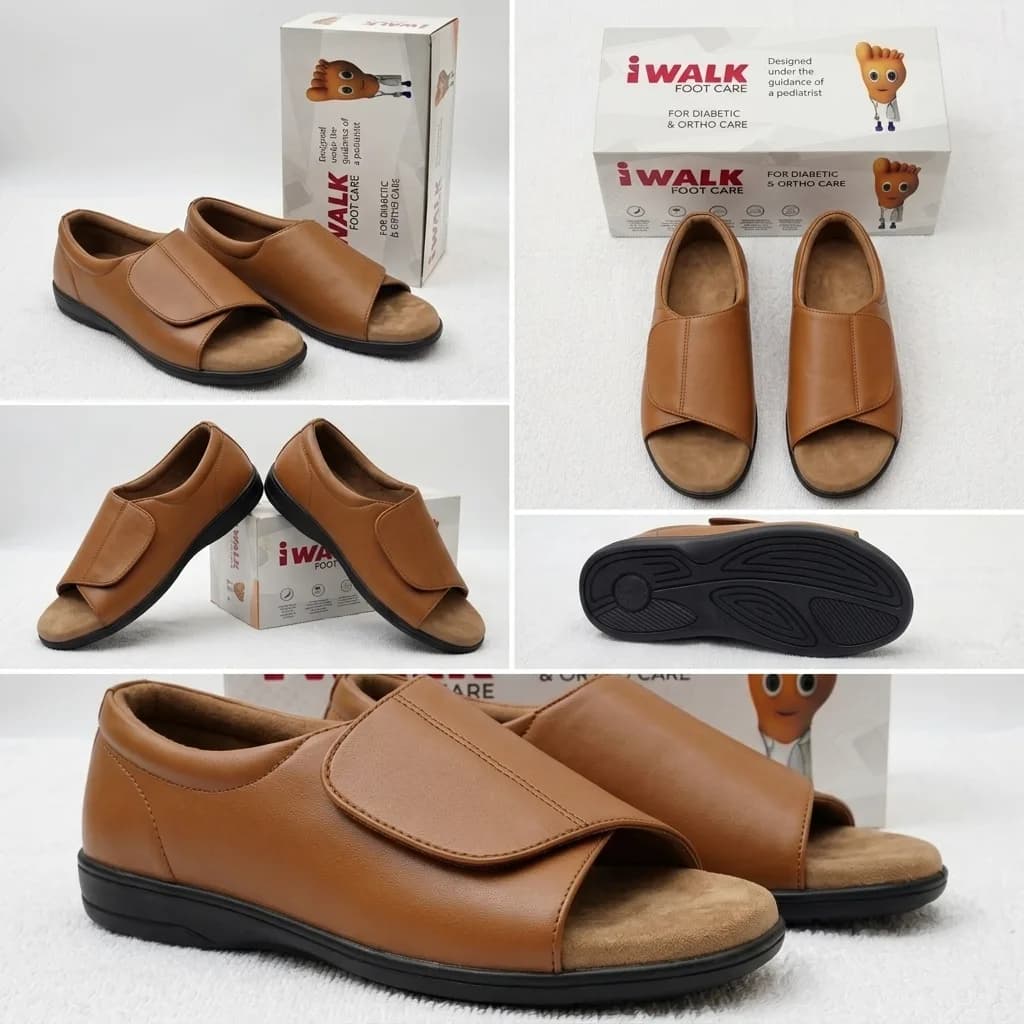
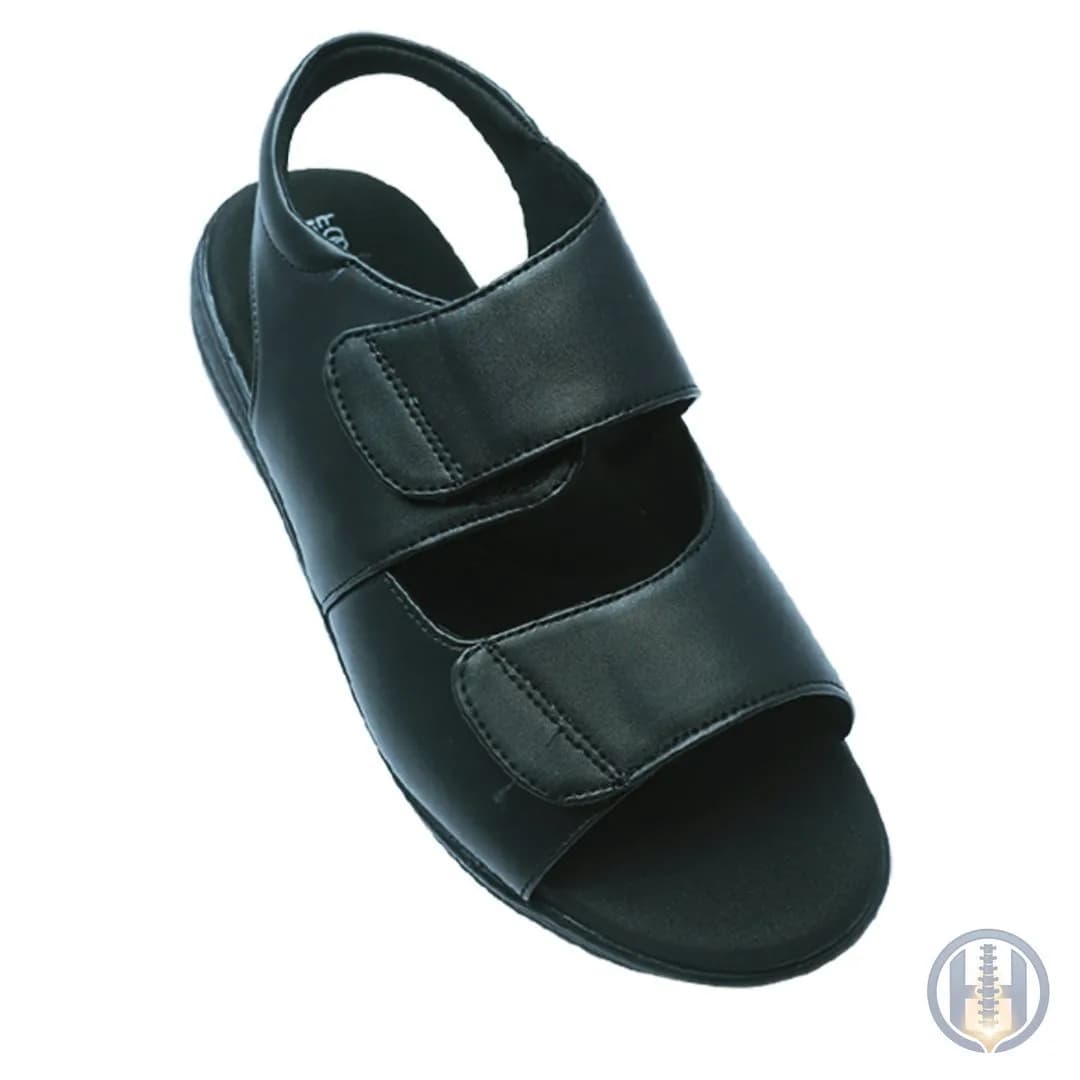
- Choose sandals with a back strap or closed heel. A heel strap, as on the AJM 09 velcro sandal or the AJM Classic, holds the heel pad together instead of letting it spread.
- Pick a cushioned heel cup — an MCP footbed cradles the heel and reduces the pressure that splits the skin.
- Wear supportive slippers at home instead of walking barefoot (doctor chappal guide).
- Wear socks with closed shoes, such as walking shoes, to reduce friction.
For women, the AJL 32 and AJL Majestic have secure straps and cushioned footbeds.
Cracked heels and diabetes: extra care
If you have diabetes, a heel crack is an open wound that can let infection in, and reduced sensation means you may not feel it getting worse.
- Do not use pumice stones aggressively, blades or corn cutters.
- Do not soak your feet in hot water — test temperature with your elbow.
- Moisturise heels daily, but not between the toes.
- Check your heels daily for cracks, redness, warmth, discharge or bleeding.
- See your doctor promptly if a crack is deep, bleeding, red or painful.
Read our daily diabetic foot care tips and diabetes symptoms in the feet.
When to see a doctor
- Cracks that bleed or are very deep.
- Redness, swelling, warmth or pus (signs of infection).
- No improvement after 2–3 weeks of regular care.
- Thick, scaly skin elsewhere on the feet (possible fungal infection or psoriasis).
Cracks keep coming back? Your slippers may be the cause. WhatsApp us your size and we'll suggest a cushioned sandal with a heel strap.
Key takeaways
- Heels crack when dry skin meets pressure — open-back slippers and barefoot walking are major causes.
- Soak, gently smooth, moisturise with a urea-based heel crack cream and wear socks overnight.
- Switch to cushioned, heel-strap footwear to stop cracks returning.
- Extra caution with diabetes — treat every crack as a wound.