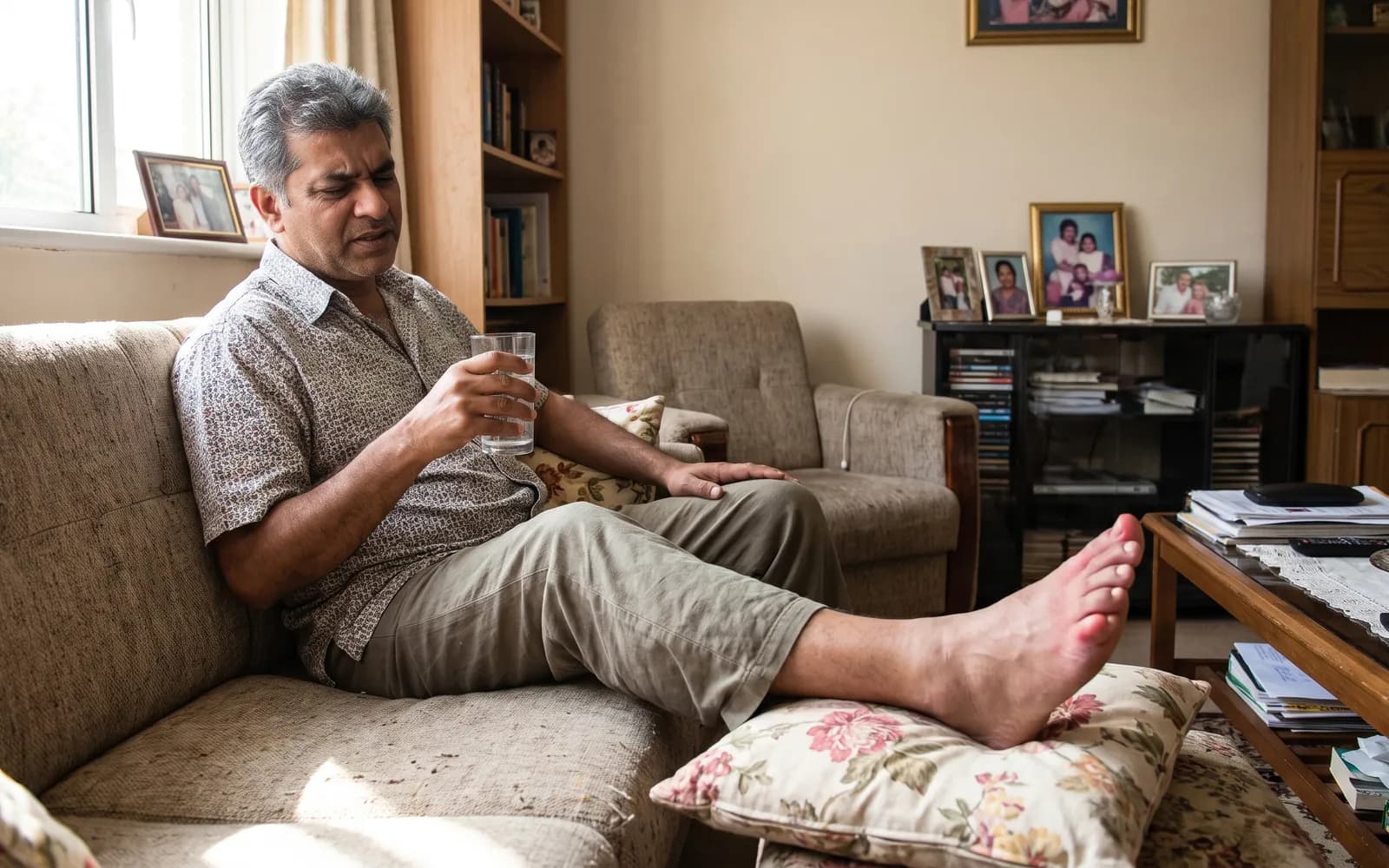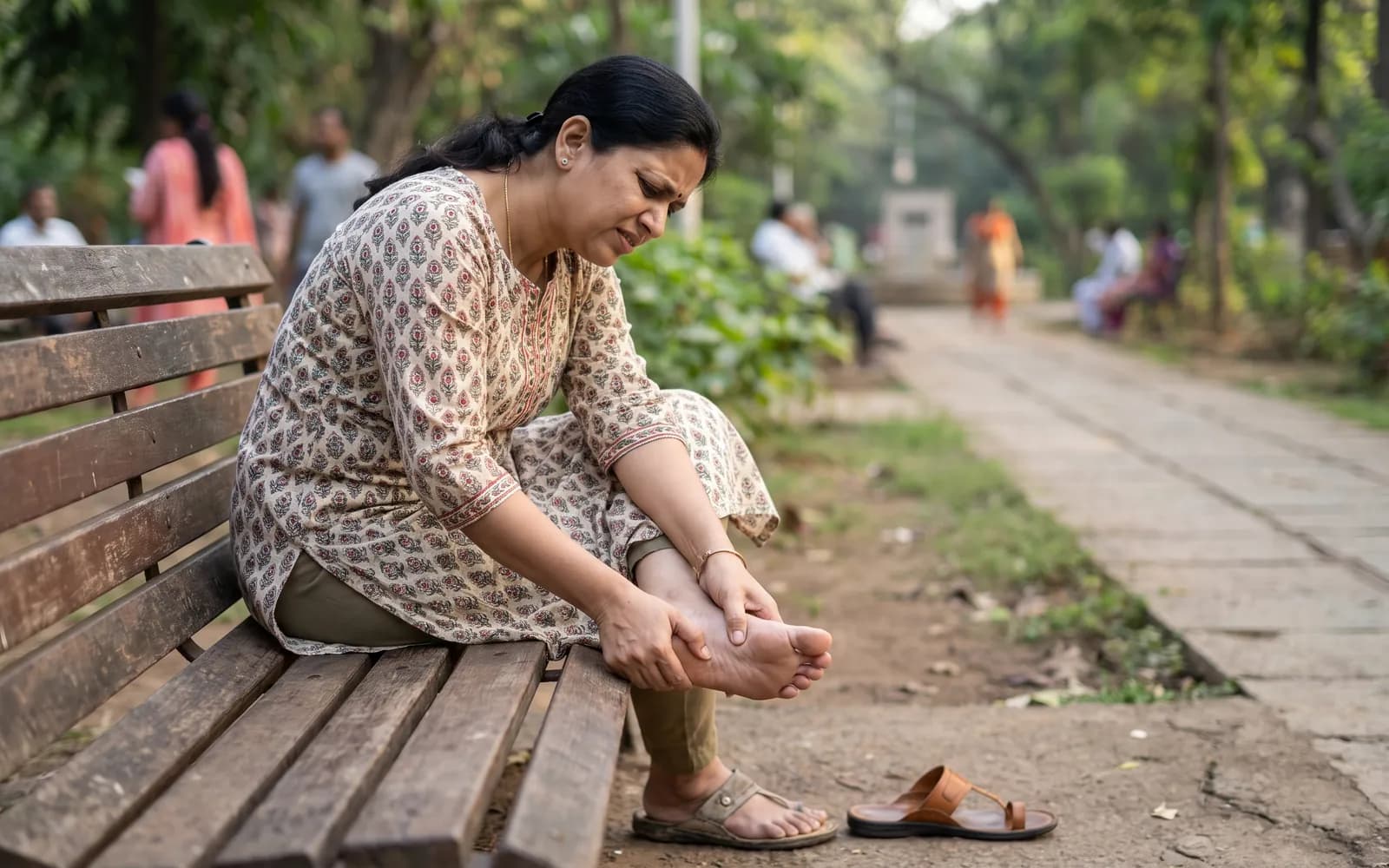
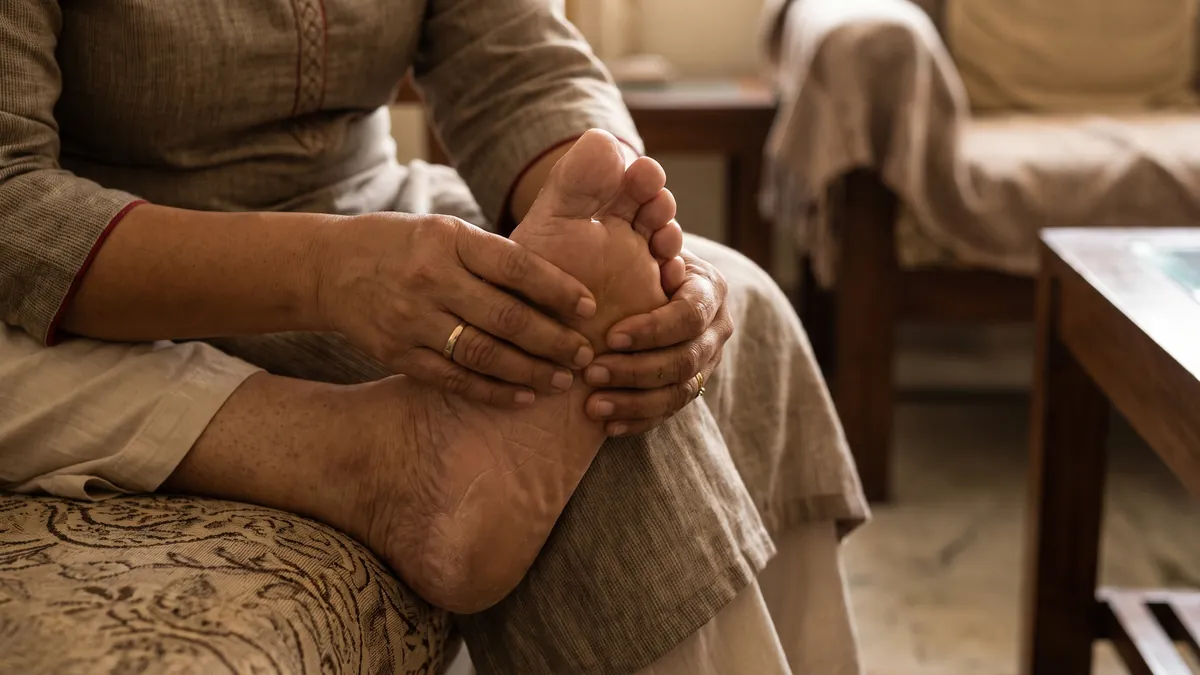
If it feels like you are walking on a small stone, or the padded area just behind your toes aches and burns after standing or walking, you may have metatarsalgia — the medical name for pain in the ball of the foot.
It is very common in people who stand for long hours, wear heels, walk on hard floors, or have lost some of the natural cushioning under the forefoot with age. The good news is that most metatarsalgia improves with the right footwear, simple padding and a few exercises.
What is metatarsalgia?
The "ball" of your foot sits under the metatarsal heads — the ends of the five long bones that connect to your toes. Every time you push off while walking, a large share of your body weight passes through this area. When it is overloaded, the tissues and joints there become inflamed and painful.
Typical symptoms:
- Aching, burning or sharp pain in the ball of the foot, often under the 2nd to 4th toes.
- Pain that is worse when standing, walking barefoot or on hard floors, and better with rest.
- A feeling of a pebble or fold in your sock.
- Sometimes numbness or tingling in the toes.
Common causes of ball of foot pain
- High heels and shoes with a steep heel-to-toe drop push weight forward.
- Thin, hard or flat soles with no cushioning.
- Narrow toe boxes that squeeze the forefoot.
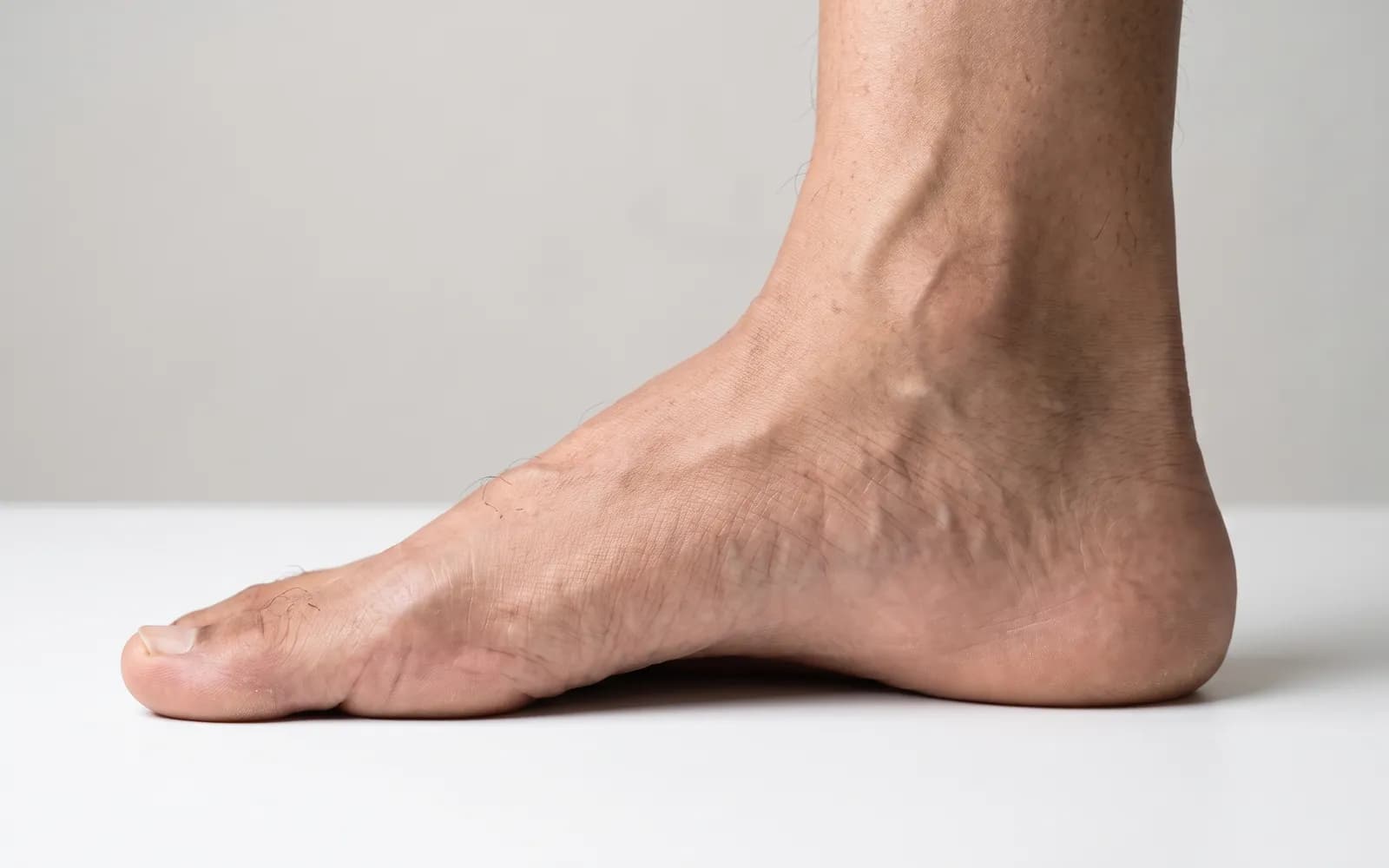
- High arches, which concentrate pressure on the heel and ball (high arch feet guide).
- Bunions or hammer toes that shift load (bunion guide).
- Thinning of the fat pad under the forefoot with age.
- Excess body weight and long hours standing.
- Tight calf muscles, which make you push off harder through the forefoot.
- Morton's neuroma — a thickened nerve between the 3rd and 4th toes that causes burning and tingling.
Relief at home
- Rest and reduce standing where you can for a few days.
- Ice the area for 15 minutes, two or three times a day (wrap ice in a cloth).
- Never walk barefoot on hard floors — wear cushioned slippers indoors.
- Stretch your calves against a wall: 30 seconds, three times each side, twice a day.
- Toe exercises: pick up a small towel with your toes, or spread your toes wide and hold for five seconds.
- Lose a little weight if needed — every kilogram reduces forefoot load.
How a metatarsal pad helps
A metatarsal pad is a small dome placed just behind the ball of the foot (not directly under the painful spot). It lifts and spreads the metatarsal bones, moving pressure away from the sore area. Many people feel relief immediately. If you are unsure about placement, ask a physiotherapist or podiatrist — a pad in the wrong place can feel worse.
Good arch support also reduces forefoot load. A semi-rigid insert such as the Arch Support Semi Pro can be used inside closed shoes.
The right footwear for metatarsalgia
| Look for | Why |
|---|---|
| Thick, cushioned footbed (e.g. 12mm MCP) | Absorbs impact under the forefoot |
| Wide, roomy toe box | Lets the metatarsals spread naturally |
| Low heel (1–3 cm) | Doesn't push weight forward |
| Arch support | Shares load between heel, arch and forefoot |
| Firm sole that doesn't bend in the middle | Less strain at push-off |
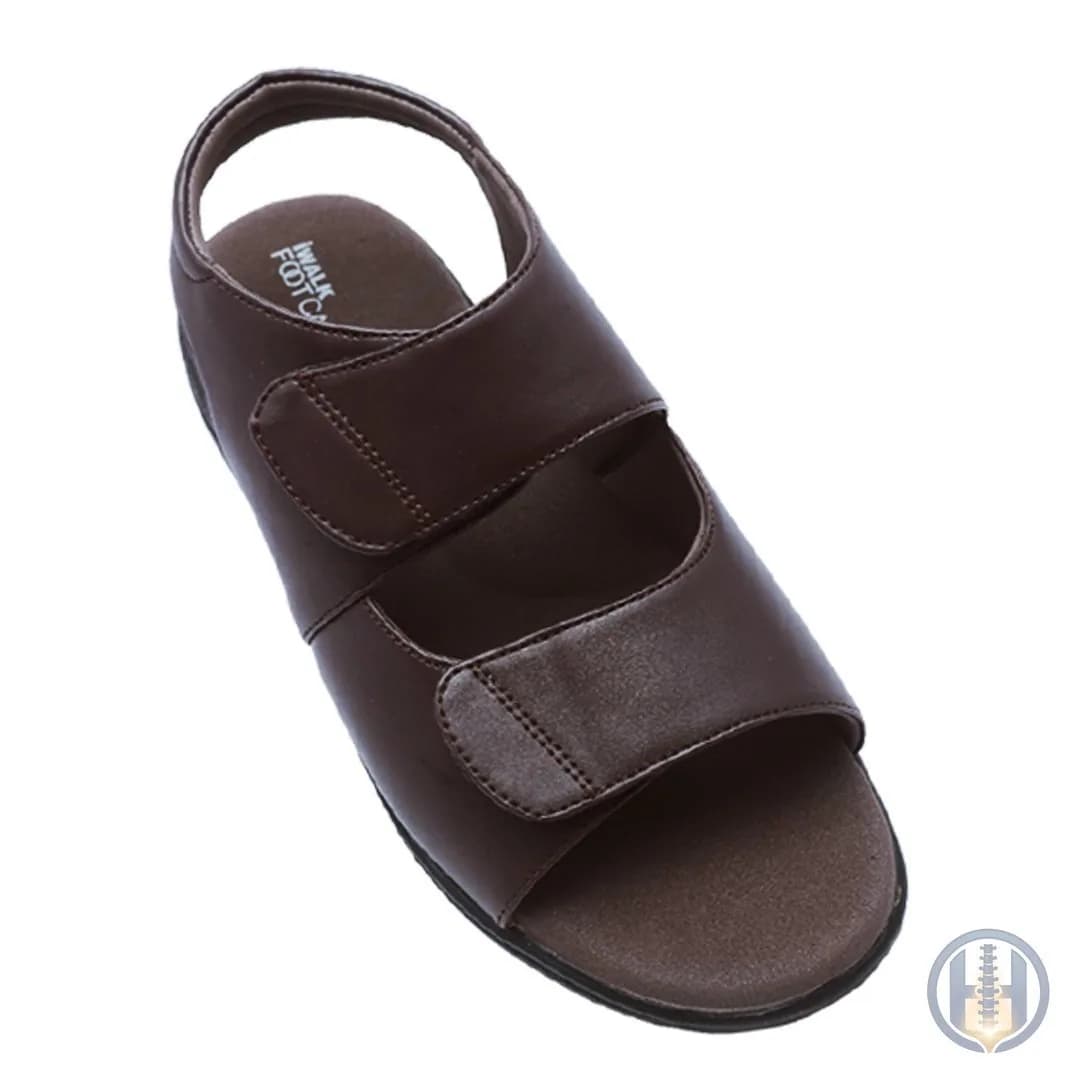
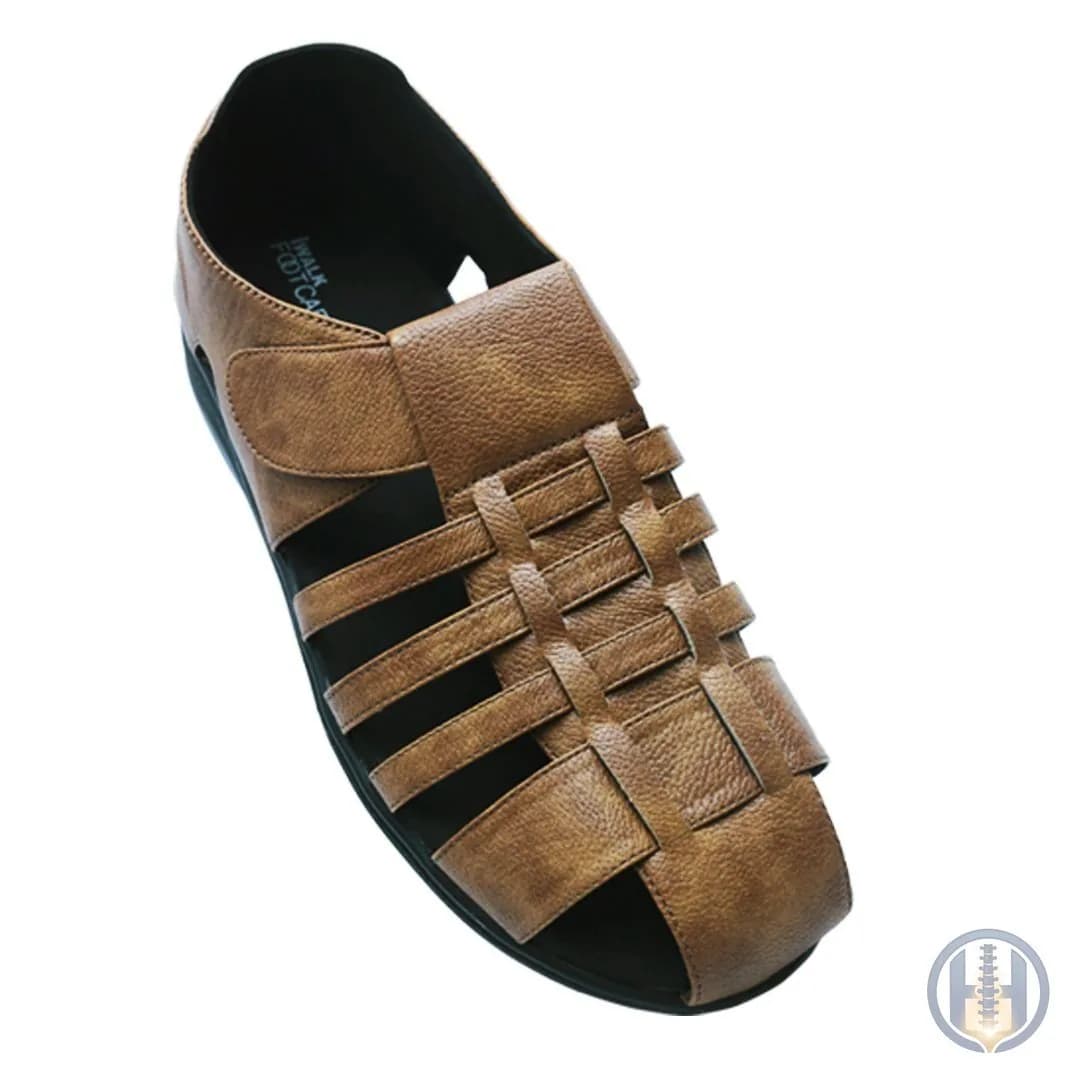
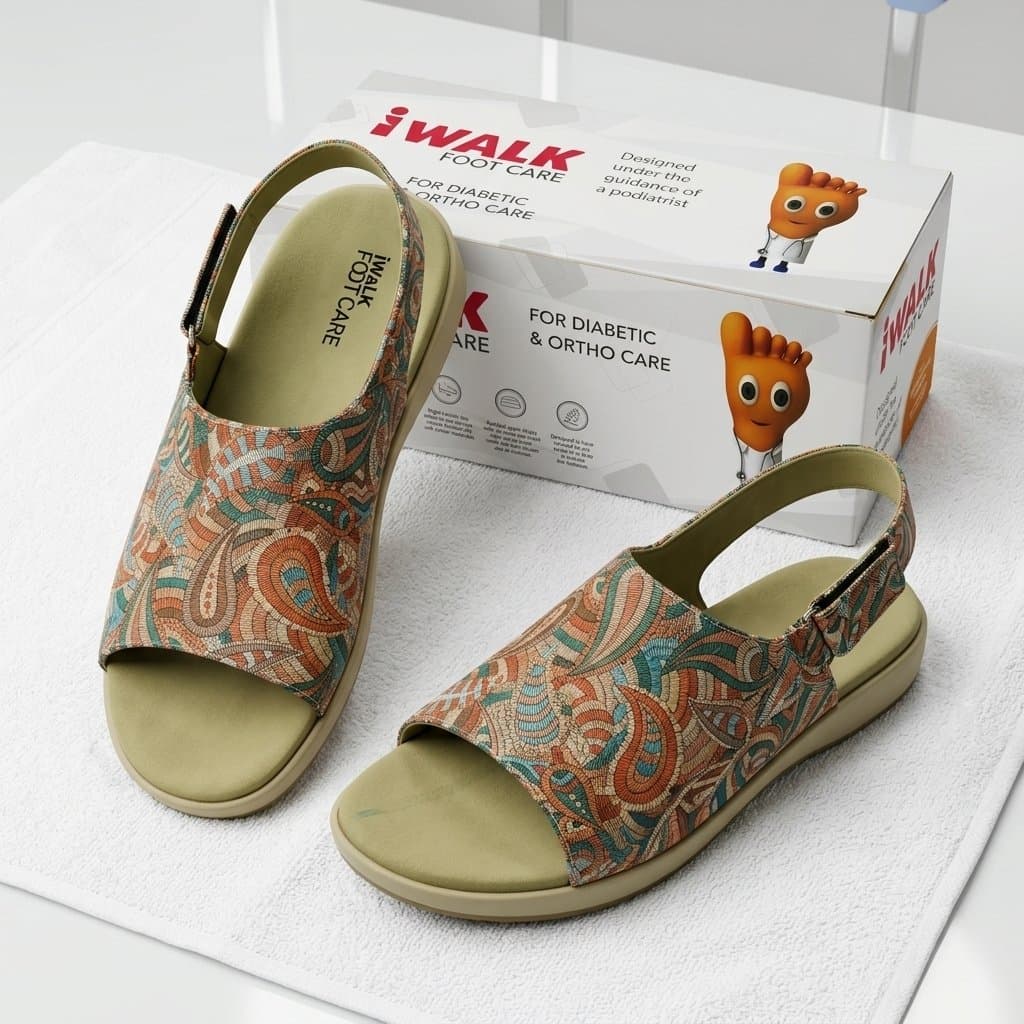
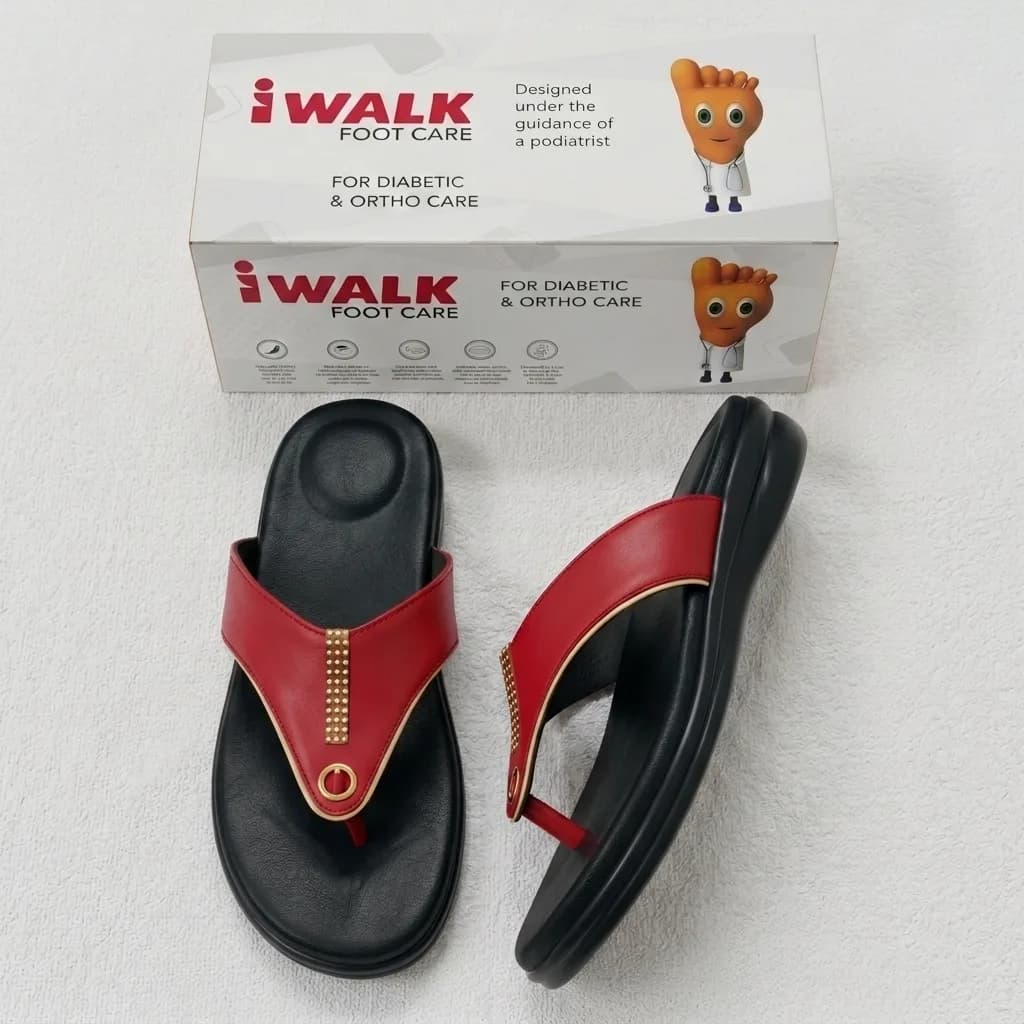
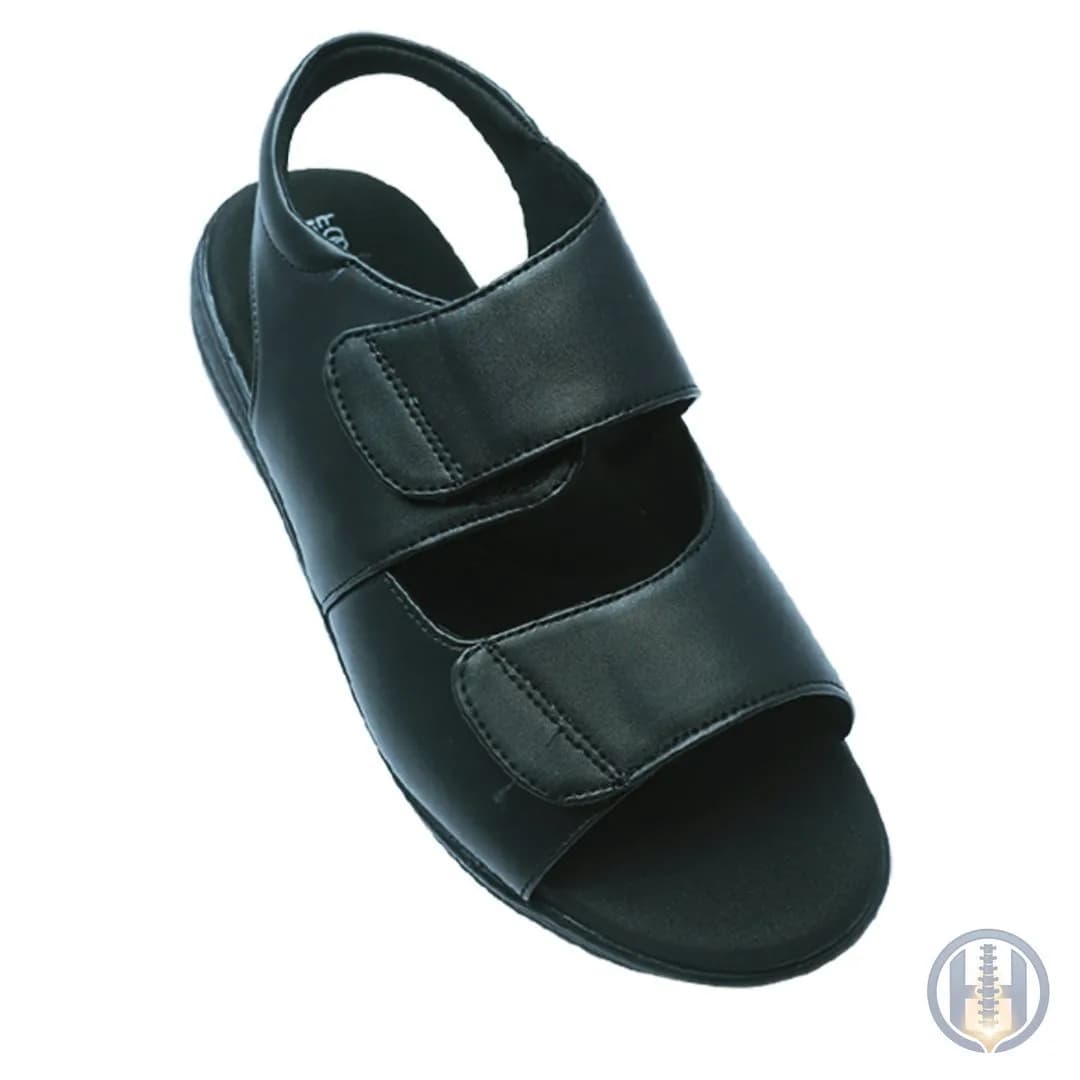
For men, the AJM 12 has a wide toe box for extra forefoot room, and the AJM 10 has an extra-depth footbed that fits orthotic inserts. For women, the AJL 32 has a spacious toe box and a shock-absorbing sole, and the AJL Barmi offers deep cushioning with a modest heel.
Avoid: high heels, pointed fronts, thin ballet flats and worn-out slippers.
Metatarsalgia vs other forefoot problems
- Morton's neuroma: burning or electric pain between the 3rd and 4th toes, with numbness.
- Stress fracture: sharp, localised pain on top of the foot with swelling, often after a sudden increase in walking.
- Corns and calluses: hard skin under the ball of the foot that hurts on pressure (corns and calluses guide).
- Diabetic neuropathy: burning in both feet, often with numbness (burning feet guide).
When to see a doctor
- Pain lasting more than two to three weeks despite rest and better footwear.
- Swelling, bruising or pain when you press on top of a bone.
- Numbness or burning between the toes.
- Any redness, warmth or wound, especially if you have diabetes.
A physiotherapist can also guide stretching and strengthening — we offer home physiotherapy in Chennai.
Not sure which pair gives your forefoot more room? WhatsApp us your size and foot width and we'll suggest a wide, cushioned option.
Key takeaways
- Metatarsalgia is pain under the ball of the foot from overload.
- Common causes: heels, thin soles, narrow shoes, high arches, age-related fat pad thinning and long standing.
- Cushioning, a wide toe box, a low heel and a metatarsal pad bring relief.
- Browse cushioned, wide-fit men's and women's footwear.