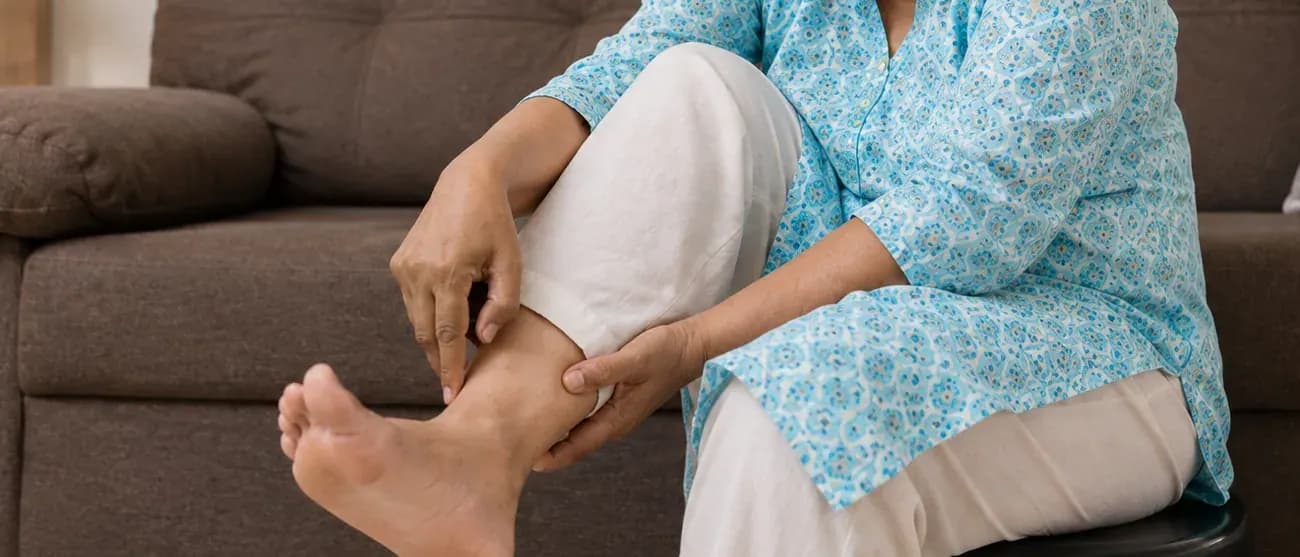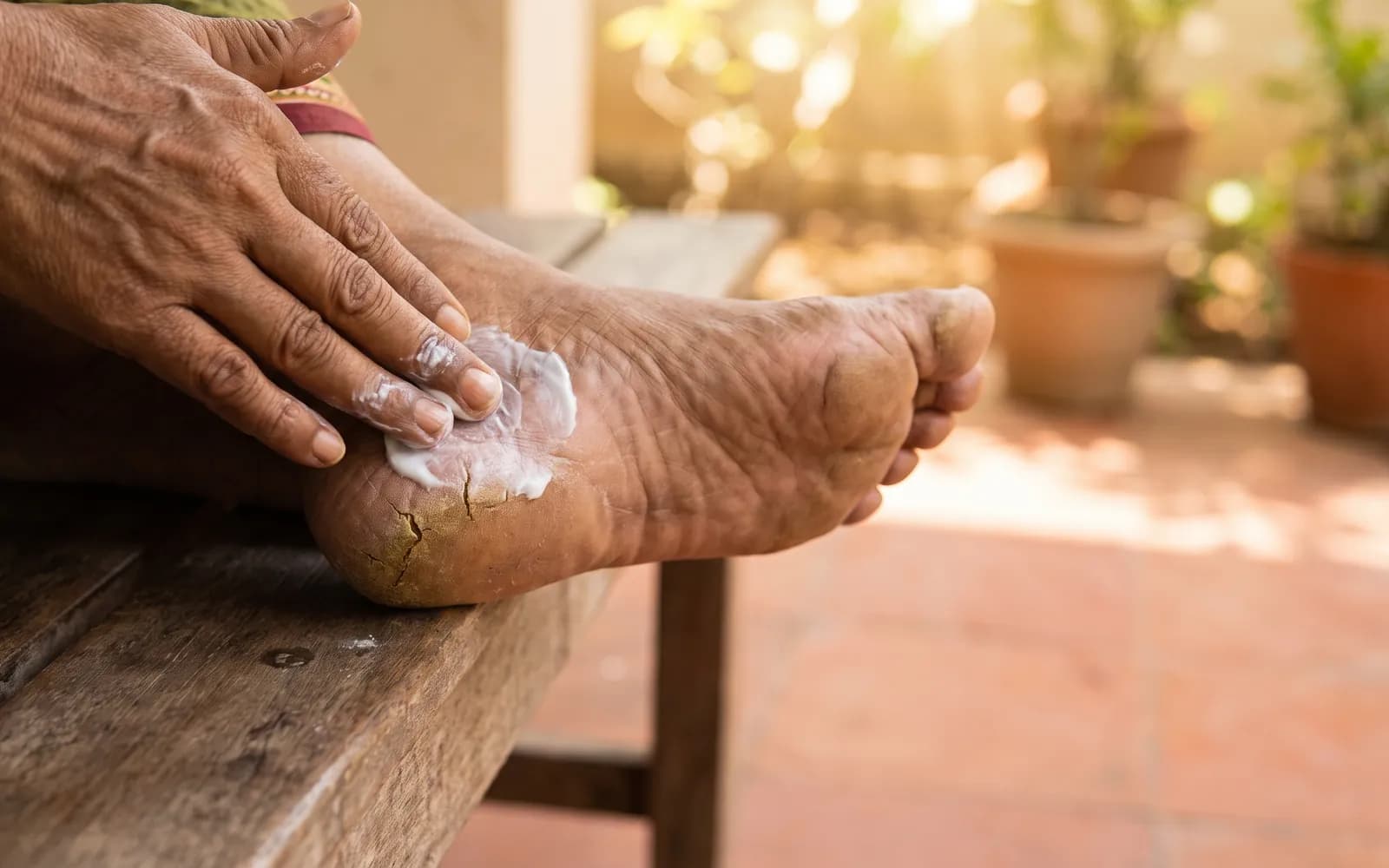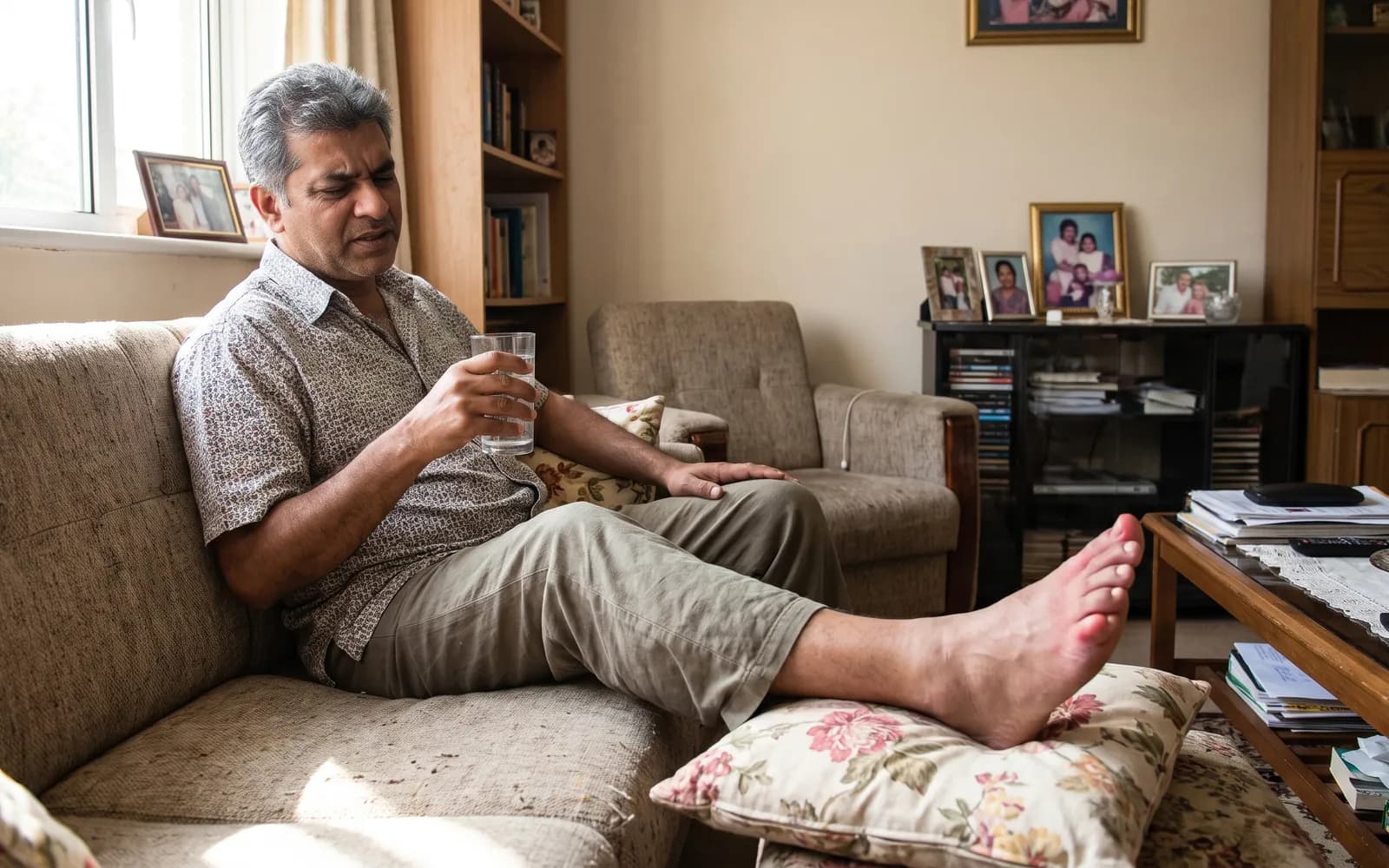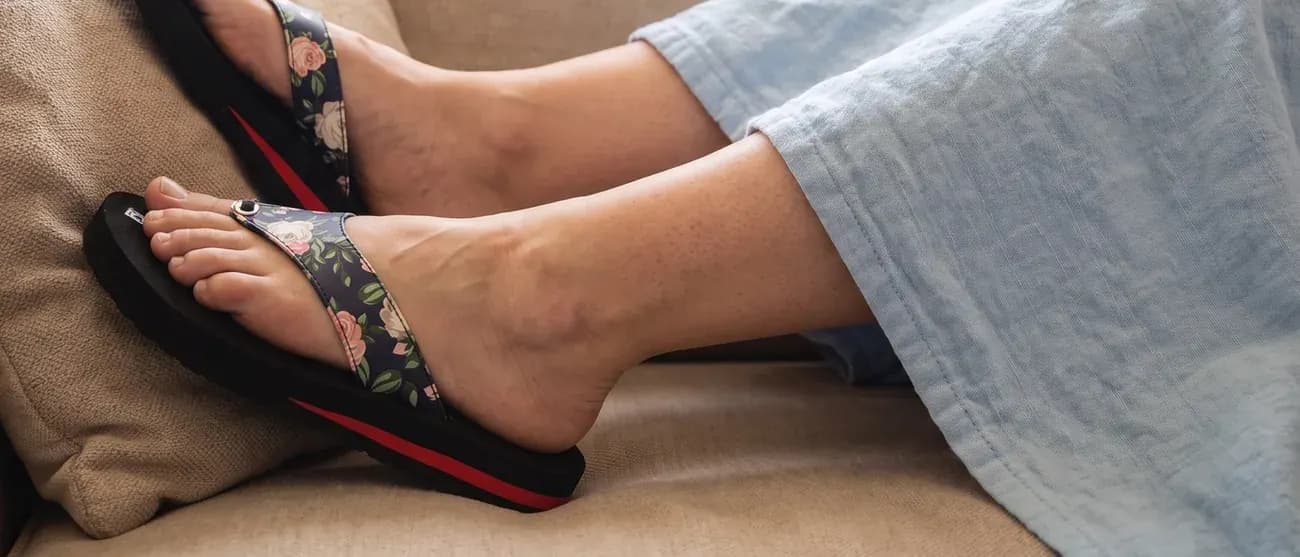
Swollen feet and ankles are common — after a long day standing, in hot weather, during pregnancy, with age, and with some health conditions and medicines. Whatever the cause, ordinary fixed-size footwear quickly becomes painful. Here's how to pick footwear that adapts.
Common causes of swollen feet
- Standing or sitting for long periods
- Hot, humid weather (very familiar in Chennai)
- Pregnancy (pregnancy footwear guide)
- Ageing and reduced circulation
- Diabetes, heart, kidney or vein problems, and some medicines
Persistent swelling should always be checked by a doctor to find the cause.
The features that matter
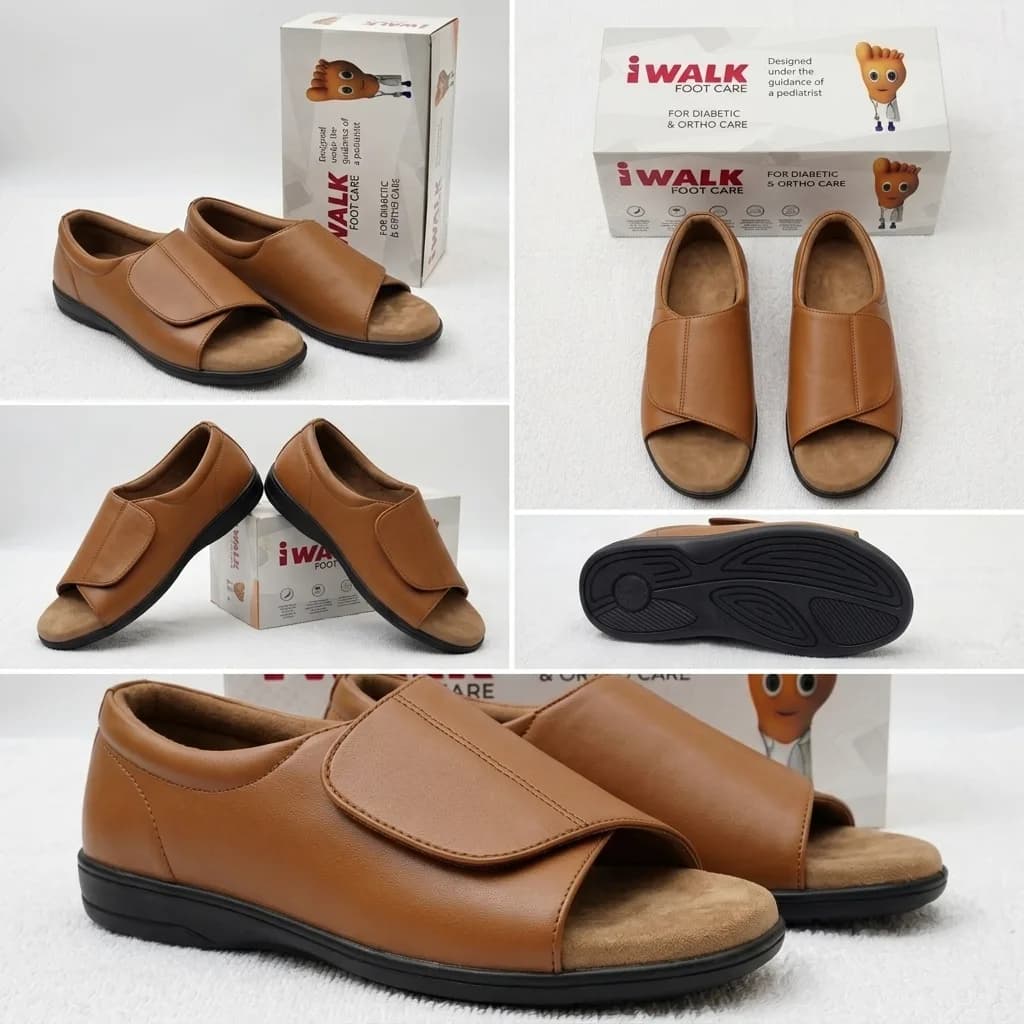
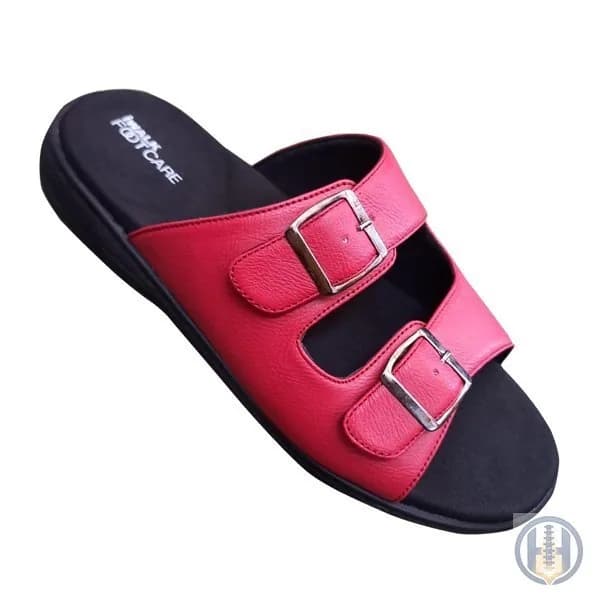
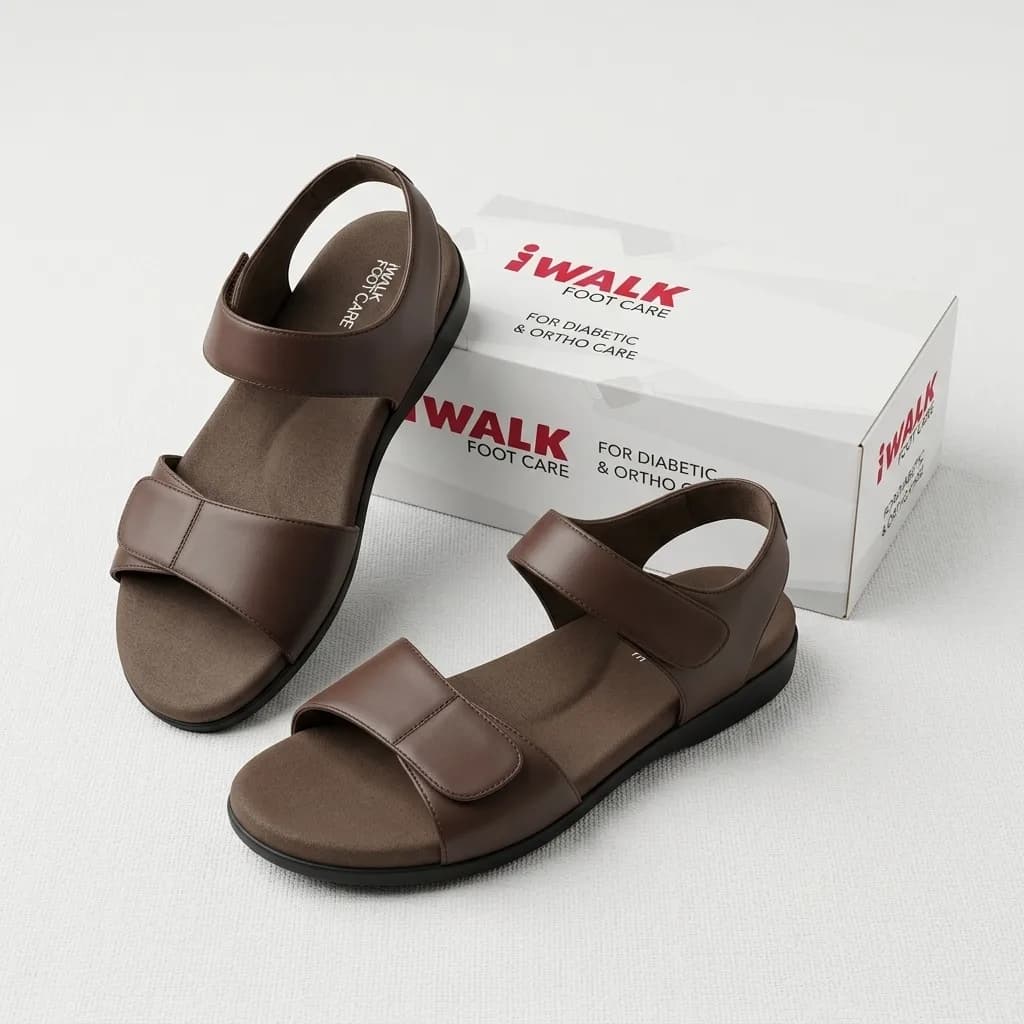
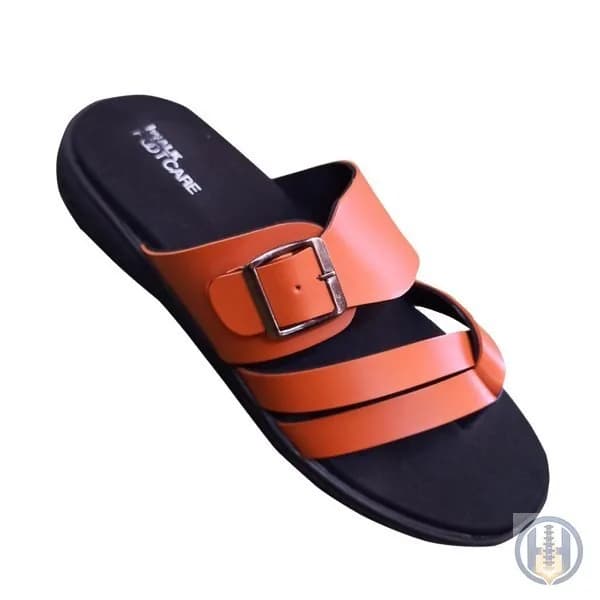
- Adjustable straps — the #1 feature. Wide velcro or multiple buckles let you loosen as feet swell through the day and tighten when they settle.
- Roomy, deep toe box — swollen toes need space above and at the sides.
- Soft, stretch-friendly uppers — no hard edges digging in.
- Seam-free lining — swollen skin is more fragile.
- Cushioned MCP footbed — comfortable support without pressure points.
- Wide opening — easy to get into without forcing the foot.
Fuller-coverage velcro designs such as the AJL Majestic and multi-strap sandals are popular choices.
Sizing for swollen feet
- Measure and try footwear in the evening.
- Fit the more swollen foot.
- Choose the size that fits when swollen and use straps to tighten on better days.
- Check for deep sock or strap marks — a sign the fit is too tight.
Simple relief habits
- Elevate your feet above hip level for 15–20 minutes a few times a day.
- Keep moving — short walks and ankle pumps help circulation.
- Avoid sitting cross-legged for long periods.
- Reduce salt if your doctor advises it.
- Wear compression stockings only if recommended by your doctor.
Warning signs — see a doctor promptly
- One leg suddenly swollen, red, warm or painful (could indicate a clot)
- Swelling with breathlessness or chest pain — seek emergency care
- Swelling in pregnancy with headache or vision changes
- Swelling with a wound, especially if you have diabetes
Everyday situations that make swelling worse
- Long journeys: on trains, buses and flights, flex and rotate your ankles every 30 minutes and walk when you can. Wear loose, adjustable footwear rather than tight shoes.
- Weddings and functions: long hours of standing in heat — take a supportive pair and sit down regularly.
- Temple visits and festivals: long queues and hot floors. Keep footwear on as long as possible and rest your feet raised when you get home.
- Hot afternoons: stay in the shade, drink water as advised and keep feet cool.
Caring for skin on swollen feet
Swollen skin is stretched and more easily injured:
- Moisturise gently to prevent cracks (not between the toes).
- Check for marks from straps or socks every evening.
- Avoid tight elastic socks unless compression is prescribed.
- Keep nails trimmed straight across so they don't dig in.
Choosing between velcro and buckles
Velcro is quickest to adjust through the day and easiest for older people. Buckles hold a set position securely and suit people whose swelling doesn't change much. Many customers with swelling choose velcro for home and buckles for outside.
Styles compared for swollen feet
| Style | Good for | Watch out for |
|---|---|---|
| Wide velcro slip-on | Heavy swelling, elders, easy on/off | Choose a secure back so it doesn't slip |
| Multi-strap sandal | Swelling that changes through the day | Straps should not press on bony points |
| Closed walker | Outdoor walking with toe protection | Needs a roomy, deep toe box |
| Soft home slipper | Evenings and rest at home | Must still have grip and some support |
Many people with swelling do best with two pairs: an adjustable sandal for daytime and a soft, supportive slipper for evenings at home.
Key takeaways
- Choose adjustable straps + roomy toe box + soft lining + cushioned footbed.
- Buy for your evening size.
- Browse adjustable women's and men's footwear.
General information only — not medical advice.