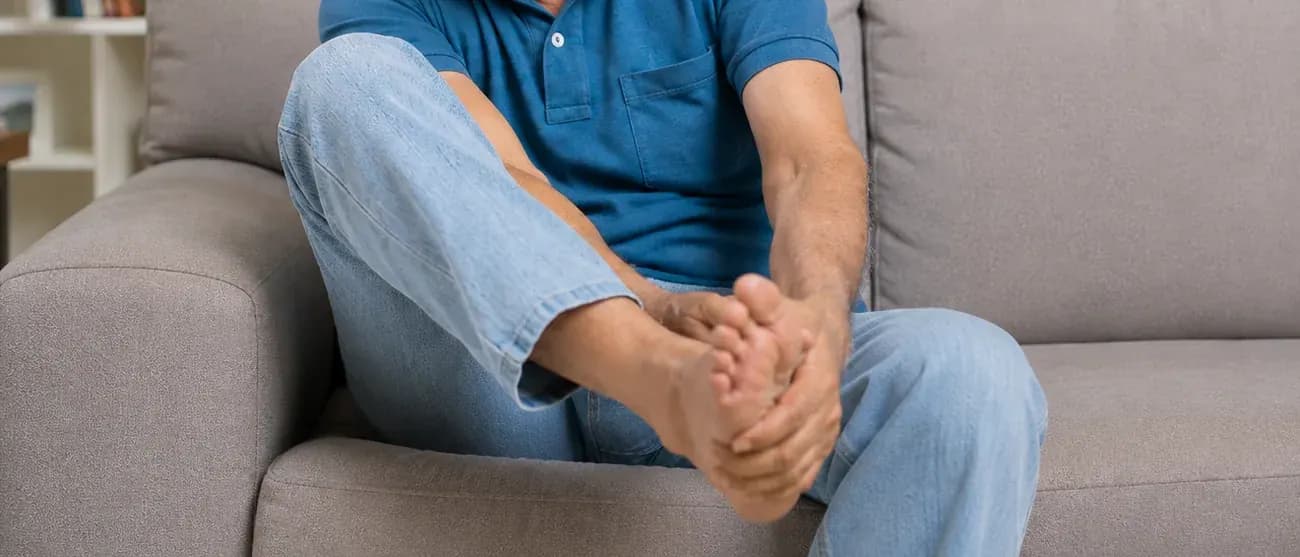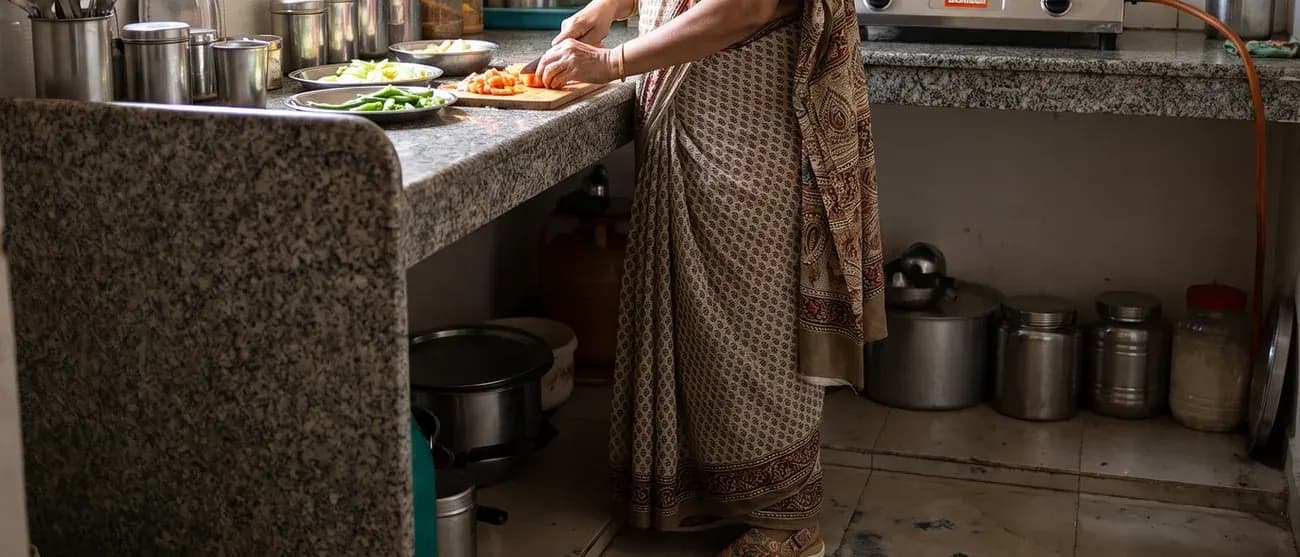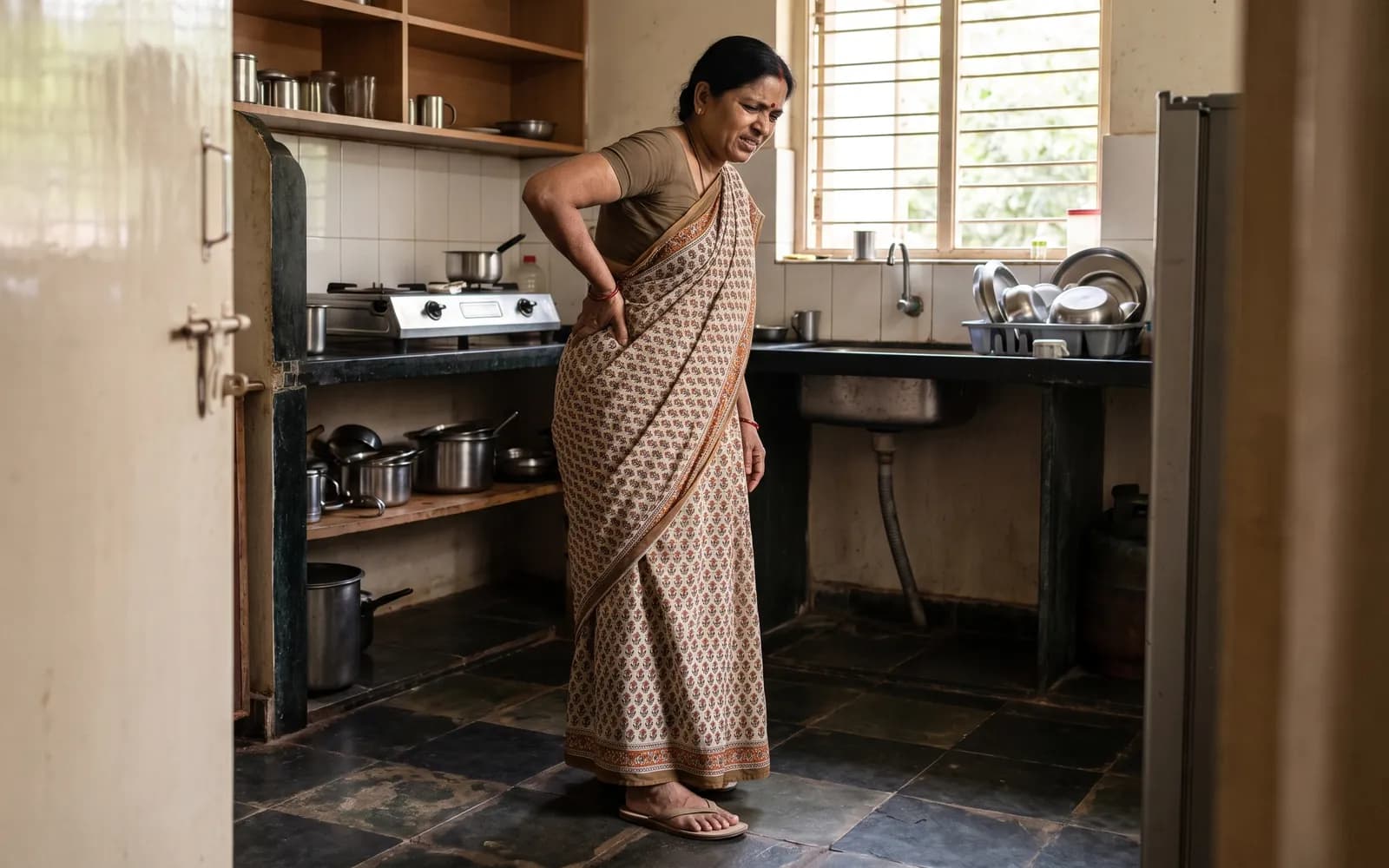
Lower back pain is one of the most common reasons people in India visit a doctor or physiotherapist. The causes are many — posture, long hours sitting, lifting, weak core muscles, age-related changes in the spine. But one contributor is often overlooked: what you wear on your feet, and what you stand on all day.
Footwear rarely causes back pain on its own, and it isn't a cure. But the right footwear can reduce the strain that travels up from your feet with every step — and the wrong footwear can keep aggravating a sore back.
How your feet affect your back
Every step sends a jolt of force up through your heel, ankle, knee, hip and spine. Your feet are the first shock absorbers in that chain.
- Flat, hard soles pass more of that impact upward.
- Collapsed arches (flat feet) let the foot roll inward, rotating the shin and thigh and tilting the pelvis.
- High heels push the pelvis forward and increase the curve of the lower back.
- Worn, uneven soles tilt your foot to one side, changing how your hips and spine move.
- Walking barefoot on marble or tile for hours gives no cushioning at all.
Footwear habits that can aggravate back pain
| Habit | Why it hurts |
|---|---|
| Thin rubber slippers all day | No cushioning, no arch support |
| Barefoot on hard floors at home | Repeated jolts with no shock absorption |
| High heels for long periods | Increased lower-back curve and muscle tension |
| Shoes worn down on one side | Tilted foot, uneven hip and spine loading |
| Very soft, unstable footwear | Muscles work harder to keep balance |
What to look for in footwear for back pain
1. Shock absorption. A cushioned footbed (such as MCP) and a cushioned sole reduce the jolt reaching your spine.
2. Arch support. Keeps the foot from rolling in, which helps keep knees, hips and pelvis aligned. Read our flat feet guide.
3. A stable heel. A firm heel cup or heel counter stops the foot from wobbling.
4. A small heel rise. 1–3 cm is usually more comfortable than completely flat or high heels.
5. A secure fit. Straps or a closed back so your toes don't grip to hold the footwear on.
Slippers for back pain at home
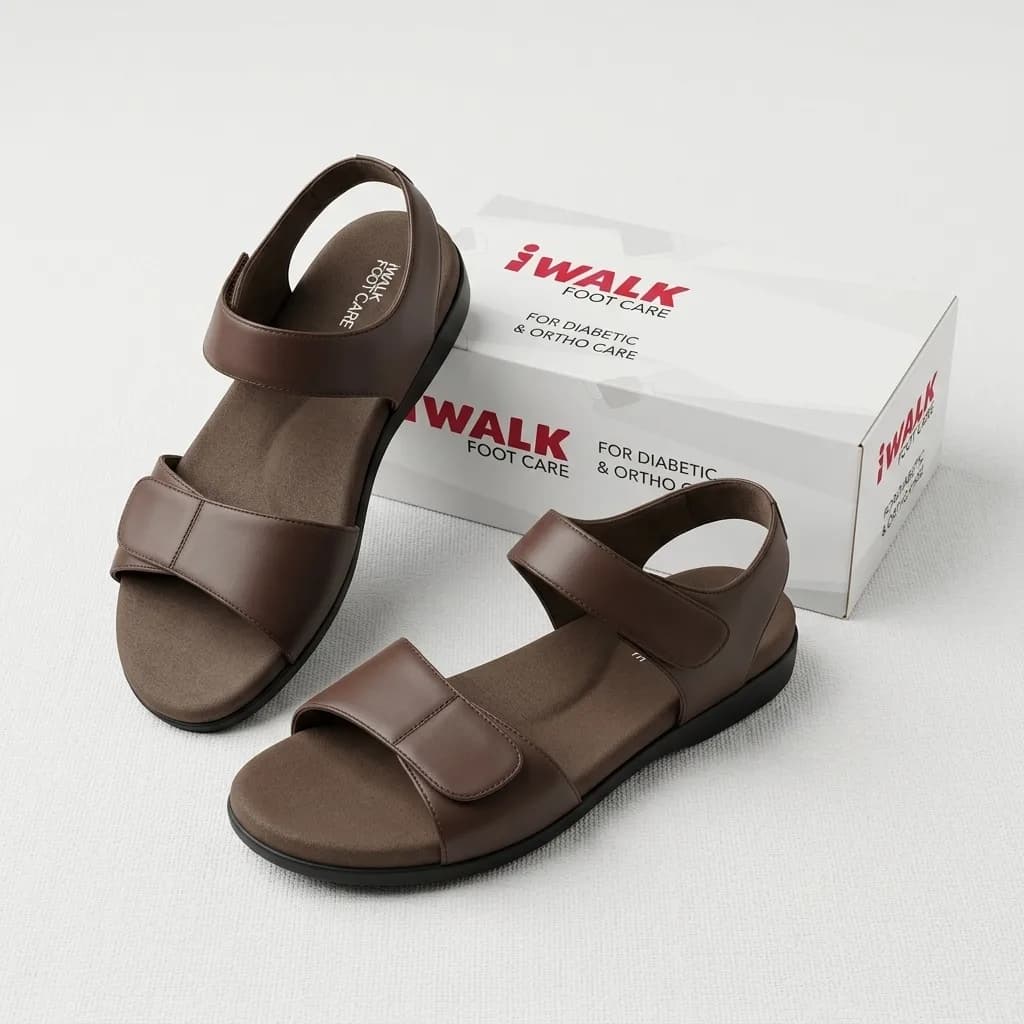
Since many of us spend hours standing in the kitchen or moving around the house, home footwear matters as much as outdoor shoes. Supportive orthopedic slippers like the AJM 800 give arch support and cushioning on hard floors. For women, the AJL Diana offers a soft upper with a supportive footbed. See also our doctor chappal guide.
Shoes for back pain when walking
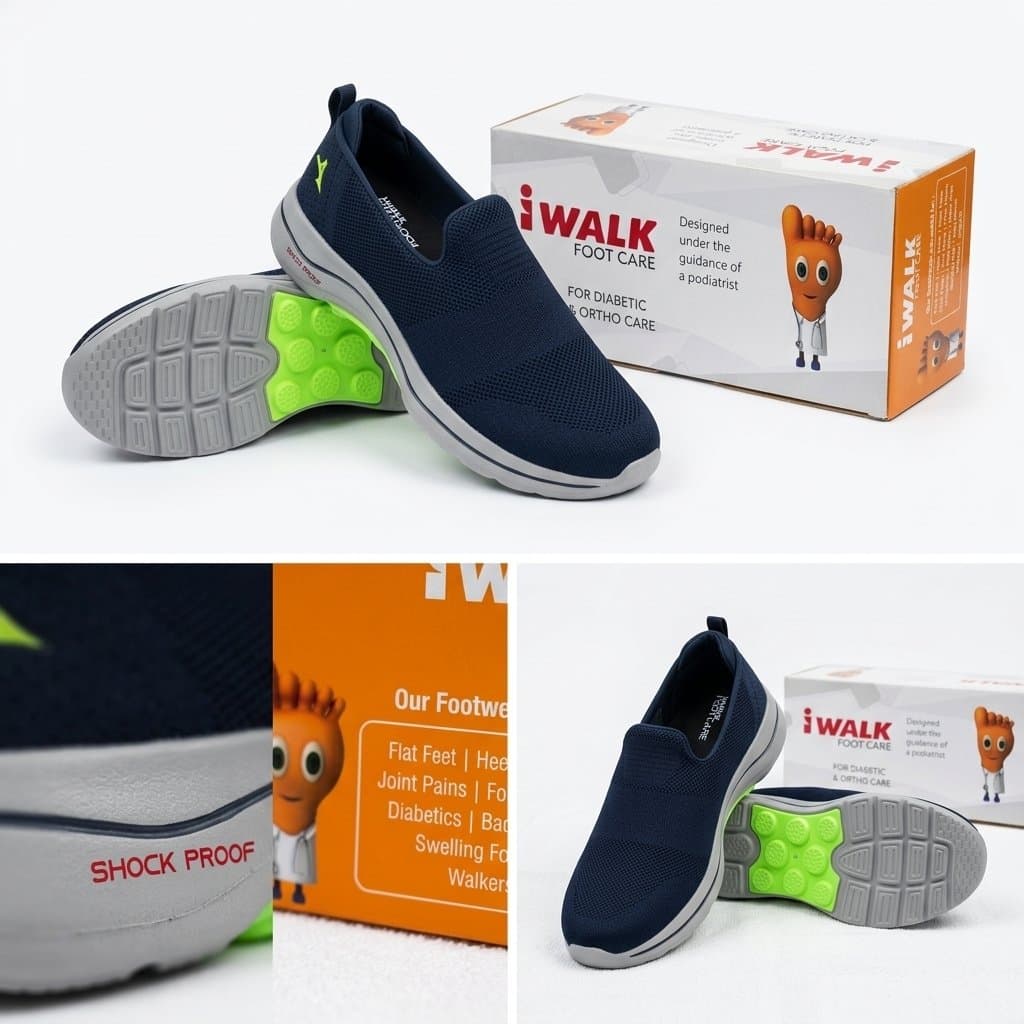
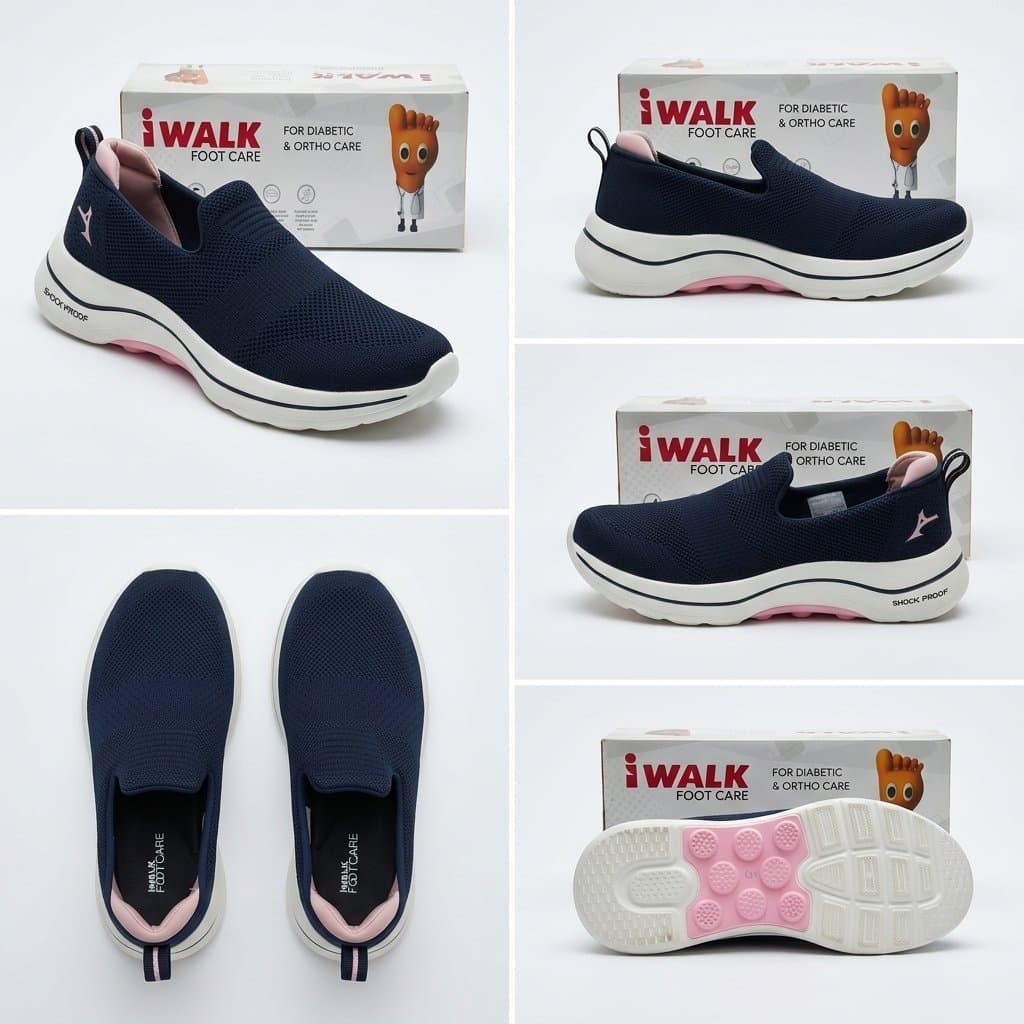
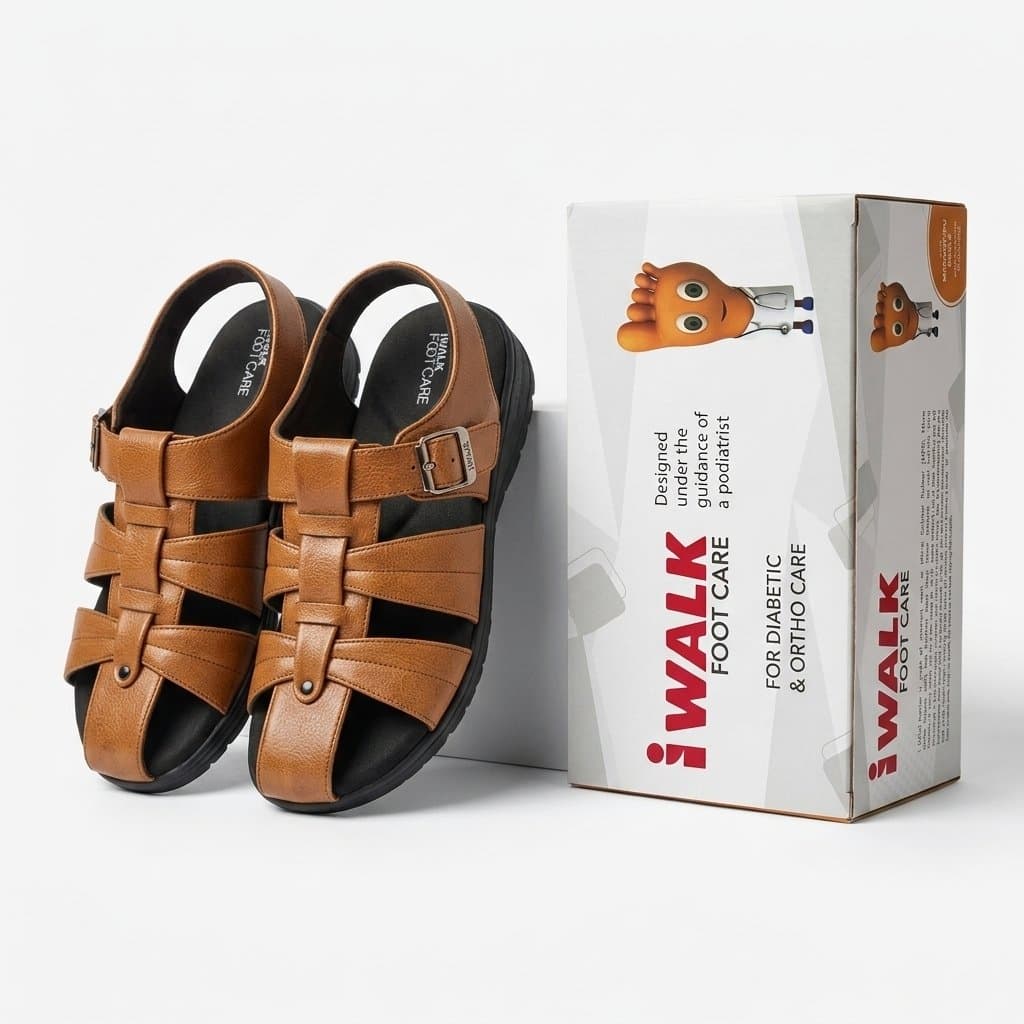
Walking is one of the best things you can do for a sore back — as long as your shoes absorb shock. The men's and women's walking shoes combine a shock-absorbing sole with a light, breathable knit upper. For short errands, the AJM Walker sandal is built for all-day walking comfort. Read how to choose walking shoes.
If your feet are flat and your shoes have a removable insole, an arch support insert can add support (insoles guide).
Beyond footwear: what really helps back pain
Footwear is one piece of the puzzle. The strongest evidence for most ongoing lower back pain supports:
- Staying active — gentle walking rather than bed rest.
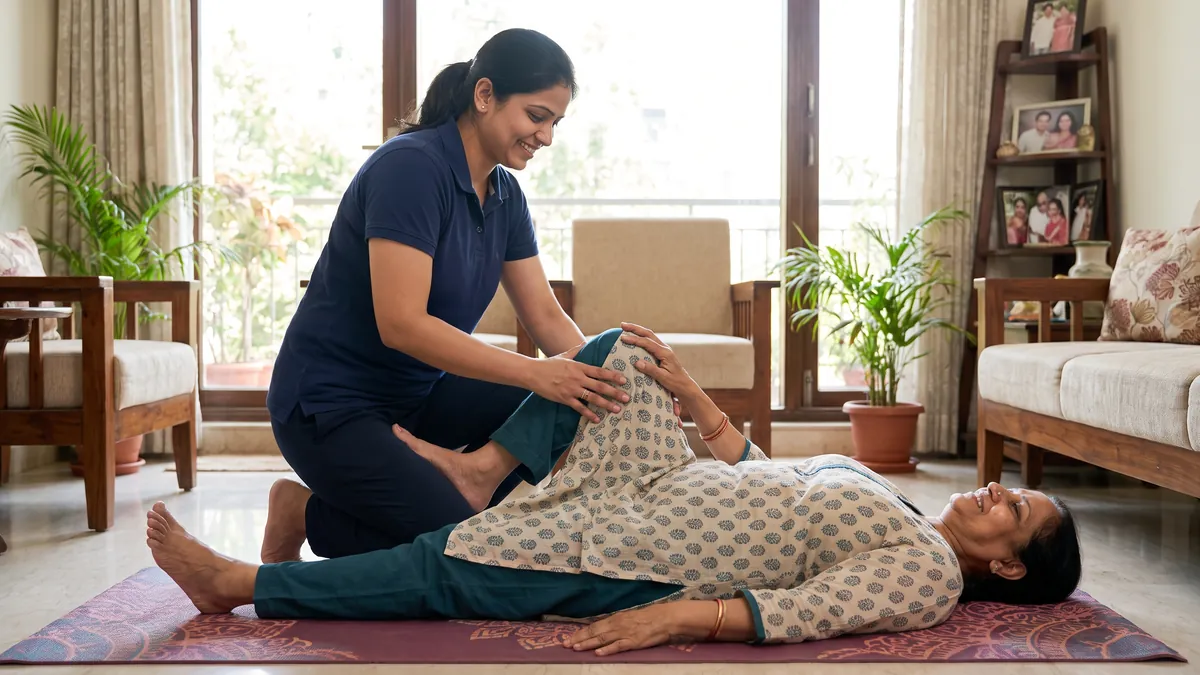
- Core and hip strengthening guided by a physiotherapist.
- Gentle stretches — knee-to-chest, cat-cow, hamstring stretches.
- Posture breaks every 30–45 minutes if you sit for work.
- Safe lifting — bend your knees, keep the load close.
- Healthy weight to reduce load on the spine.
Our home physiotherapy service in Chennai can assess your back, posture and gait, and build a plan you can do at home.
When back pain needs urgent attention
See a doctor immediately if back pain comes with:
- Numbness around the groin or buttocks, or loss of bladder or bowel control.
- Weakness in the legs or foot drop.
- Fever, unexplained weight loss, or a history of cancer.
- Pain after a fall or accident.
- Severe pain that doesn't ease with rest or wakes you every night.
Key takeaways
- Feet are your body's first shock absorbers — flat, hard, worn or high-heeled footwear can add to lower back strain.
- Look for shock absorption, arch support, a stable heel, a small heel rise and a secure fit.
- Wear supportive slippers at home on hard floors.
- Combine good footwear with activity and physiotherapy. Browse supportive men's and women's footwear.