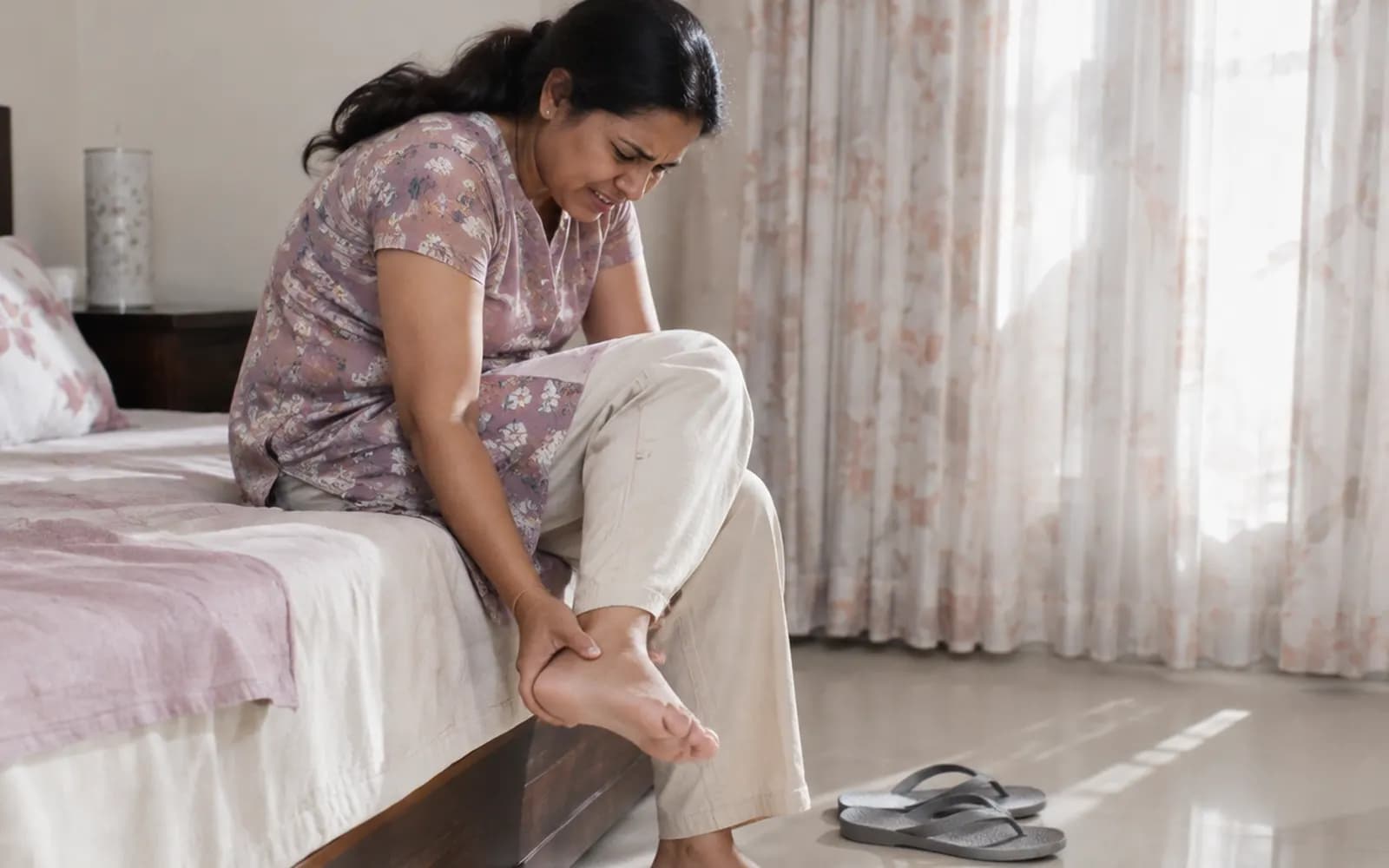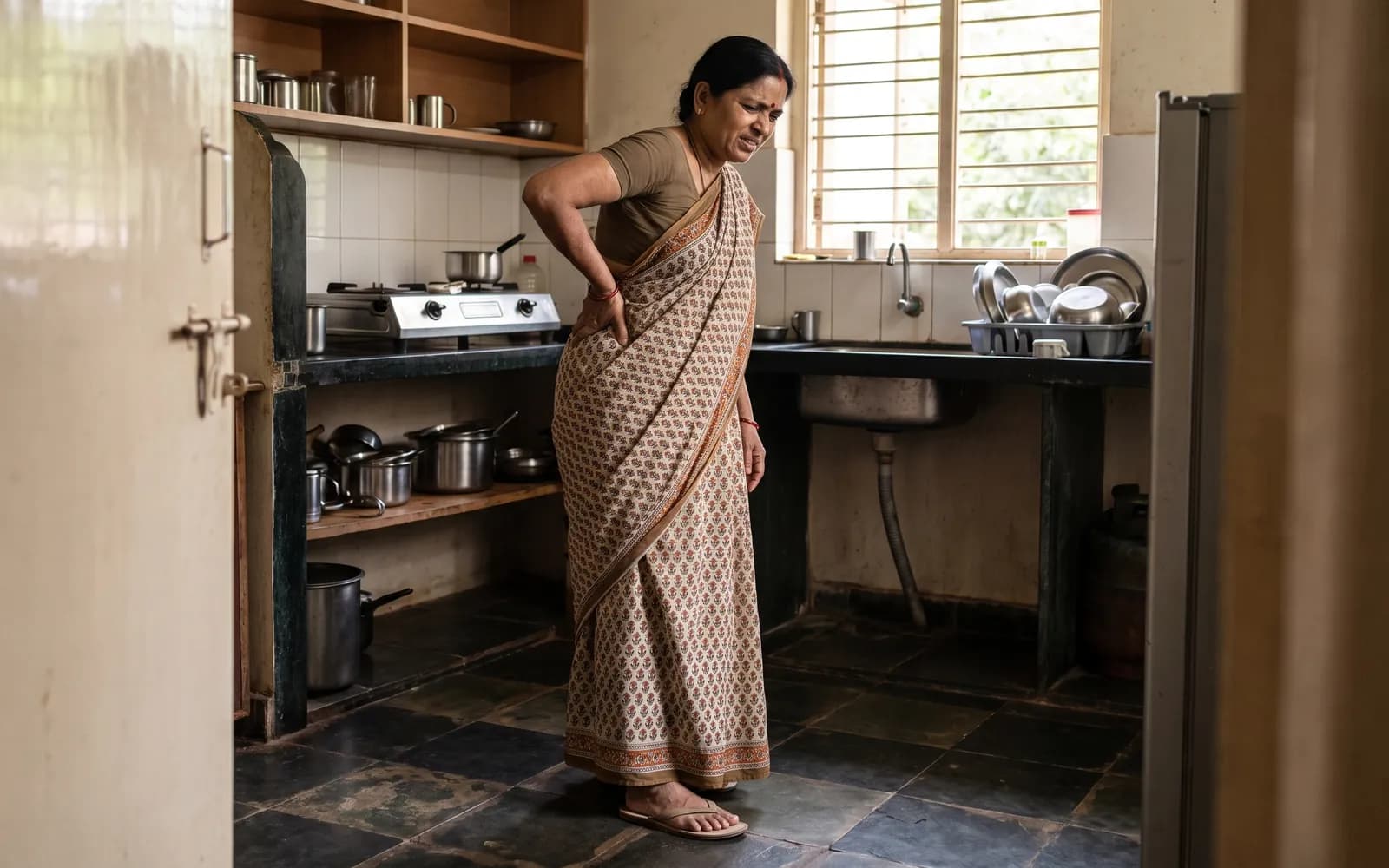
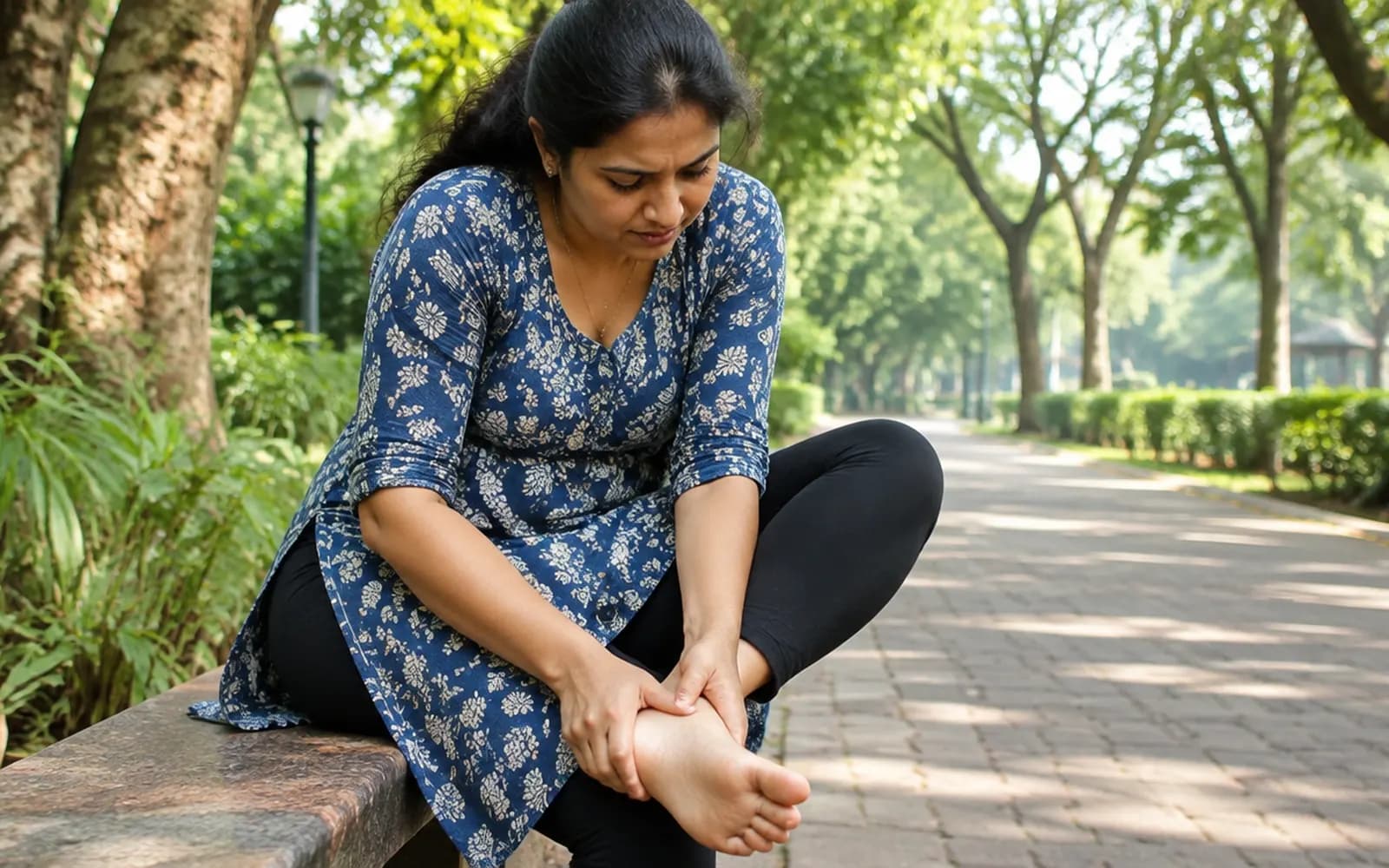
Walking is meant to be the simplest form of exercise, so foot pain when walking is frustrating — and it can make you walk less, which is bad for your heart, blood sugar and weight. The good news is that where the pain sits gives strong clues about the cause, and footwear is often part of the answer.
Use this guide to match your symptom to its likely cause. It is not a diagnosis; if pain is severe or persistent, please see a doctor.
Where does it hurt? A quick guide
| Pain location | Common causes | Footwear that helps |
|---|---|---|
| Heel (especially first steps) | Plantar fasciitis, heel spur | Cushioned heel, arch support |
| Arch (middle of the sole) | Flat feet, overpronation, strain | Arch-support footbed or insert |
| Ball of the foot | Metatarsalgia, thin soles, high heels | Cushioned forefoot, rocker or thick sole |
| Big toe joint | Bunion, arthritis, tight toe box | Wide toe box, soft upper |
| Outer edge of the foot | High arches, ankle instability | Cushioned, stable shoes |
| Top of the foot | Tight laces or straps, tendon strain | Adjustable straps, soft upper |
| Whole foot, burning or tingling | Nerve problems, diabetes | Soft, seamless, cushioned footwear |
The common causes in more detail
Heel pain
Usually plantar fasciitis or a heel spur. See best footwear for plantar fasciitis and our guide to heel pain in the morning.
Arch pain and flat feet
A fallen or flat arch lets the foot roll inwards, straining the sole. Read flat feet and arch support footwear and our guide to arch support insoles.
Ball of foot pain
Pressure under the forefoot, often a burning or "stone in the shoe" feeling. See metatarsalgia.
Big toe and forefoot pain
Narrow shoes squeeze the toes, aggravating bunions and arthritis. Our guides to bunions and wide feet and arthritis foot and ankle pain help.
Nerve-related pain
Burning, tingling or numbness may come from nerve damage. Read about burning feet and numbness in feet.
Why footwear matters so much
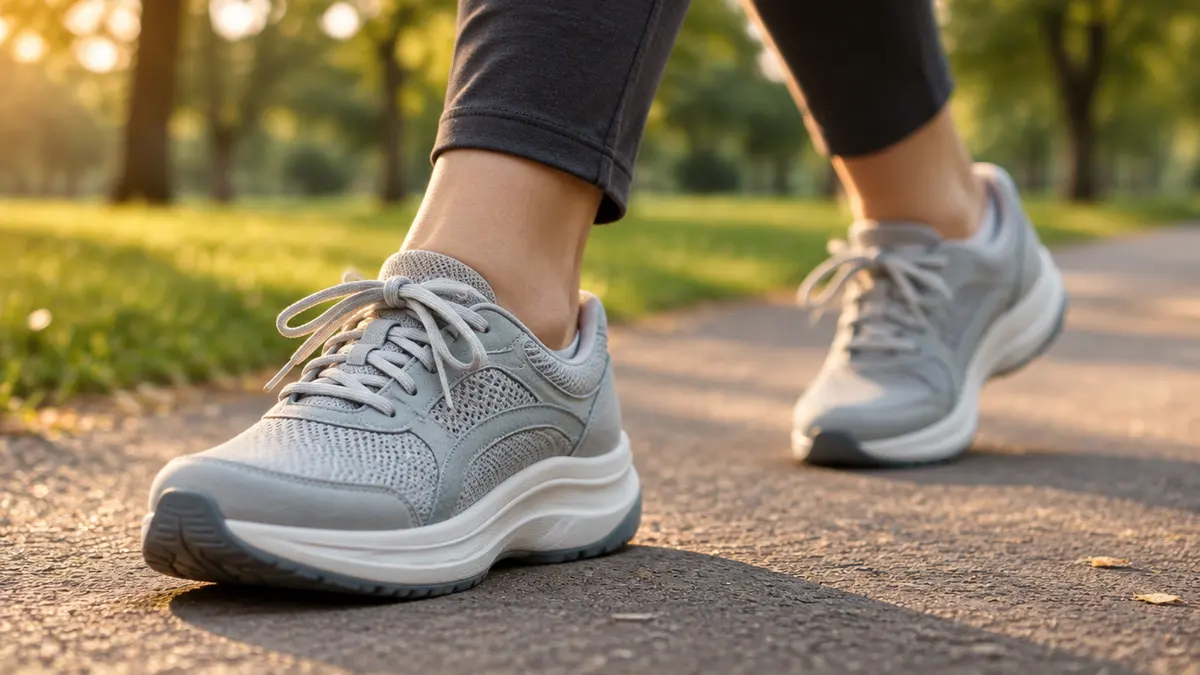
Your feet absorb a force of roughly one to one-and-a-half times your body weight with every step when walking, more when running. A good shoe or sandal:
- Absorbs shock so your heel, knees and back take less impact.
- Supports the arch so weight spreads evenly.
- Holds the foot steady, preventing sliding and rubbing.
- Leaves room for the toes so they can spread naturally.
A thin, flat, worn-out or ill-fitting pair does the opposite — which is why many people feel better within days of switching.
6 footwear checks for painful feet
- Cushioning. Press the footbed — it should feel soft yet springy, not hard.
- Arch support. There should be a visible contour under the arch.
- Toe room. You should be able to wiggle all your toes.
- Sole stability. The sole should bend at the ball of the foot, not in the middle.
- Secure fit. The heel should not slip with each step.
- Condition. Replace pairs when the sole is worn unevenly or the footbed has flattened — see when to replace orthopedic footwear.
Our picks for painful feet
- AJM Walker — ₹1,650. A men's orthopedic sandal with an arch-support MCP footbed, built for all-day walking and standing.
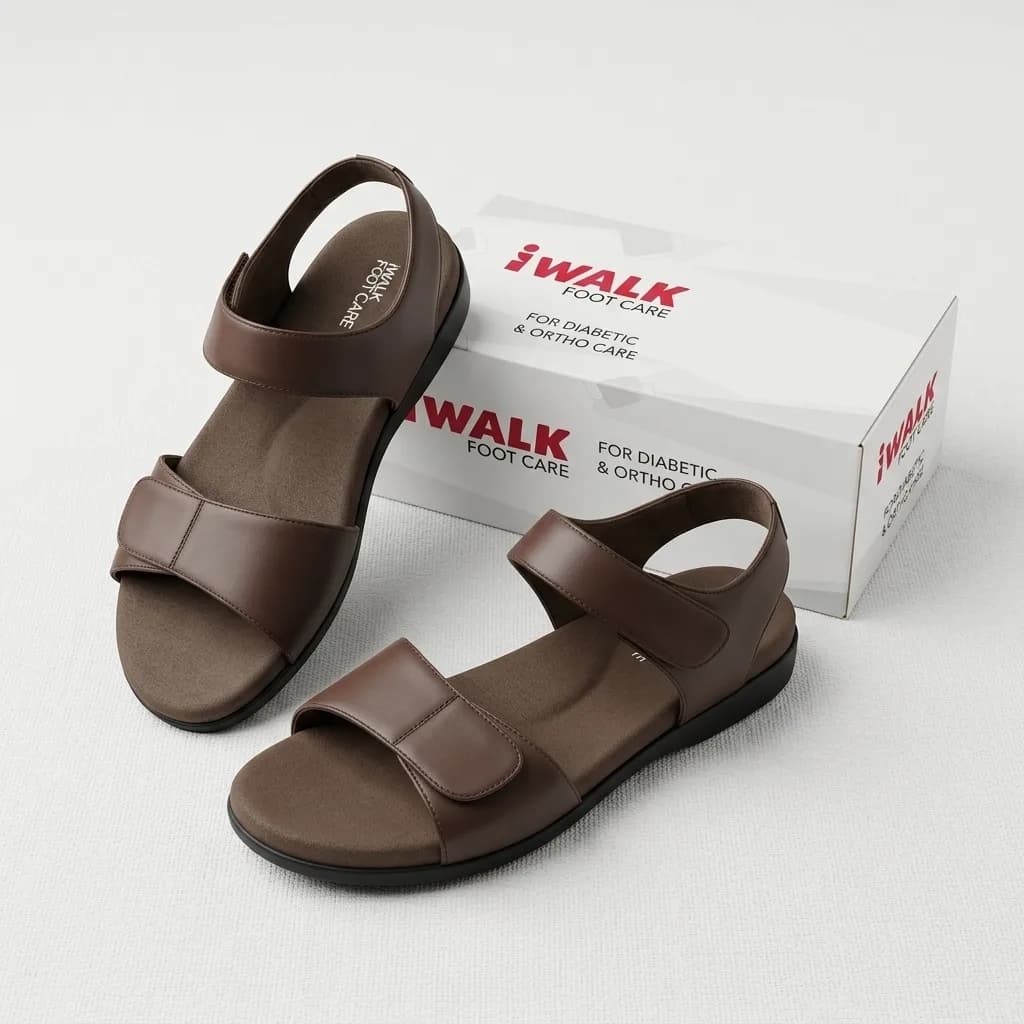
- AJL Diana — ₹1,680. A women's orthopedic sandal with a 12mm arch-support footbed that cushions evenly.
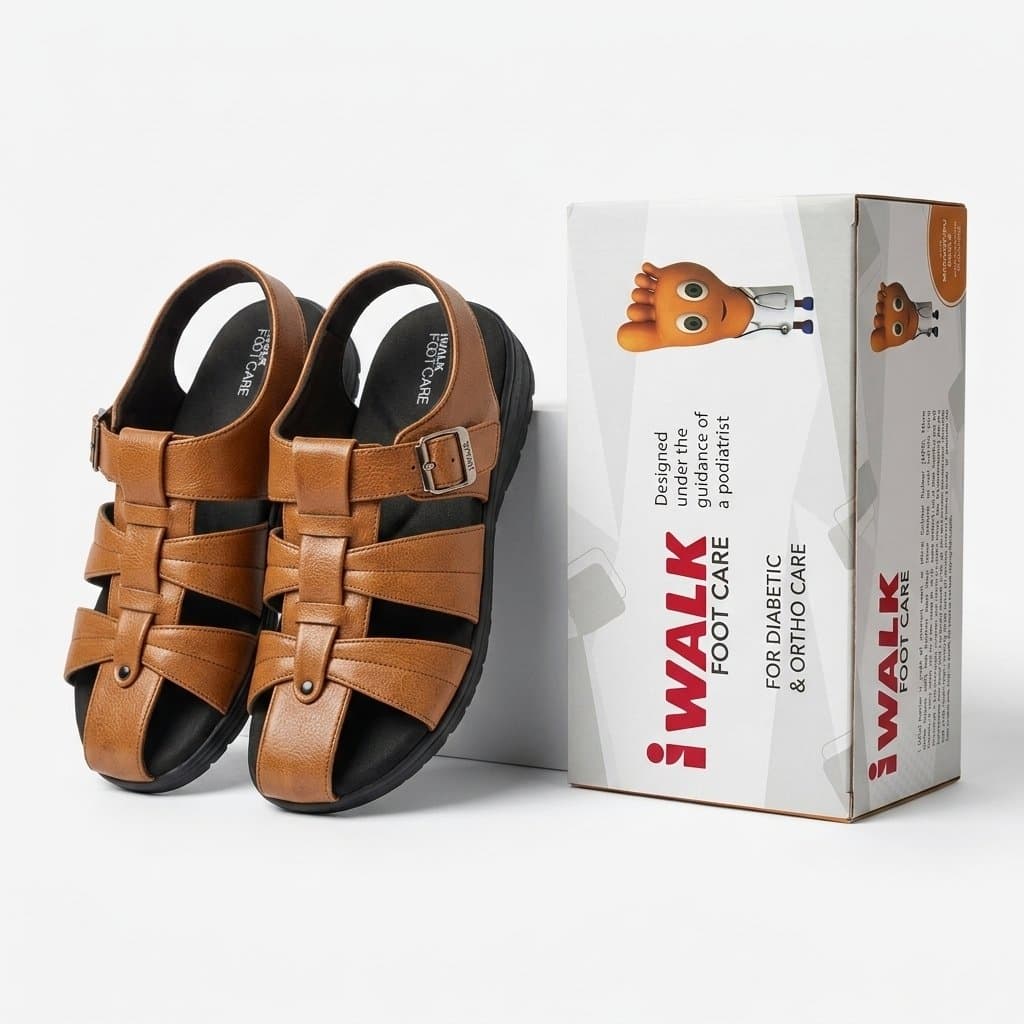
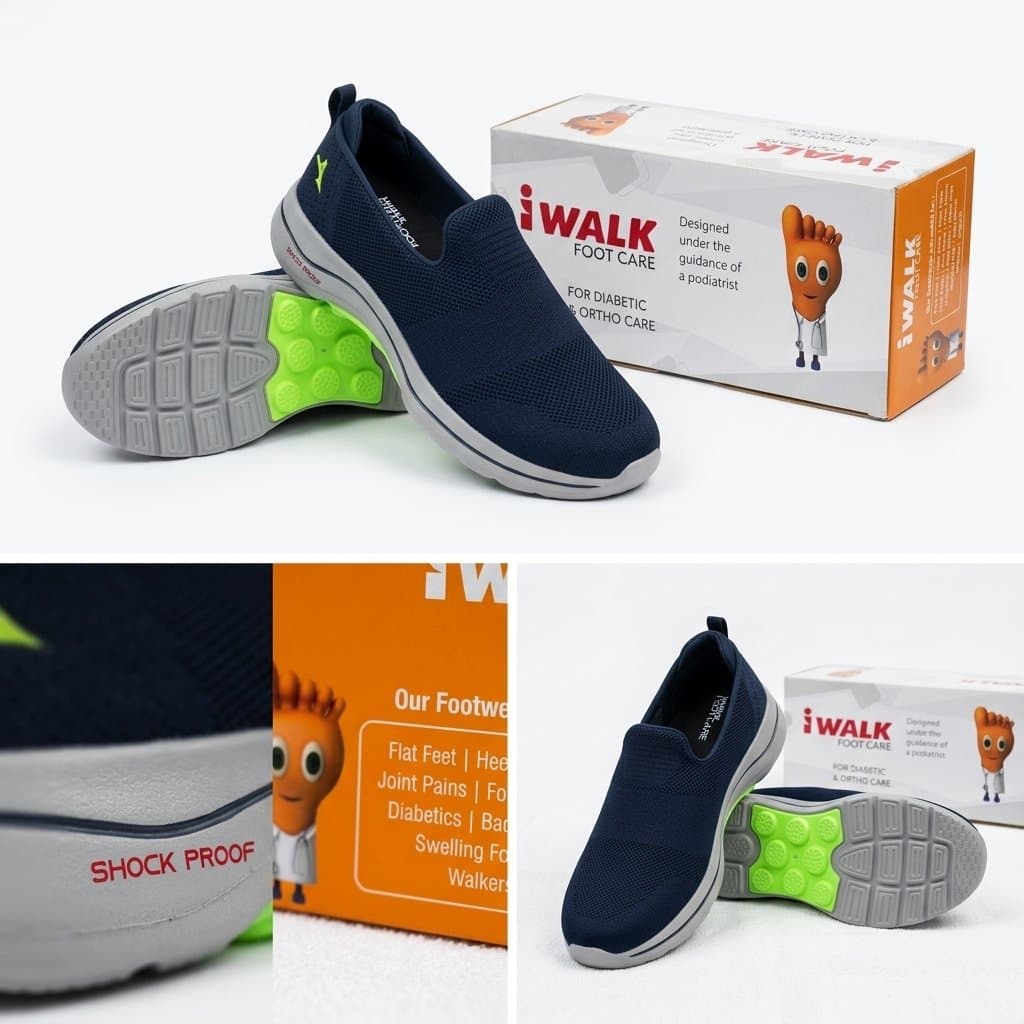
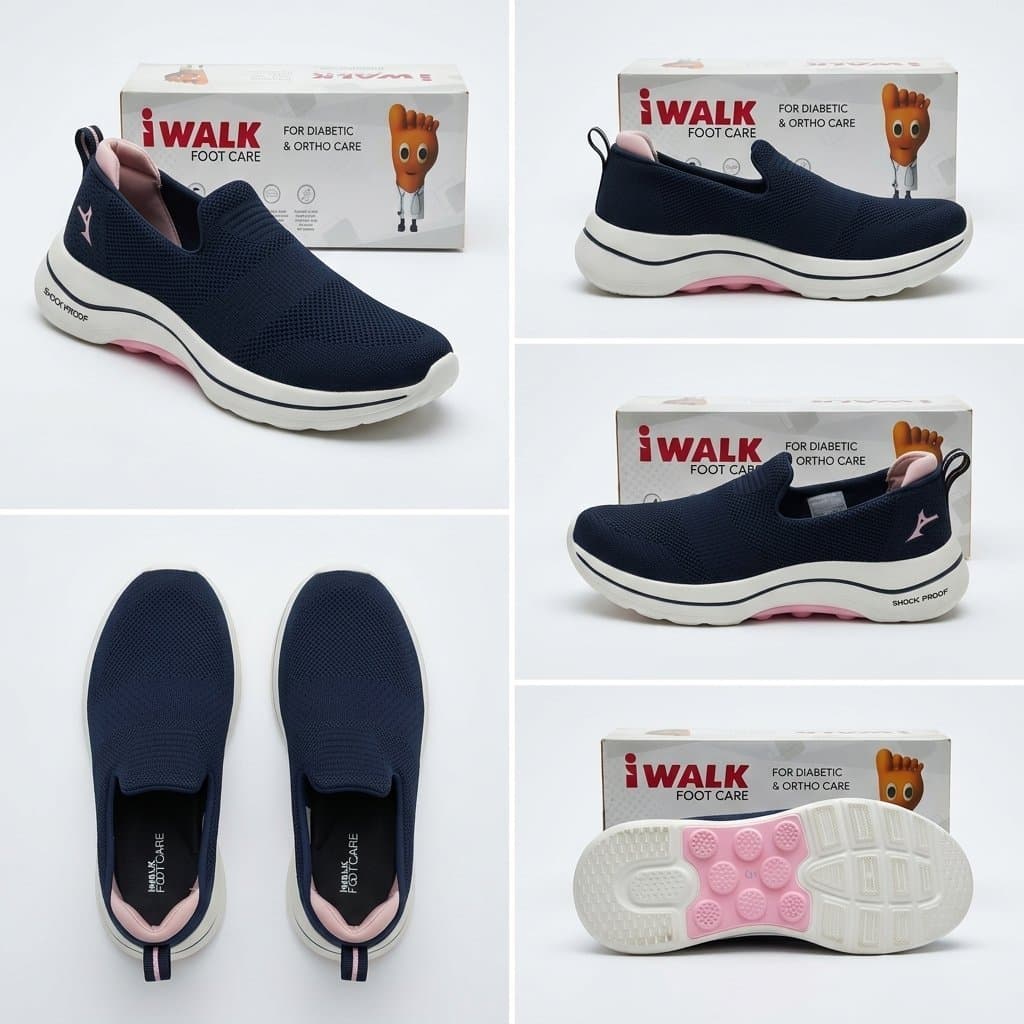
- iWALK Men's Walking Shoe and Women's Walking Shoe — ₹3,900 each. Cushioned slip-on shoes with a breathable knit upper and shock-proof rubber sole for longer walks. Our walking shoes guide compares them.
- Arch Support Semi Pro — ₹650. A semi-rigid insert for flat feet, fallen arches and arch fatigue that goes inside regular or orthopedic footwear.
When to see a doctor
Get medical advice if:
- Pain persists for more than two weeks despite better footwear and rest.
- You have swelling, redness or warmth, or the foot looks deformed.
- Pain started after an injury or you cannot bear weight.
- You have diabetes, numbness or a wound that is slow to heal.
Not sure which footwear fits your pain? WhatsApp us where it hurts and what you wear most of the day, and we'll suggest a pair. Cash on Delivery for eligible orders; we deliver across Tamil Nadu and India.